USAID
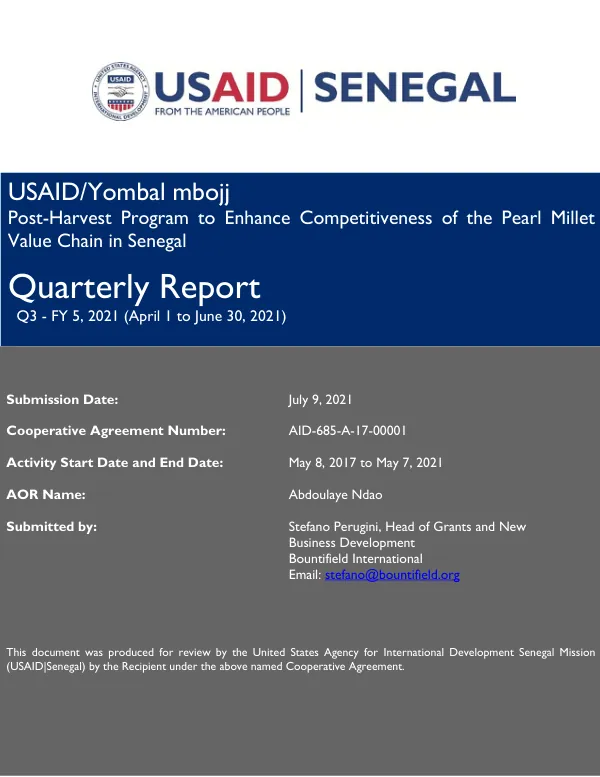
USAID/Yombal mbojj FY 2021 Q3 Quarterly Report
The agricultural development initiative in Senegal began in 2017 with funding from USAID's Senegal Mission.
2021 · 22 pages
Sign in to readA free account is required to download.
Abstract
The project, known as Yombal mbojj, aimed to enhance the competitiveness of the pearl millet value chain in Senegal by increasing the availability of high-quality grains on the local market. Yombal mbojj was designed to address the gap in postharvest processing technologies available for smallholder pearl millet producers, particularly women, by introducing affordable tools and improving distribution strategies. The project prioritized strengthening private sector capacity to develop and distribute affordable postharvest processing equipment tailored to the unique needs of women smallholders. A facilitation approach was used to develop a "business in a box model" for smallholder farmers to make a profit from their harvest. The goal of the project was to build economically sustainable millet postharvest processing equipment supply and millet value chains in Senegal that generate revenues and create opportunities for smallholder farmers, especially women. The project's objectives included developing capacity for manufacturing and distribution of improved postharvest technologies, creating a financial, business, and technical training package to support profitable enterprise development among smallholders, and building awareness among smallholder farmers of postharvest technologies and local market opportunities. The project also aimed to facilitate linkages between farmers and commercial millet buyers and value-addition enterprises. During the third quarter of the project, amid the COVID-19 pandemic, the project continued working with the Chamber of Commerce to assess and implement a capacity-building program for women's groups on the "business in a box" package with the grinder. The project closeout plan was prepared and submitted to USAID. The project's activities included implementing a training program for women's groups on the "business in a box" package and closing out the project. The project's progress was monitored and evaluated through various indicators, including the number of women's groups trained, the number of grinders deployed, and the level of awareness among smallholder farmers about postharvest technologies and local market opportunities. The project's achievements included the deployment of all grinders in stock and the preparation of an annual report. The project's impact was expected to have a positive effect on the livelihoods of smallholder farmers, particularly women, by increasing their income and improving their access to high-quality grains on the local market. The project's legacy was expected to be a sustainable and competitive pearl millet value chain in Senegal, with a strong private sector capacity to develop and distribute affordable postharvest processing equipment.