CONCERN INTERNATIONAL
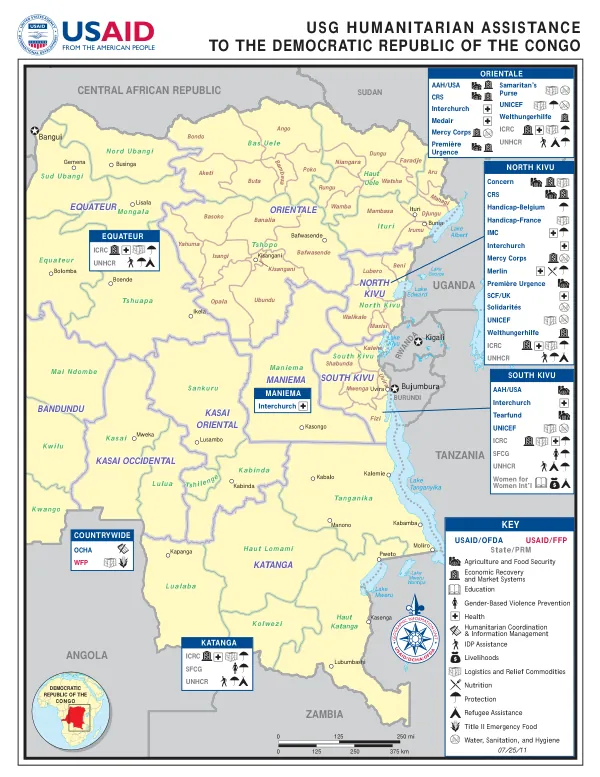
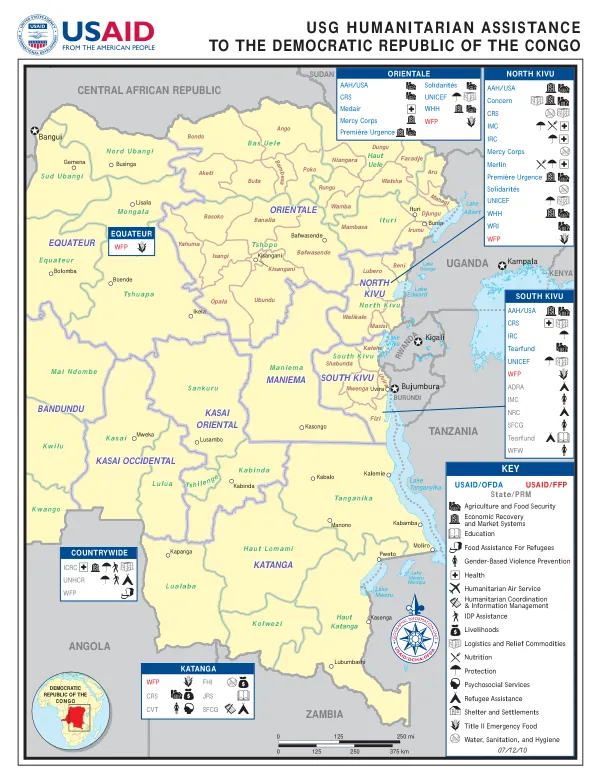
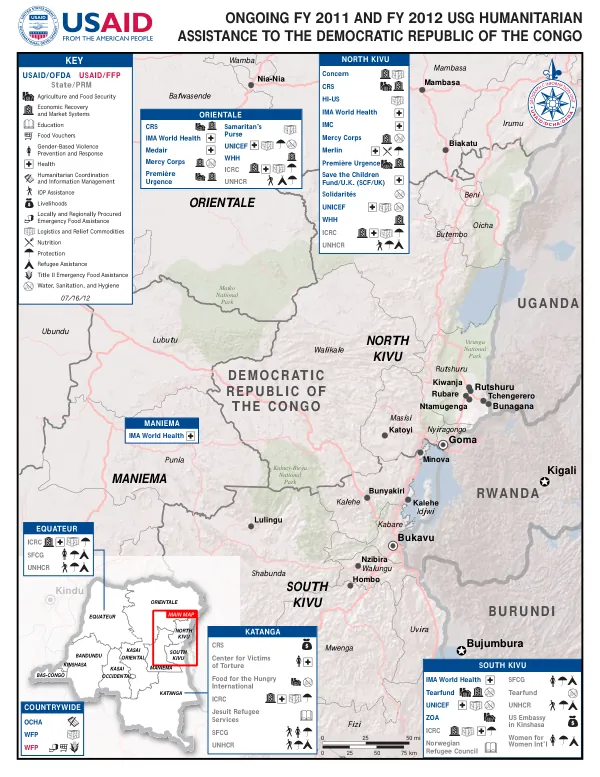
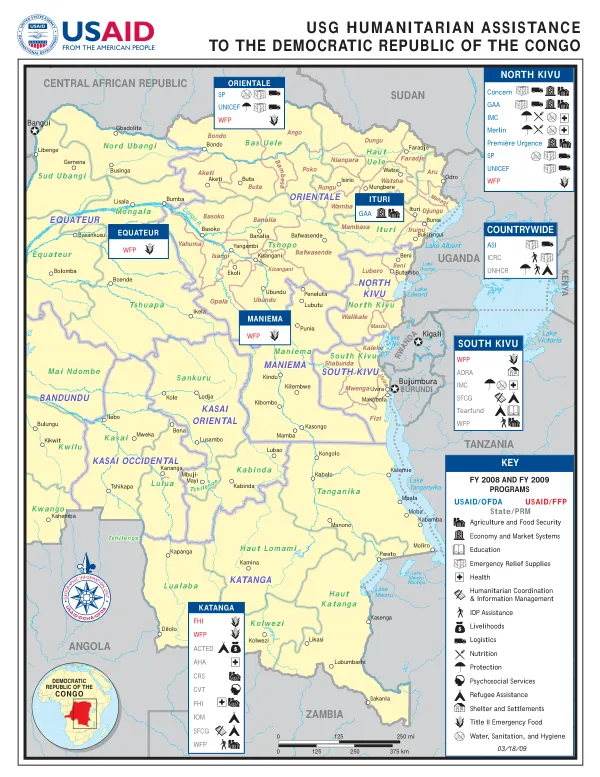
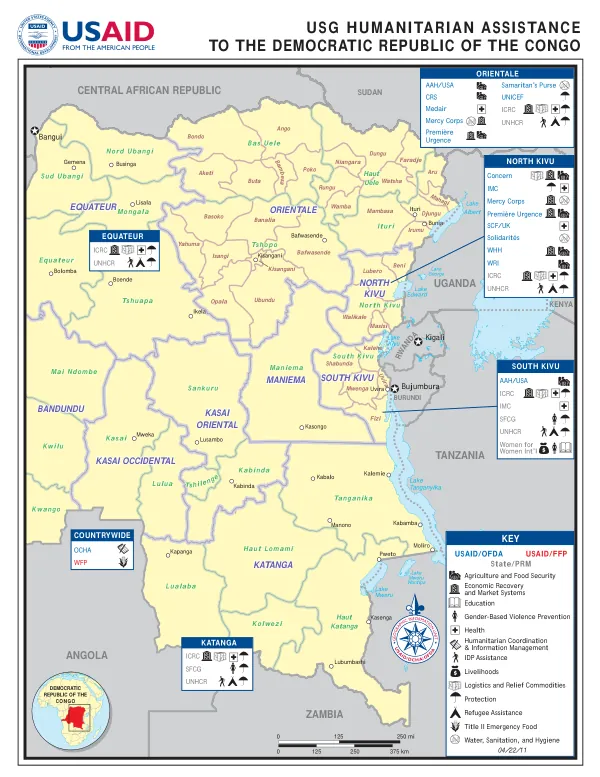
USG HUMANITARIAN ASSISTANCE TO THE DEMOCRATIC REPUBLIC OF THE CONGO MAP
The Democratic Republic of the Congo is a vast country in central Africa, bordering nine countries, including Zambia, Angola, Sudan, Uganda, Tanzania, the Central African Republic, Malawi, Burundi, and Kenya.
2011 · 1 pages
Sign in to readA free account is required to download.
Abstract
The country's geography is characterized by numerous lakes, including Lake Tanganyika, Lake Albert, Lake Mweru, Lake Edward, and Lake Kivu, among others. The terrain is diverse, with mountains, forests, and savannas covering a significant portion of the country. The country's administrative divisions are organized into 26 provinces, including North Kivu, South Kivu, Orientale, Equateur, Bandundu, Maniema, Kasai, and Katanga, among others. The provinces are further divided into territories, which are the primary administrative units at the local level. The capital city, Kinshasa, is located in the province of Kinshasa, which is a separate administrative entity. The country has a long history of humanitarian crises, including conflicts, displacement, and poverty. The humanitarian situation in the Democratic Republic of the Congo is complex, with multiple actors involved in providing assistance. The United States Agency for International Development (USAID) is one of the key humanitarian donors, providing assistance through various programs, including the Office of U.S. Foreign Disaster Assistance (OFDA) and the Food for Peace (FFP) program. The humanitarian assistance provided by USAID/OFDA and USAID/FFP focuses on various sectors, including agriculture and food security, economic recovery and market systems, education, gender-based violence prevention, health, humanitarian coordination and information management, IDP assistance, livelihoods, logistics and relief commodities, protection, refugee assistance, and Title II emergency food, among others. The assistance is provided through various implementing partners, including Concern, IMC, Mercy Corps, Première Urgence, SCF/UK, Solidarités, WHH, WRI, ICRC, and UNHCR, among others. The humanitarian assistance is provided in various provinces, including North Kivu, Orientale, Equateur, Katanga, and South Kivu, among others. The assistance is focused on providing emergency food, shelter, and other essential items to affected populations, as well as supporting the recovery and resilience of communities affected by conflict and displacement. The assistance is also focused on promoting economic recovery and market systems, as well as supporting education, health, and protection programs.