CONCERN INTERNATIONAL
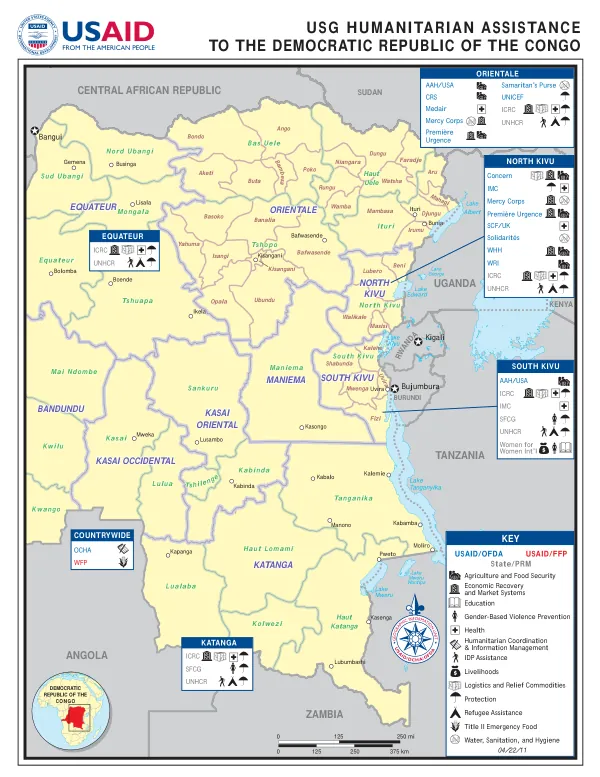
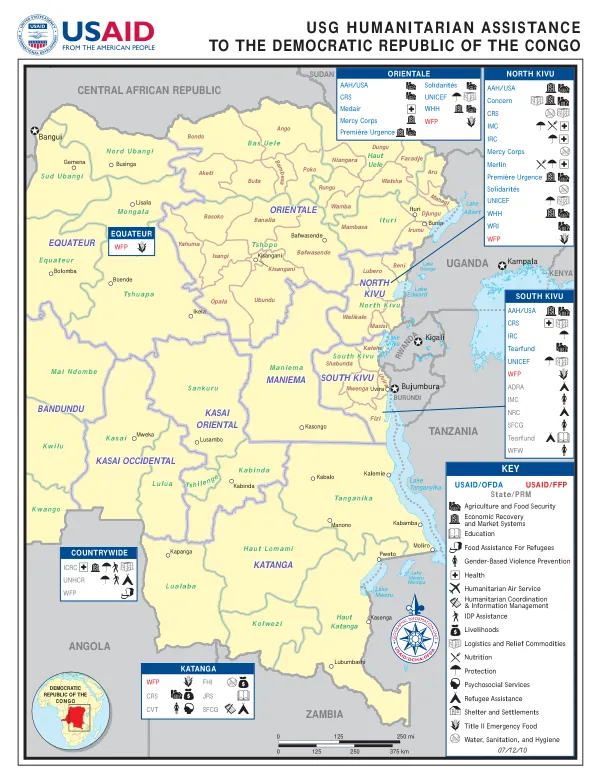
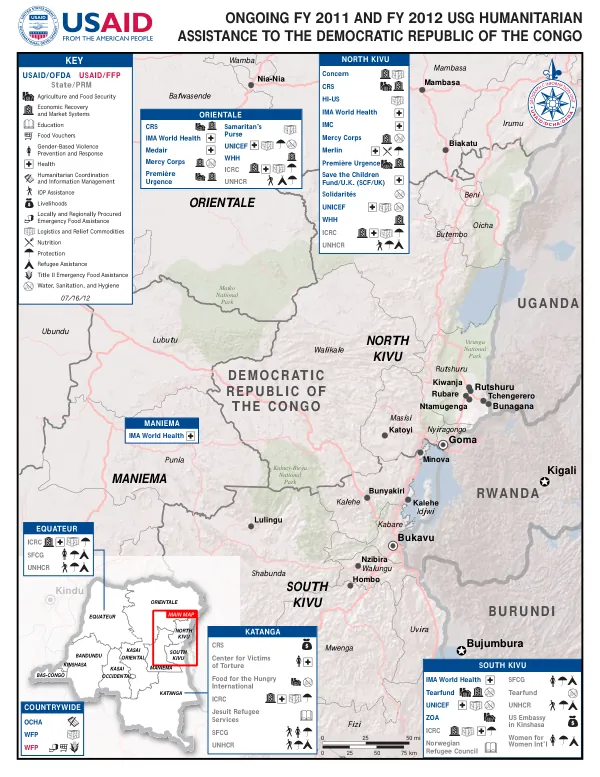
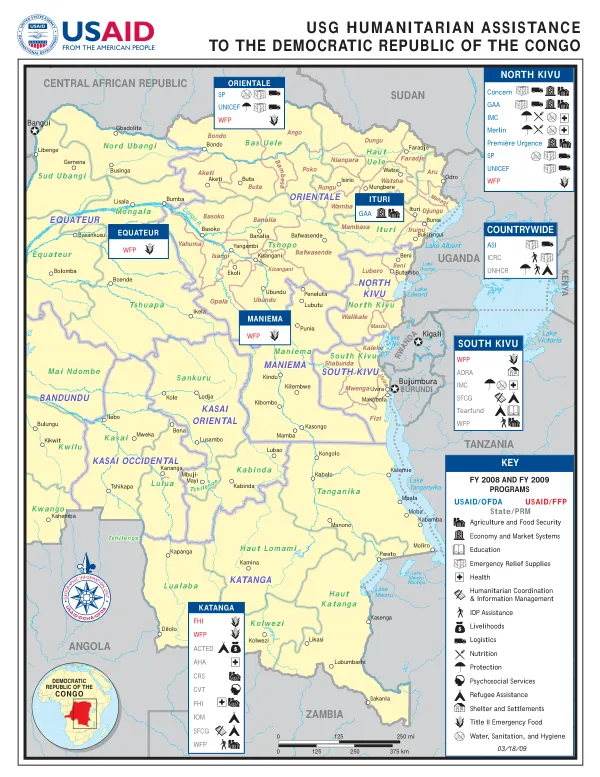
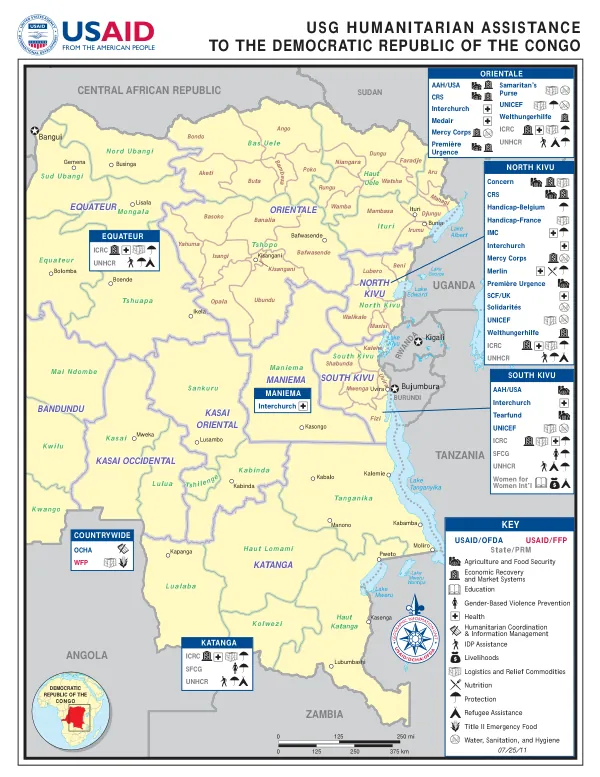
USG HUMANITARIAN ASSISTANCE TO THE DEMOCRATIC REPUBLIC OF THE CONGO MAP
The Democratic Republic of the Congo (DRC) is a vast and geographically diverse country, with numerous lakes and rivers playing a crucial role in its economy and ecosystem.
2011 · 1 pages
Sign in to readA free account is required to download.
Abstract
Lake Tanganyika, the second-deepest lake in the world, is located in the western part of the country and serves as a vital source of fish and transportation for local communities. The lake's shoreline stretches across several provinces, including Kivu, Katanga, and Lualaba. Lake Albert, situated in the northeastern part of the DRC, is another significant waterbody that borders Uganda and the Central African Republic. The lake's basin is home to numerous ethnic groups, including the Bafwasende and the Ituri, who rely heavily on fishing and agriculture for their livelihoods. The region is also rich in natural resources, including gold, diamonds, and timber. The DRC's geography is characterized by a mix of tropical rainforests, savannas, and mountains, with the Albertine Rift running through the country's eastern provinces. The rift valley is home to several lakes, including Lake Edward, Lake Mweru, and Lake George, which are connected by the Semliki River. The region is also prone to natural disasters, including floods, landslides, and volcanic eruptions. The DRC's provinces, including North Kivu, South Kivu, and Katanga, have distinct cultural and economic profiles. North Kivu is home to the city of Goma, a major commercial center and transportation hub. South Kivu is known for its rich mineral deposits, including copper, cobalt, and diamonds. Katanga, on the other hand, is a major producer of copper and cobalt, with the city of Lubumbashi serving as the country's second-largest urban center. The DRC's humanitarian situation is complex, with ongoing conflicts, displacement, and poverty affecting millions of people. The country has received significant humanitarian assistance from international organizations, including the United States Agency for International Development (USAID), the United Nations High Commissioner for Refugees (UNHCR), and the International Committee of the Red Cross (ICRC). The humanitarian response has focused on providing emergency food assistance, shelter, and protection to affected populations, as well as supporting economic recovery and market systems. The DRC's humanitarian situation is closely monitored by international organizations, including the United Nations Office for the Coordination of Humanitarian Affairs (OCHA) and the USG Humanitarian Assistance to the Democratic Republic of the Congo. The humanitarian response is coordinated through a range of mechanisms, including the Inter-Agency Standing Committee (IASC) and the Humanitarian Country Team (HCT). The response is also supported by a range of international and local non-governmental organizations (NGOs), including Concern, CRS, Handicap-Belgium, and Welthungerhilfe. The DRC's humanitarian situation is expected to continue to evolve in the coming months, with ongoing conflicts and displacement affecting millions of people. The humanitarian response will need to adapt to these changing circumstances, with a focus on providing emergency assistance, supporting economic recovery, and promoting long-term development.