ADRA
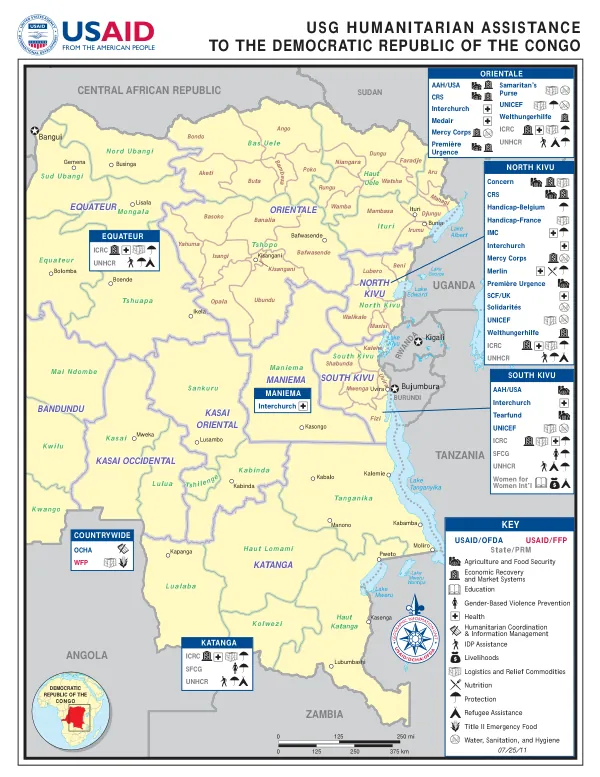
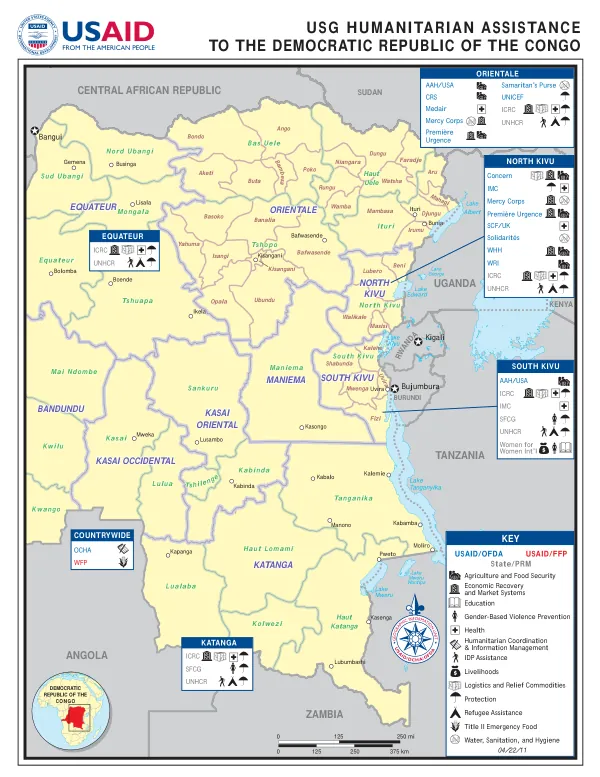
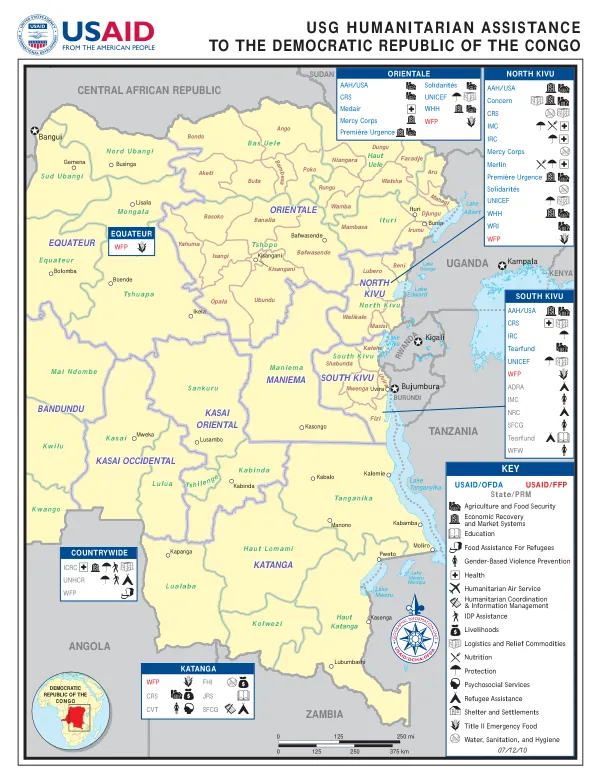
USG HUMANITARIAN ASSISTANCE TO THE DEMOCRATIC REPUBLIC OF THE CONGO MAP
The Democratic Republic of the Congo is a vast country in central Africa, bordering nine countries, including Zambia, Angola, Sudan, Uganda, Tanzania, Central African Republic, Malawi, Burundi, and Kenya.
2010 · 1 pages
Sign in to readA free account is required to download.
Abstract
The country's geography is characterized by numerous lakes, including Lake Tanganyika, Lake Albert, Lake Mweru, Lake Edward, and Lake Kivu, among others. The terrain is diverse, with mountains, forests, and savannas, and the climate varies from tropical to temperate. The country is divided into 26 provinces, including North Kivu, South Kivu, Orientale, Equateur, Bandundu, Maniema, Kasai, and Katanga, among others. The provinces are further divided into districts and territories, with a total of 450 municipalities. The capital city is Kinshasa, located in the province of Kinshasa. The country has a long history of conflict, with various rebel groups and militias operating in the eastern regions. The humanitarian situation in the Democratic Republic of the Congo is complex, with ongoing conflicts, displacement, and food insecurity affecting millions of people. The country has received significant humanitarian assistance from the international community, including the United States Agency for International Development (USAID). USAID has provided humanitarian assistance to the Democratic Republic of the Congo through various programs, including the Office of U.S. Foreign Disaster Assistance (OFDA) and the Food for Peace (FFP) program. The assistance has focused on addressing the humanitarian needs of the affected populations, including food assistance, shelter, and protection. The programs have been implemented in partnership with various non-governmental organizations (NGOs), including Concern, CRS, IMC, IRC, Mercy Corps, and UNICEF, among others. The humanitarian assistance has been provided in various provinces, including North Kivu, South Kivu, Orientale, Equateur, and Katanga, among others. The assistance has been delivered through various channels, including air transport, road transport, and water transport. The programs have been designed to address the specific needs of the affected populations, including food assistance, shelter, and protection. The humanitarian situation in the Democratic Republic of the Congo remains complex, with ongoing conflicts, displacement, and food insecurity affecting millions of people. The country continues to receive significant humanitarian assistance from the international community, including the United States Agency for International Development (USAID). The assistance has been provided through various programs, including the Office of U.S. Foreign Disaster Assistance (OFDA) and the Food for Peace (FFP) program, in partnership with various non-governmental organizations (NGOs).
Related documents