BRAC INTERNATIONAL
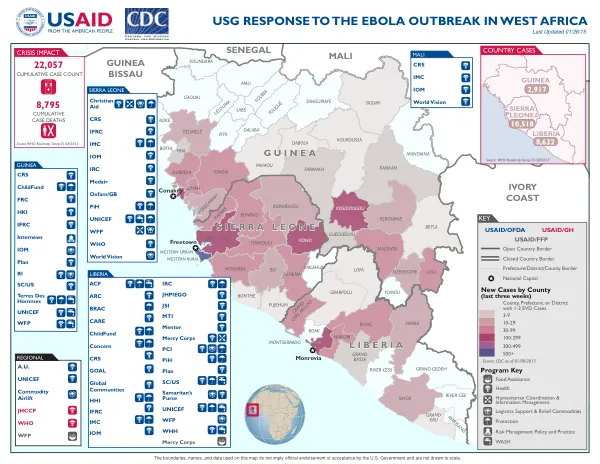
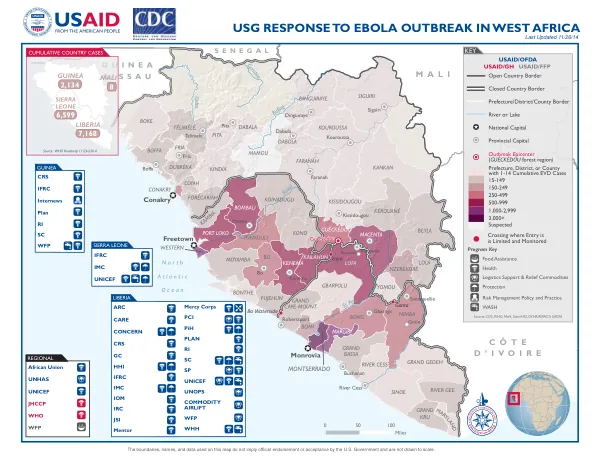
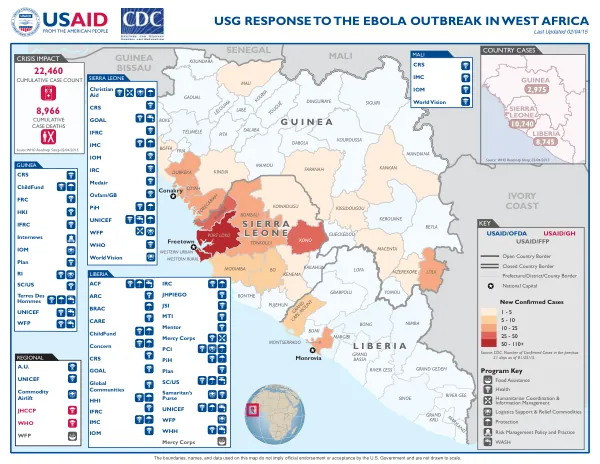
USG RESPONSE TO THE EBOLA OUTBREAK IN WEST AFRICA
The 2014-2016 Ebola outbreak in West Africa was a significant public health crisis that affected several countries in the region.
2015 · 1 pages
Sign in to readA free account is required to download.
Abstract
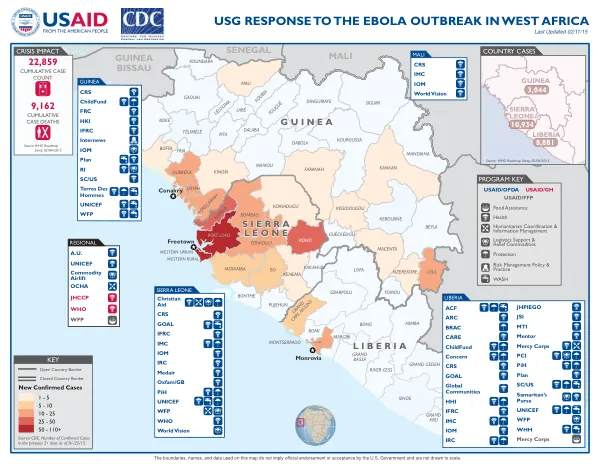
The outbreak began in Guinea in December 2013 and spread to Liberia and Sierra Leone. The World Health Organization (WHO) reported a cumulative case count of 22,934 and 9,157 deaths as of February 2015. The outbreak had a significant impact on the affected countries, with Guinea reporting 3,044 cases, Liberia reporting 8,881 cases, and Sierra Leone reporting 10,934 cases. The number of new cases peaked in September 2014, with 1,082 cases reported in a single week. The outbreak was characterized by a high mortality rate, with an average case fatality ratio of 40%. The US Government (USG) responded to the outbreak through a comprehensive humanitarian response plan. The plan included support for health, logistics, and information management, as well as risk management and policy. The response was coordinated through the US Agency for International Development (USAID) and involved multiple implementing partners, including non-governmental organizations (NGOs) and international organizations. The response efforts focused on several key areas, including health, logistics, and information management. The USG provided support for the establishment of Ebola treatment centers, the distribution of personal protective equipment (PPE), and the training of healthcare workers. The response also included support for the coordination of humanitarian activities, including the provision of food assistance, shelter, and other essential services. The response efforts were led by USAID's Office of Foreign Disaster Assistance (OFDA) and involved multiple implementing partners, including the International Rescue Committee (IRC), the World Food Programme (WFP), and the United Nations Children's Fund (UNICEF. The response also included support for the development of a comprehensive plan to address the outbreak, including the establishment of a national emergency operations center and the deployment of international responders. The response efforts were supported by a range of partners, including the African Union (AU), the European Union (EU), and other international organizations. The response also included support for the development of a comprehensive plan to address the outbreak, including the establishment of a national emergency operations center and the deployment of international responders.
Related documents