DELOITTE CONSULTING, LLP
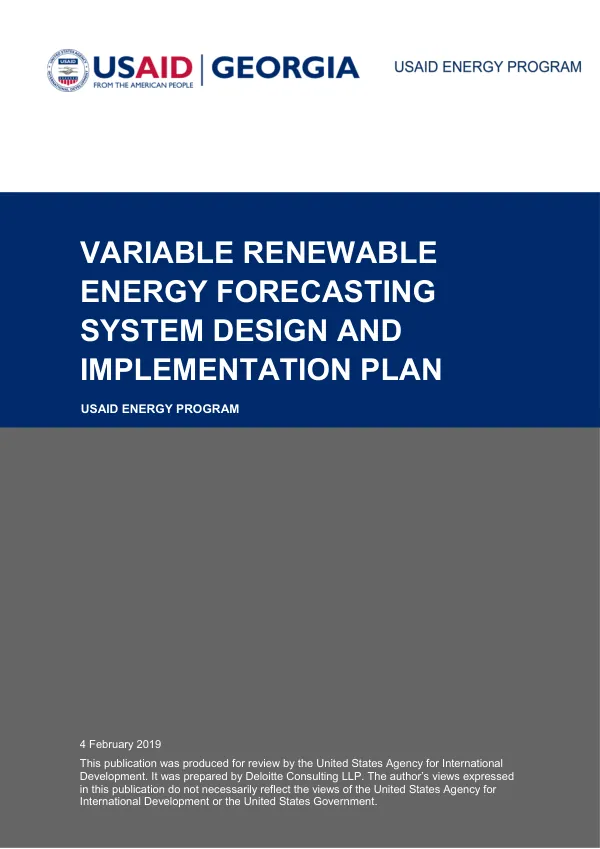
VARIABLE RENEWABLE ENERGY FORECASTING SYSTEM DESIGN AND IMPLEMENTATION PLAN
The Variable Renewable Energy Forecasting System Design and Implementation Plan was developed for the USAID Energy Program in Georgia.
2019 · 67 pages
Sign in to readA free account is required to download.
Abstract
The plan aims to improve the accuracy of variable renewable energy forecasting, which is essential for the reliable operation of the energy system. The project began in 2018 and was conducted by Deloitte Consulting LLP. The plan focuses on the conceptual design and implementation of a forecasting system that can accurately predict the output of variable renewable energy sources, such as wind and solar power. The system will provide real-time data on energy production, allowing for better management of the energy grid and reducing the risk of power outages. The conceptual design of the forecasting system involves the selection of a suitable technology, structure, and hosting agency. The system will use a combination of numerical weather prediction (NWP) models and machine learning algorithms to forecast energy production. The structure of the system will include a data management platform, a forecasting engine, and a user interface. The hosting agency for the system will be the Georgian State Electrosystem (GSE), which will be responsible for maintaining and operating the system. The system will provide forecasts for various time horizons, including short-term (up to 24 hours), medium-term (up to 1 week), and long-term (up to 1 month). The implementation plan for the forecasting system includes the selection of a vendor, the development of a contract, and the establishment of a data exchange process. The vendor will be responsible for developing and implementing the forecasting system, while the GSE will be responsible for maintaining and operating the system. The plan also includes a detailed analysis of the options for conceptual design and implementation, including a review of the technical requirements and a comparison of different technologies and vendors. The analysis concludes that the proposed system design and implementation plan is the most suitable option for achieving the project's objectives. The project's methodology involves a combination of desk research, stakeholder engagement, and technical analysis. The research involved a review of existing literature on variable renewable energy forecasting, as well as a review of the technical requirements for the forecasting system. The stakeholder engagement involved consultations with key stakeholders, including the GSE, the Georgian Energy Development Fund, and the Ministry of Energy of Georgia. The project's main findings include the identification of the key technical requirements for the forecasting system, including the need for high-resolution NWP models and machine learning algorithms. The project also identified the need for a robust data management platform and a user-friendly interface. The project's recommendations include the selection of a suitable technology and vendor, the development of a detailed implementation plan, and the establishment of a data exchange process. The project also recommends the establishment of a monitoring and evaluation framework to ensure that the system is operating effectively and efficiently. Overall, the Variable Renewable Energy Forecasting System Design and Implementation Plan is a comprehensive document that outlines the technical requirements and implementation plan for a forecasting system that can accurately predict the output of variable renewable energy sources. The plan is designed to improve the reliability and efficiency of the energy system in Georgia, while also reducing the risk of power outages.