ADRA
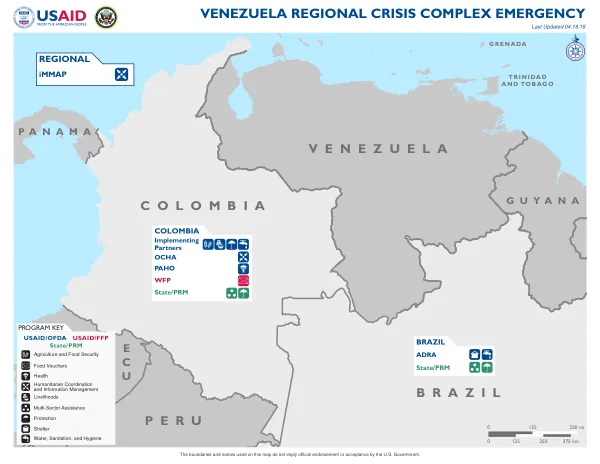
VENEZUELA REGIONAL CRISIS COMPLEX EMERGENCY
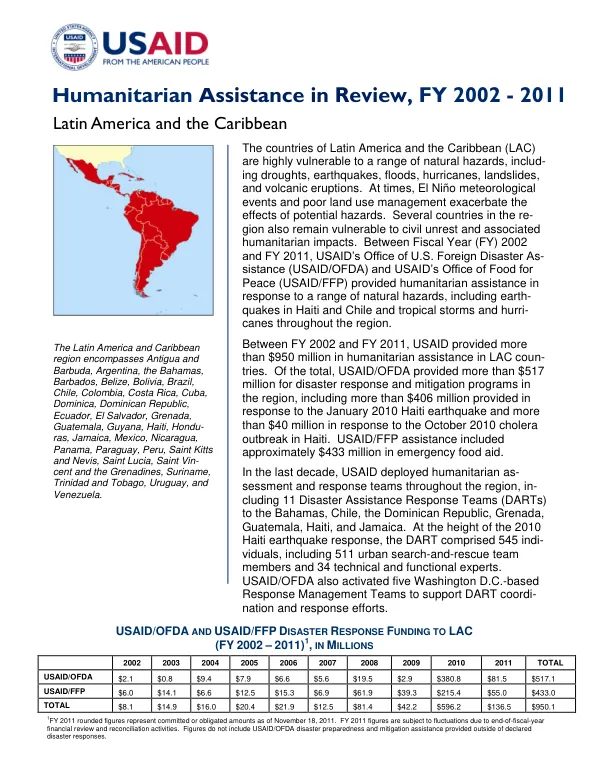
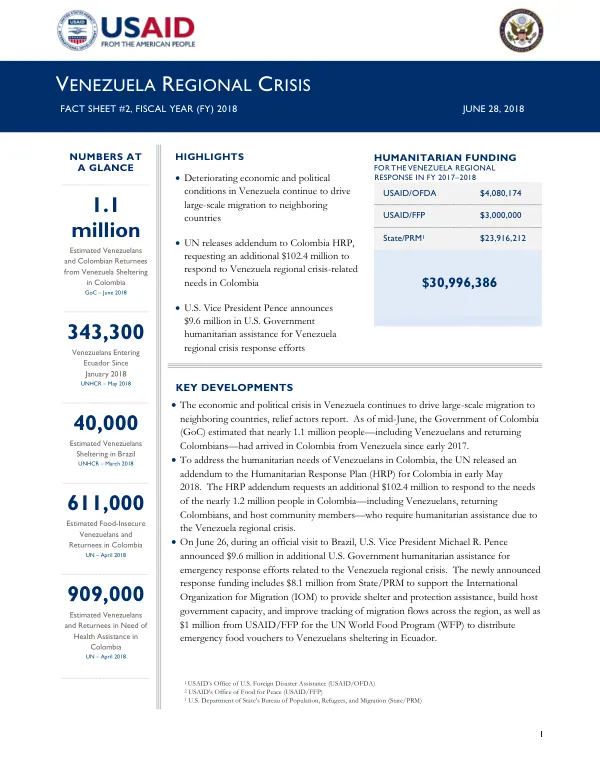
Brazil Colombia Venezuela Peru Guyana Panama Trinidad and Tobago Antigua and Barbuda Grenada Ecuador The Caribbean region is experiencing a complex emergency due to the Venezuela regional crisis.
2018 · 1 pages
Sign in to readA free account is required to download.
Abstract
The crisis has resulted in a significant influx of migrants and refugees into neighboring countries, including Colombia, Peru, and Peru's border with Ecuador. The number of migrants and refugees has increased steadily since 2015, with a peak of 5,000 individuals per day in 2018. The majority of migrants and refugees are from Venezuela, with a significant number from Brazil, Colombia, and other countries in the region. The migrants and refugees are fleeing poverty, violence, and violence-related trauma, with many reporting food insecurity and lack of access to basic services. The influx of migrants and refugees has put a strain on the resources of host countries, including healthcare, education, and education infrastructure. The United States Agency for International Development (USAID) has provided assistance to the affected countries, including Colombia, Peru, and Peru's border with Ecuador. The assistance includes multi-sector assistance, water, sanitation, and hygiene, protection, livelihoods, shelter, and shelter vouchers. The assistance is provided through a range of implementing partners, including the Office for the Coordination of Humanitarian Affairs (OCHA), the Pan American Health Organization (PAHO), and the World Food Programme (WFP). The regional response to the crisis is coordinated by the United Nations Office for the Coordination of Humanitarian Affairs (OCHA) and the United States Agency for International Development (USAID]. The response includes humanitarian coordination, information sharing, and information dissemination, as well as support for the affected countries' response efforts. The response is ongoing, with a focus on addressing the immediate needs of migrants and refugees, as well as supporting the long-term recovery and development of the affected countries. The crisis has resulted in significant economic and social impacts on the affected countries, including a decline in economic growth, a decline in economic stability, and a decline in social stability. The crisis has also resulted in a significant increase in poverty and food insecurity, as well as a decline in access to basic services, including healthcare and education. The response to the crisis is ongoing, with a focus on addressing the immediate needs of migrants and refugees, as well as supporting the long-term recovery and development of the affected countries.