USAID DEC
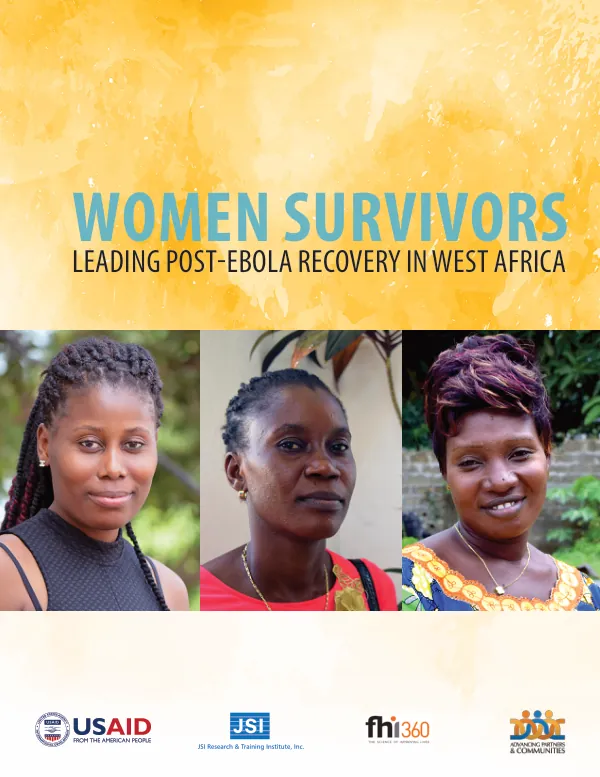
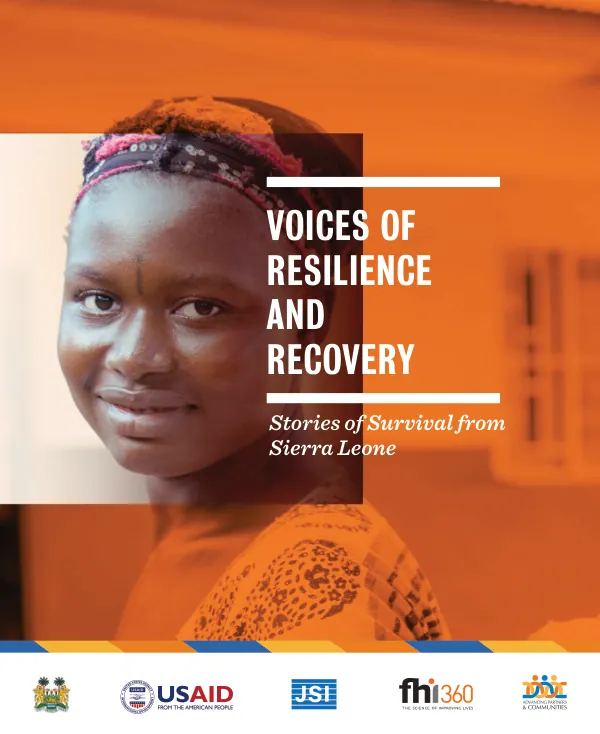
Voices of Resilience and Recovery: Stories of Survival from Sierra Leone (December 2018)
Sign inFHI 360
Voices of Resilience and Recovery: Stories of Survival from Sierra Leone (December 2018)
The Ebola virus disease outbreak in West Africa, particularly in Sierra Leone, had a devastating impact on the country's health system and economy.
2018 · 32 pages
Sign in to readA free account is required to download.
Abstract
The outbreak, which occurred from 2014 to 2016, resulted in over 4,000 deaths and left a large group of Ebola survivors. In response to the crisis, the Government of Sierra Leone established the Comprehensive Program for Ebola Survivors (CPES) in November 2015, which aimed to provide support to Ebola survivors and help them reintegrate into their communities. The CPES program was implemented in partnership with the United States Agency for International Development (USAID) through the Advancing Partners & Communities (Advancing Partners) project. The project was implemented by JSI Research & Training Institute and partners, and its primary goal was to help Ebola survivors access specialized services, reduce stigma, and restore confidence in the health care system. The program took a multi-pronged approach to achieve its objectives, including improving human resources capacity, reducing stigma for survivors, and strengthening the health system in ways that would ensure self-reliance and sustainability long after the project ends. Dr. Kwame Oneill, the manager of the CPES program, played a crucial role in implementing the program's objectives. He emphasized the importance of community engagement in controlling the Ebola pandemic, stating that "we only got on top of the pandemic through human will—when we engaged communities, that's when people started to change their behavior." The program also provided psychosocial support to survivors, reduced stigma, and reintegrated survivors into their communities. Advancing Partners supported the CPES program through the Program Implementation Unit, which strengthened the health system countrywide through capacity building, providing mentorship to healthcare workers, and integrating referral systems into the District Health Management Team (DHMT). The program also supported the holistic approach of strengthening mental health services at all levels. The Sierra Leone Association of Ebola Survivors (SLAES) was another key partner in the CPES program. Advancing Partners worked with SLAES to support capacity development and implementation of a range of programs, including adult literacy, survivor-to-survivor support with an income-generating component, and building institutional capacity of SLAES executive leadership. This has led to a more self-reliant SLAES, able to advocate for the rights of EVD survivors. The CPES program has made significant progress in providing support to Ebola survivors and strengthening the health system in Sierra Leone. The program's multi-pronged approach has helped to reduce stigma, improve human resources capacity, and strengthen the health system in ways that will ensure self-reliance and sustainability long after the project ends. The success of the CPES program is a testament to the importance of community engagement and partnership in addressing public health crises. Advancing Partners has played a crucial role in supporting the CPES program, and its efforts have helped to improve the health and well-being of Ebola survivors in Sierra Leone. The program's success has also highlighted the importance of investing in community-based programming and strengthening the health system in low-resource settings.