INTERNATIONAL FOOD AND POLICY RESEARCH INSTITUTE
WASH 1,000 Photo-Aid (May, 2017)
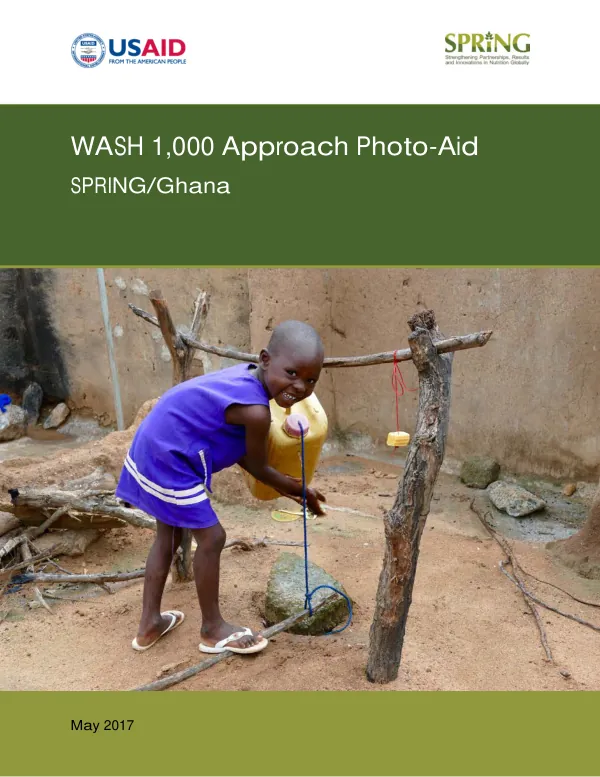
The WASH 1,000 Approach Photo-Aid is a tool developed by the Strengthening Partnerships, Results, and Innovations in Nutrition Globally (SPRING) project in Ghana.
2017 · 16 pages
Sign in to readA free account is required to download.
Abstract
The project aims to strengthen global and country efforts to scale up high-impact nutrition practices and policies, and improve maternal and child nutrition outcomes. The WASH 1,000 Approach focuses on promoting water, sanitation, and hygiene (WASH) behaviors among 1,000-day households, which include pregnant and lactating women and children under 2 years old. Poor WASH practices are a significant determinant of poor nutritional status in Ghana, particularly in Northern Ghana. The consequences of poor WASH include diarrhea, environmental enteric dysfunction (EED), and worm infestation, which can lead to poor nutritional outcomes. The WASH 1,000 Approach aims to reduce exposure to contaminants by promoting four key behaviors: washing hands at critical times, safely disposing of human and animal feces, creating clean spaces for children, and boiling household drinking water just before drinking. The WASH 1,000 Photo-Aid is designed to stimulate behavior change through participatory health education and promotion activities. The photo-aid depicts a series of behaviors centered on WASH and is intended to be used for interpersonal communication among community members. The facilitator should ask participants about their current practices, show each picture, and use the text to describe the picture in detail. Questions can be asked about good and bad WASH behaviors, what participants can do to improve their WASH behavior, and the benefits of adopting specific WASH behaviors. The four promoted behaviors for 1,000-day households include washing hands at critical times, safely disposing of human and animal feces, creating clean spaces for children, and boiling household drinking water just before drinking. The benefits of adopting these behaviors include promoting the healthy growth of children, reducing incidents of infections and diseases, and saving household income due to fewer hospitalizations. The WASH 1,000 Photo-Aid can be used for individual counseling, household education, or community-wide education. It is intended to be used for interpersonal communication that will encourage discussions among participants and help them understand the key behaviors. The facilitator should use the photo-aid to stimulate behavior change and promote the adoption of WASH behaviors among 1,000-day households. The WASH 1,000 Approach Photo-Aid is a valuable tool for promoting WASH behaviors among 1,000-day households in Ghana. By promoting these behaviors, the WASH 1,000 Approach aims to reduce exposure to contaminants and improve nutritional outcomes among pregnant and lactating women and children under 2 years old. The photo-aid can be used to stimulate behavior change and promote the adoption of WASH behaviors among community members. The WASH 1,000 Photo-Aid is a key component of the WASH 1,000 Approach, which aims to promote WASH behaviors among 1,000-day households in Ghana. The photo-aid is designed to stimulate behavior change through participatory health education and promotion activities. By promoting WASH behaviors, the WASH 1,000 Approach aims to reduce exposure to contaminants and improve nutritional outcomes among pregnant and lactating women and children under 2 years old. The WASH 1,000 Photo-Aid can be used in a variety of settings, including individual counseling, household education, and community-wide education. The facilitator should use the photo-aid to stimulate behavior change and promote the adoption of WASH behaviors among community members. By promoting WASH behaviors, the WASH 1,000 Approach aims to improve nutritional outcomes among pregnant and lactating women and children under 2 years old in Ghana.