GHANA HEALTH SERVICE
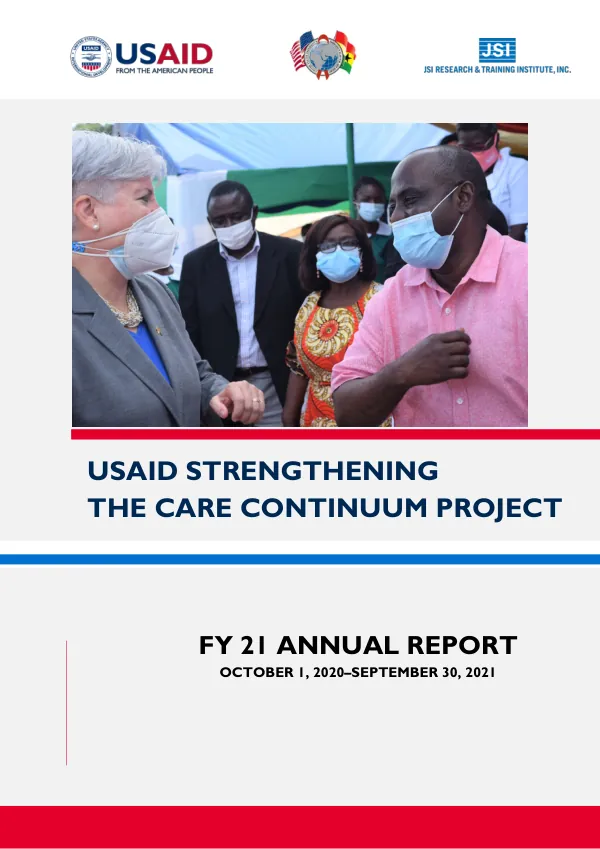
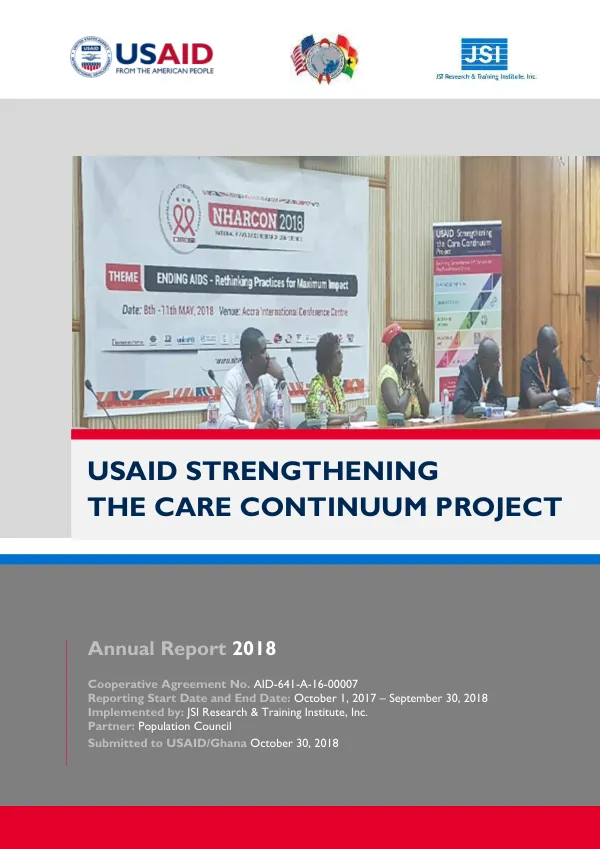
USAID Strengthening the Care Continuum Project PY3 (Oct 2017-Sept 2018) Report
The USAID Strengthening the Care Continuum Project in Ghana aimed to strengthen the capacity of key partners to coordinate, plan, and monitor key population interventions.
2018 · 44 pages
Sign in to readA free account is required to download.
Abstract
The project's third year, spanning from October 2017 to September 2018, focused on implementing strategies for HIV testing, linkage to treatment, adherence, and viral suppression. Key population groups targeted included female sex workers, men who have sex with men, and transgender individuals. Strengthened technical and managerial capacity was achieved through the training of government partners, civil society organizations, and national organizations. This capacity building enabled them to lead, coordinate, plan, monitor, and evaluate HIV prevention, care, and support activities in Ghana. Public-private partnerships were established with relevant actors across the continuum of care, ensuring a collaborative approach to addressing HIV/AIDS services. Improved access to and retention in quality HIV care services for key populations was a significant achievement. Comprehensive HIV services were made available across the continuum of care, including testing, treatment, and adherence support. The Health Living Platform, a technology application, was used to improve demand for and management of HIV services. This platform enabled individuals to access HIV testing and treatment services more efficiently. Evidence was produced, applied, and disseminated to detail quality approaches for commitment, support, and programming for key populations. This included the development of standard operating procedures and behavior change communication materials. The project also increased demand and improved the enabling environment for comprehensive, sustainable, and quality HIV and AIDS services for key populations across the continuum of care. The project's cross-cutting issues included addressing sexual- and gender-based violence, which was a significant challenge in the target communities. Monitoring and evaluation were critical components of the project, with regular assessments conducted to track progress and identify areas for improvement. Challenges faced during the project included equipment costs and limited access to certain interventions, such as mechanical land preparation. The project's administrative and financial progress was satisfactory, with all sub-grantees meeting their targets. The project's priorities for the next phase included continuing to strengthen the capacity of key partners, improving access to HIV care services, and increasing demand for comprehensive HIV and AIDS services. The project's achievements were recognized through various awards and recognition, including a visit from Queen Mathilde of Belgium, an advocate for the United Nations Sustainable Development Goals.