GHANA HEALTH SERVICE
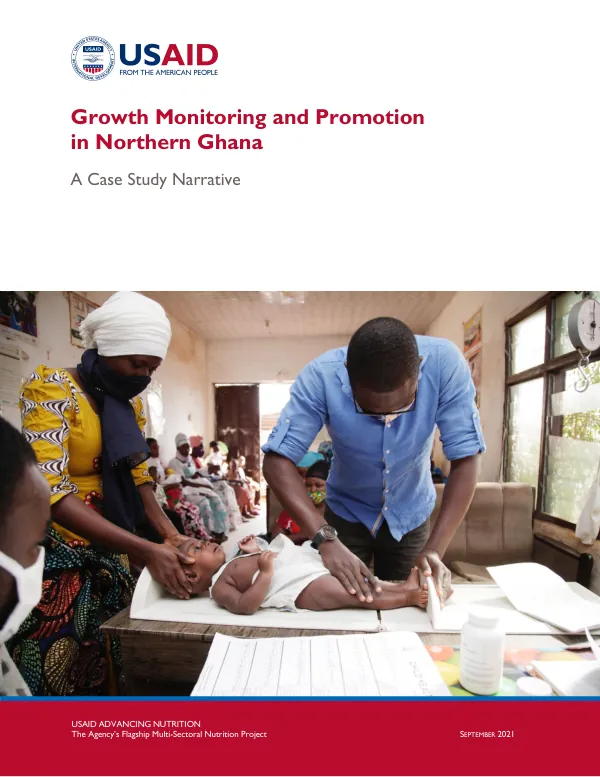
Growth Monitoring and Promotion in Northern Ghana: A Case Study Narrative
Growth monitoring and promotion (GMP) is a prevention activity that uses growth monitoring to facilitate communication and interaction with caregivers and generate adequate action to promote child growth.
2021 · 25 pages
Sign in to readA free account is required to download.
Abstract
This approach involves increased caregiver awareness about child growth, improved caring practices, and increased demand for other services as needed. The GMP framework identifies the GMP process, which begins with growth monitoring: monthly contact and an assessment of adequate growth. Monitoring occurs regularly and focuses on the growth trend, not on nutritional status. In Ghana, impressive progress has been made in reducing child malnutrition over the last 20 years, putting the country on course to meet related Sustainable Development Goals. However, significant regional disparities mean improving child nutrition remains a policy and program priority in northern Ghana. The Ghana Health Service (GHS) and stakeholders have been working to foster healthy child growth and development in the region. The GMP process in northern Ghana involves defining and addressing promotion, tracking and using data, linking with other services, and addressing challenges. Defining promotion involves tailoring advice to the age of the child and community context, enabling caregivers to receive specific, actionable advice through counseling aligned with the child's growth trend and referral, if needed. Tracking and using data is crucial for identifying growth faltering early and making informed decisions about interventions. Implementation of GMP in northern Ghana has been challenging, with issues related to coverage and quality of GMP services. However, good practices and lessons learned have been identified, including the importance of community-based health planning and services (CHPS) and the role of community health volunteers (CHVs) in promoting GMP. Opportunities for GMP to improve children's healthy growth and development in northern Ghana include strengthening the enabling environment, building local capacity, and supporting behavior change. The GMP framework has been adapted from Mangasaryan et al. (2011), which identifies the GMP process as a prevention activity that uses growth monitoring to facilitate communication and interaction with caregivers and generate adequate action to promote child growth. The framework emphasizes the importance of focusing on the growth trend, not on nutritional status, and linking the information gathered over time from monitoring growth trends with an action, where promotion begins. In northern Ghana, the GHS and stakeholders have been working to implement GMP, with a focus on defining and addressing promotion, tracking and using data, linking with other services, and addressing challenges. The implementation of GMP has been challenging, with issues related to coverage and quality of GMP services. However, good practices and lessons learned have been identified, including the importance of community-based health planning and services (CHPS) and the role of community health volunteers (CHVs) in promoting GMP. The GMP process in northern Ghana has been linked with other services, including child welfare clinics (CWCs) and community health nurses (CHNs). The GMP framework has been adapted to the local context, with a focus on promoting healthy child growth and development in the region. The implementation of GMP has been supported by USAID Advancing Nutrition, which has provided technical support, guidance, and advice throughout the study. Overall, the GMP process in northern Ghana has been challenging, but good practices and lessons learned have been identified. The implementation of GMP has been linked with other services, and the GMP framework has been adapted to the local context. Opportunities for GMP to improve children's healthy growth and development in northern Ghana include strengthening the enabling environment, building local capacity, and supporting behavior change.
Related documents