UNICEF
WASH Factors Associated with Child Stunting
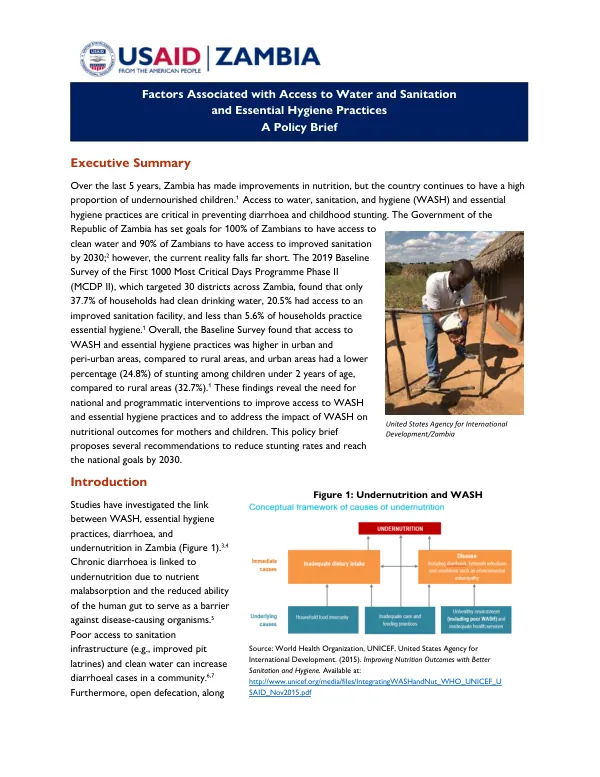
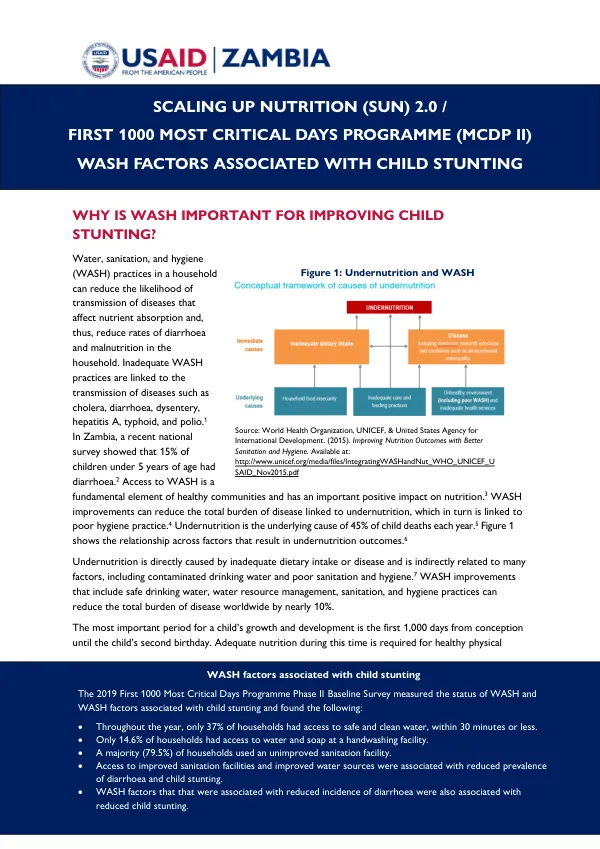
The First 1000 Most Critical Days Programme Phase II Baseline Survey aimed to measure the status of water, sanitation, and hygiene (WASH) factors associated with child stunting in Zambia.
2021 · 11 pages
Sign in to readA free account is required to download.
Abstract
The survey found that only 37% of households had access to safe and clean water within 30 minutes or less throughout the year. Furthermore, only 14.6% of households had access to water and soap at a handwashing facility. The majority of households (79.5%) used an unimproved sanitation facility, with the most common type being a pit latrine without a slab. Approximately 14.9% of households practiced open defecation, with the most common method being the use of a nearby bush. In contrast, households in urban areas showed a much higher use of improved sanitation facilities, with 73.6% of households using improved sanitation methods compared to 26.1% in rural areas. Proper handwashing practices are crucial for improved health outcomes, particularly for infants and children. However, the Baseline Survey found that only 37.7% of households had a handwashing facility, and among those, few had both water and soap available. Access to handwashing facilities was generally low among households in the SUN districts, with 51% of urban households having a handwashing facility compared to 32% of rural households. The survey also found that households in urban areas that used unimproved water sources were more likely to treat their water using recommended water treatment technologies, such as boiling or using bleach. However, only a small percentage of households (9.5%) reported treating their water using these methods. The First 1000 Most Critical Days Programme Phase II Baseline Survey highlights the importance of addressing WASH factors in reducing the prevalence of diarrhoea and child stunting. The survey's findings suggest that improving access to safe water, sanitation facilities, and handwashing facilities is crucial for promoting healthy communities and reducing the burden of disease linked to undernutrition. The survey's results also indicate that addressing malnutrition should take a holistic approach, targeting household conditions affecting a child's nutritional status and access to WASH interventions. The programme's focus on improving WASH factors is essential for promoting healthy growth and development in children, particularly during the first 1,000 days from conception until the child's second birthday. The survey's methodology involved a baseline, cross-sectional survey of 7,500 households, with a final study subsample of 7,486 households with children under 2 years of age from 10 enumeration areas. The survey also included key informant interviews with 51 district and provincial programme officers in SUN priority districts. The survey's findings have significant implications for policymakers and programme implementers seeking to address WASH factors and reduce the prevalence of diarrhoea and child stunting in Zambia. The programme's focus on improving WASH factors is essential for promoting healthy communities and reducing the burden of disease linked to undernutrition.
Related documents