USAID DEC
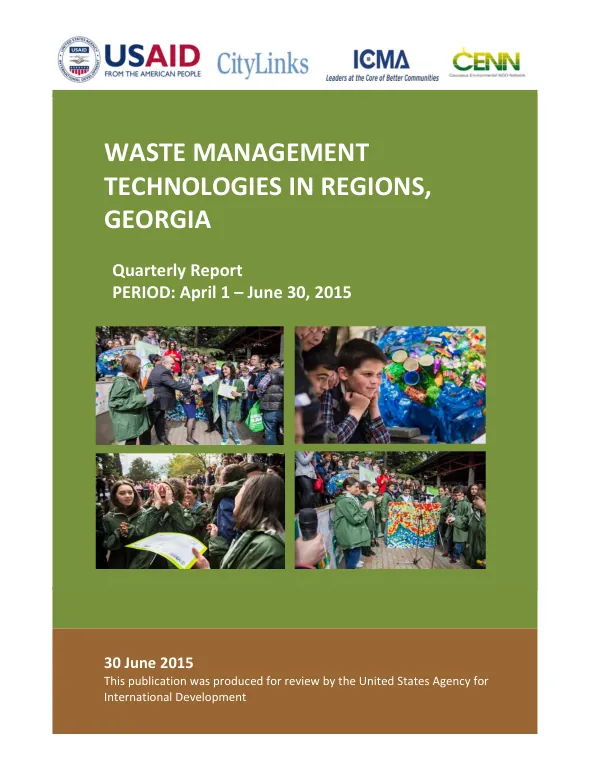
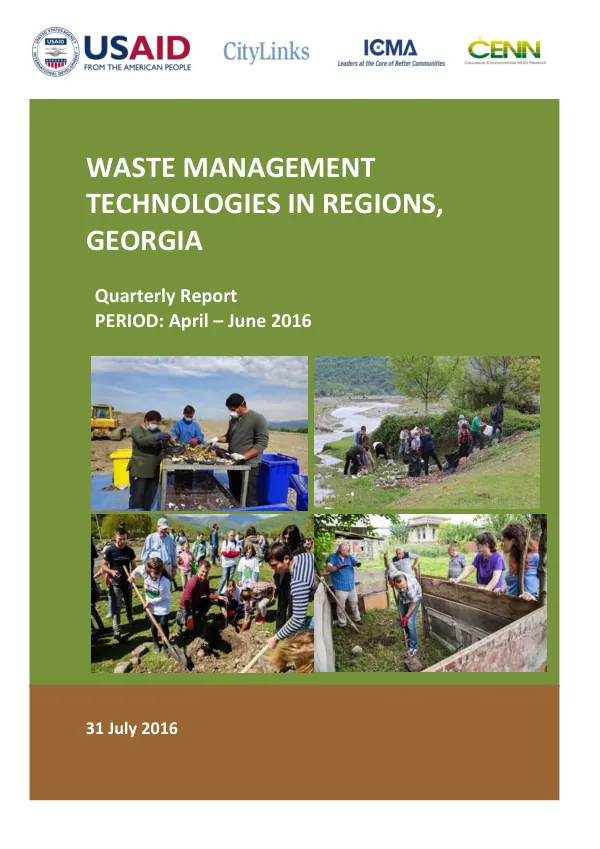
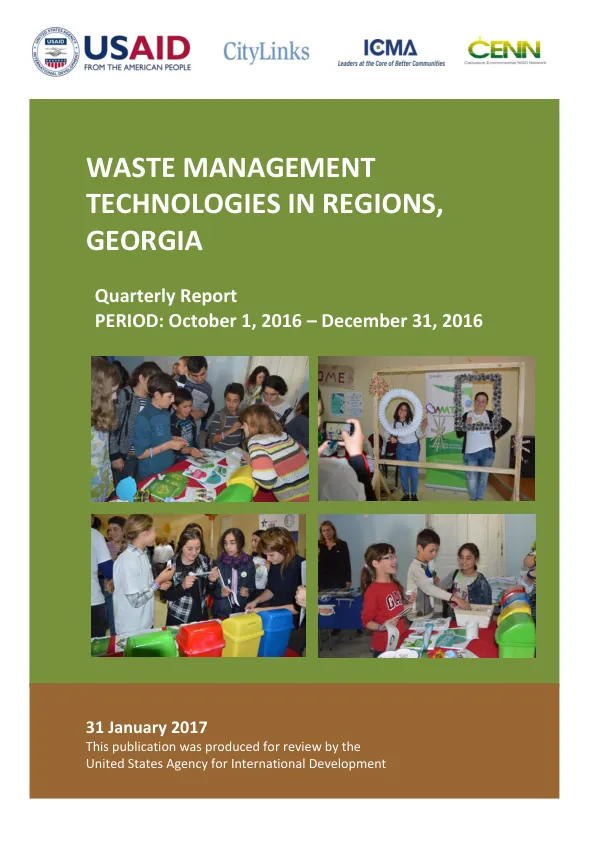
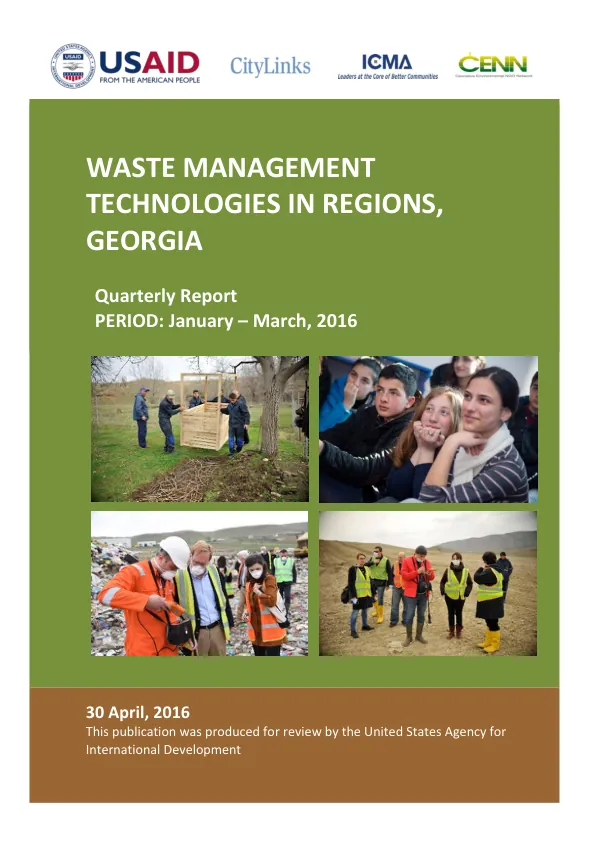
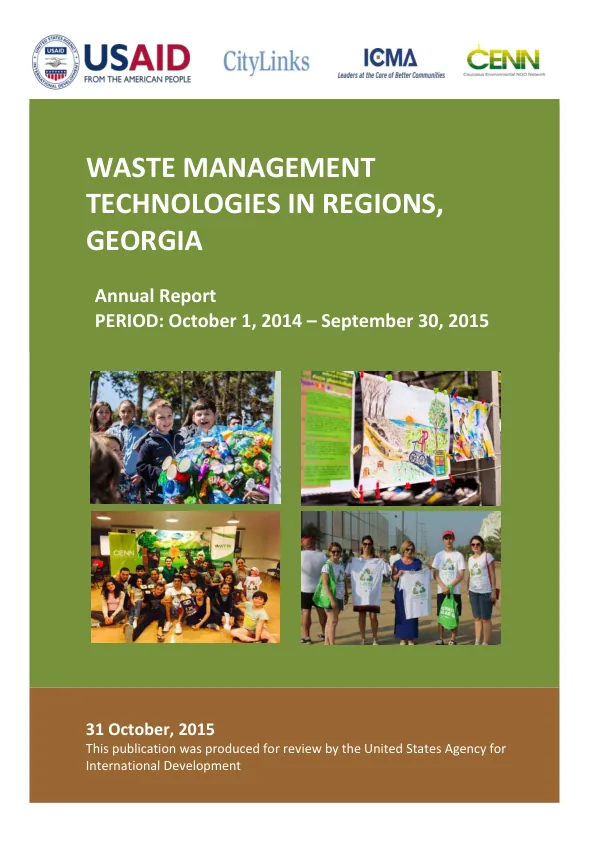
Waste Management Technologies in Regions, Georgia Annual Report October 1, 2014 – September 30, 2015
Sign inINTERNATIONAL CITY AND COUNTY MANAGEMENT ASSOCIATION
Waste Management Technologies in Regions, Georgia Annual Report October 1, 2014 – September 30, 2015
The USAID Waste Management Technologies in Regions Program (WMTR) was implemented in partnership with the International City/County Management Association (ICMA) and the Caucasus Environmental NGO Network (CENN) in two regions of Georgia - Kakheti and Adjara AR.
2015 · 109 pages
Sign in to readA free account is required to download.
Abstract
The program aimed to provide professional waste management technical assistance to support waste management system development and recycling in the target regions. WMTR activities combined various components into a comprehensive structure that focused on technical assistance and capacity/institution building of integrated waste management systems and recycling/composting. The program had four main components: Component 1, Waste Collection and Recycling Systems; Component 2, Private Sector-Led Recycling; Component 3, Waste Management Strategy and Tariff Policy; and Component 4, Communication and Outreach. WMTR also implemented cross-cutting activities that supported the four components above and promoted local governance. These activities included empowerment of youth and women, ethnic minorities, and people with disabilities, as well as gender mainstreaming. During the reporting period, WMTR had to contend with several assumptions, problems, and barriers. These included frequent turnover of governmental representatives, miscommunication and lack of coordination between donor agencies working in the waste management sector, lack of communication between state institutions responsible for waste management in Georgia, and lack of financial resources in municipal budgets allocated for waste management issues. The program prepared the Municipal Waste Management Action Plan Guidelines, but development of concrete action plans for municipalities was delayed until the waste management strategy was finalized by the Ministry of Environment and Natural Resource Protection (MoENRP). WMTR also faced challenges related to lack of technique and equipment in municipalities required for waste collection, lack of accurate data and information related to waste management, and limited number of recycling companies with the capacity and willingness to be potential grant recipients. WMTR implemented several activities to address these challenges, including conducting a waste composition study in the summer season, developing a municipal waste management plan development guideline, and establishing a waste management association. The program also worked closely with its local partner, CENN, to build the capacity of its staff with the ultimate goal of WMTR handover in 2017. The program's achievements during the reporting period included the development of a municipal waste management plan development guideline, the establishment of a waste management association, and the conduct of a waste composition study. WMTR also implemented several cross-cutting activities, including empowerment of youth and women, ethnic minorities, and people with disabilities, and gender mainstreaming. The program's results during the reporting period included a 27% increase in household income among program participants compared to the control group, and improvements in food security indicators across all target communities. The program also made progress in developing the waste management sector, including waste collection, recycling, and public awareness. WMTR's activities were supported by several annexes, including the Municipal Waste Management Plan Development Guideline, the By-law on the Construction, Operation, Closure, and After-Care of Landfills, and the Report on EU Approaches on Waste Management. The program also conducted several studies, including a waste composition study and a report on municipal waste management capacity analysis in Adjara AR and Kakheti Region in Georgia. Overall, WMTR made significant progress in implementing its activities and achieving its objectives during the reporting period. The program's achievements and results demonstrate its commitment to improving waste management in the target regions and promoting sustainable development in Georgia.