USAID DEC
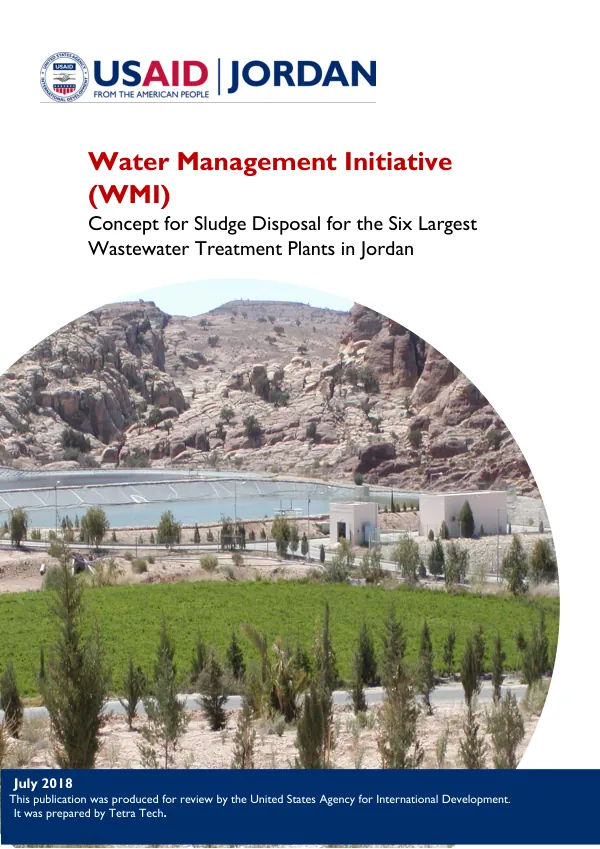
Water Management Initiative (WMI) Concept for Sludge Disposal for the Six Largest Wastewater Treatment Plants in Jordan
Sign inTETRA TECH
Water Management Initiative (WMI) Concept for Sludge Disposal for the Six Largest Wastewater Treatment Plants in Jordan
The Water Management Initiative (WMI) Concept for Sludge Disposal for the Six Largest Wastewater Treatment Plants in Jordan was developed in July 2018.
2018 · 48 pages
Sign in to readA free account is required to download.
Abstract
The initiative aimed to improve wastewater treatment performance and sludge management in Jordan. The six largest wastewater treatment plants (WWTPs) in Jordan were selected for the study, including Wadi Arab Wastewater Treatment Plant, Central Irbid/Dogara TP (CITP), As Samra WWTP, Baqa'a WWTP, South Amman, and Aqaba Mechanical TP. The assessment approach used in the study involved a desktop review, assessment of the existing situation, review of pilot projects, and legislative framework analysis. The desktop review involved a review of existing literature and reports on wastewater treatment and sludge management in Jordan. The assessment of the existing situation involved an analysis of the current status of WWTPs in Jordan, including their capacity, treatment processes, and sludge management practices. The review of pilot projects involved an examination of five pilot projects implemented in Jordan, including the RSS and USAID project, the First German-Jordanian research and demonstration facility, Sludge Stabilization by Composting – A Case Study in Jordan, Bio-solids Application for Improving Soil Fertility and Crop Production in Jordan, and As Samara WWTP. The pilot projects were evaluated based on their effectiveness in improving wastewater treatment performance and sludge management. The legislative framework analysis involved an examination of the laws and regulations related to wastewater treatment and sludge management in Jordan. The study found that the existing legislative framework was inadequate to address the challenges of wastewater treatment and sludge management in Jordan. The assessment of the selected six WWTPs involved an evaluation of their current status, including their capacity, treatment processes, and sludge management practices. The study found that the WWTPs in Jordan were facing significant challenges, including inadequate treatment processes, insufficient sludge management practices, and lack of regulatory framework. The projected quantities of sludge were estimated based on the treatment capacity of the WWTPs and the sludge production rates. The study found that the projected quantities of sludge were significant, with an estimated 150,000 tons of sludge produced annually. Alternative options for WWTPs were identified, including mechanical dewatering, thermal drying, and composting. The financial viability of the proposed options was evaluated based on the capital investment, operating costs, and tariff requirements. The study found that the proposed options were financially viable, with a payback period of less than 10 years. The study made several recommendations, including the implementation of a comprehensive sludge management plan, improvement of wastewater treatment processes, and development of a regulatory framework for wastewater treatment and sludge management. The study also recommended the implementation of pilot projects to test the effectiveness of alternative sludge management options. The study concluded that the WMI Concept for Sludge Disposal for the Six Largest WWTPs in Jordan was a critical step towards improving wastewater treatment performance and sludge management in Jordan. The study provided a comprehensive analysis of the current status of WWTPs in Jordan and identified alternative options for sludge management. The study also made several recommendations for the implementation of a comprehensive sludge management plan and improvement of wastewater treatment processes.
Related documents