ADVENTIST DEVELOPMENT AND RELIEF AGENCY INTERNATIONAL
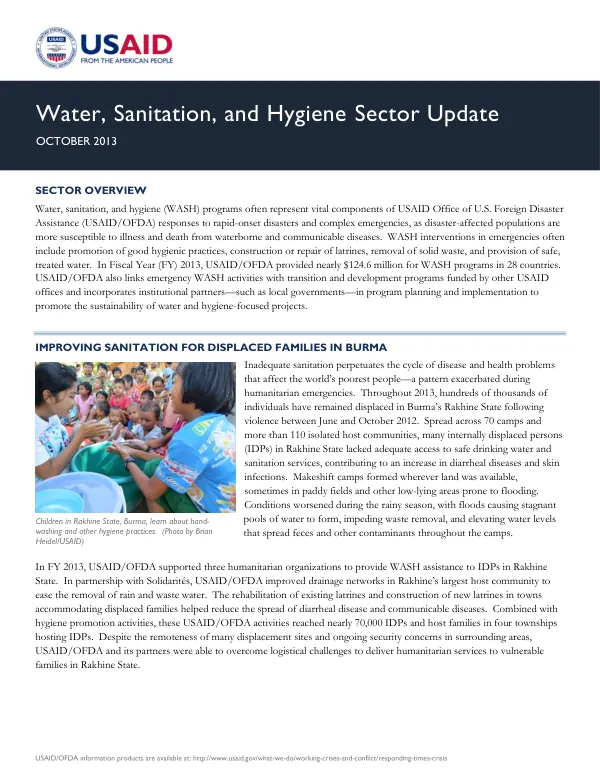
Water, Sanitation and Hygiene Sector Update - May 2009
Water, sanitation, and hygiene (WASH) programs are critical components of disaster response and complex emergencies, as affected populations are more susceptible to illness and death from waterborne diseases.
2009 · 2 pages
Sign in to readA free account is required to download.
Abstract
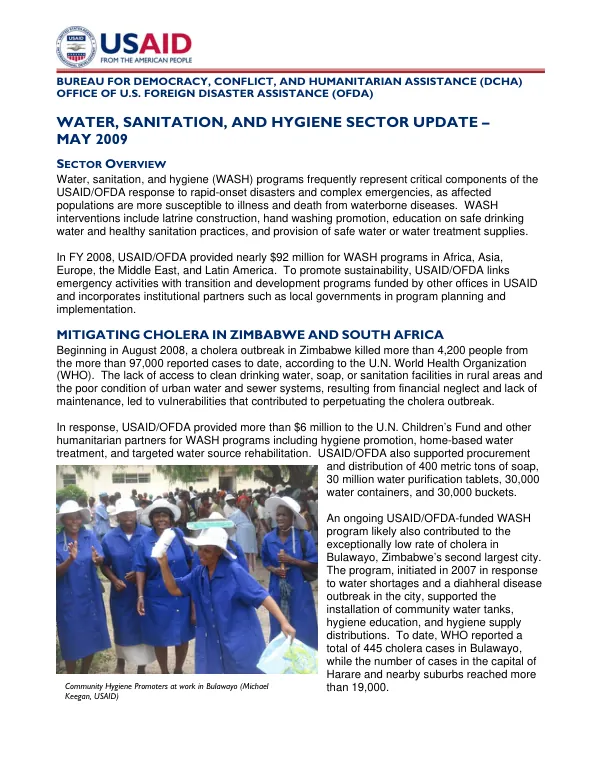
In FY 2008, USAID/OFDA provided nearly $92 million for WASH programs in Africa, Asia, Europe, the Middle East, and Latin America. To promote sustainability, USAID/OFDA links emergency activities with transition and development programs funded by other offices in USAID and incorporates institutional partners such as local governments in program planning and implementation. A cholera outbreak in Zimbabwe beginning in August 2008 killed more than 4,200 people from the more than 97,000 reported cases to date, according to the U.N. World Health Organization (WHO). The lack of access to clean drinking water, soap, or sanitation facilities in rural areas and the poor condition of urban water and sewer systems led to vulnerabilities that contributed to perpetuating the cholera outbreak. In response, USAID/OFDA provided more than $6 million to the U.N. Children's Fund and other humanitarian partners for WASH programs including hygiene promotion, home-based water treatment, and targeted water source rehabilitation. USAID/OFDA also supported procurement and distribution of soap, water purification tablets, water containers, and buckets. An ongoing USAID/OFDA-funded WASH program likely contributed to the exceptionally low rate of cholera in Bulawayo, Zimbabwe's second-largest city. The program, initiated in 2007 in response to water shortages and a diarrheal disease outbreak in the city, supported the installation of community water tanks, hygiene education, and hygiene supply distributions. To date, WHO reported a total of 445 cholera cases in Bulawayo, while the number of cases in the capital of Harare and nearby suburbs reached more than 19,000. Cholera also affected South Africa, including cases reported among Zimbabwean migrants crossing the border via Mussina town, Limpopo Province. In response, USAID/OFDA provided approximately $400,000 to educate South African farmers and migrant laborers about cholera, provide hygiene materials and water treatment supplies, and build latrines. Cyclone Nargis left more than 130,000 people dead or missing and presumed dead, while severely affecting an estimated 2.4 million people in Ayeyarwady and Rangoon divisions, according to an assessment by U.N., Government of Burma, and Association of Southeast Asian Nations staff. The cyclone inundated agricultural land and water sources in the lower Ayeyarwady Delta, contaminating community water sources and destroying infrastructure, including latrines. Affected populations required WASH interventions to increase access to safe drinking water, provide hygiene supplies to replace items lost in the storm surge, and rehabilitate or replace latrines, wells, and community ponds. As part of an overall humanitarian response, USAID/OFDA provided more than $2.4 million to support WASH sector interventions for affected populations.