THE WORLD FOOD PROGRAMME
WFP Niger Resilience Review Report
The integrated resilience program in Niger, implemented by the UN World Food Program (WFP) with support from USAID since 2014, has made significant progress in restoring ecosystems and reducing climate risks.
2023 · 45 pages
Sign in to readA free account is required to download.
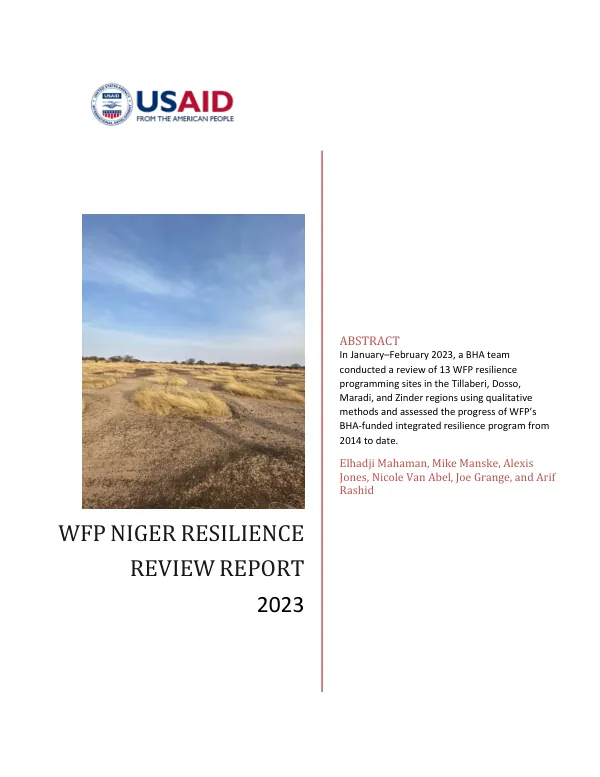
Abstract
The program, which has received $105 million in USAID funding between Fiscal Years 18-22, has supported around 1.1 million Food Assistance for Assets (FFA) beneficiaries in Niger since 2014. Of these, BHA funding to WFP supported roughly 430,000 beneficiaries from 1,020 villages in Diffa, Maradi, Zinder, Tahoua, and Tillabéri regions. The program's objectives include restoring ecosystems and reducing climate risks through FFA investments designed along landscape continuums, sustaining those assets once rehabilitated, and delivering nutrition-specific and nutrition-sensitive interventions to promote the availability and consumption of nutritious foods. The program has also integrated a lean season food/cash and nutrition response to safeguard early resilience gains. The BHA review team conducted a review of 13 WFP resilience programming sites in the Tillaberi, Dosso, Maradi, and Zinder regions using qualitative methods and assessed the progress of WFP's BHA-funded integrated resilience program from 2014 to date. The review team observed considerable achievements of WFP's resilience activities in the 13 communities, including increased productive assets and other assets, livelihood strategy shifts from less-preferred to more-preferred strategies, reduced indebtedness and pawning of land, improved access to food during the lean season, and increased ability to manage a bad year or shock. The review team also observed significant increases in tree and grass cover in the sites, with WFP indicating that they restored 46,000 hectares of land in 2022. Millet or sorghum yields increased by 10 to 60 bushels per hectare, reflecting increases in yields ranging from 50 to over 500 percent. The replication of zai and demi-lunes in the agricultural crop land by beneficiaries and non-beneficiaries also reported increased productivity. Sustained improvements in participant economic and social status, resilience, well-being, and self-efficacy were observed in 2014-2021 progression sites where food/cash transfers have now been phased out. Increased social capital and collective action by participants were also observed. Consumption smoothing and improved access to food in the lean season through the participant-managed cereal banks created by the project were also noted. Reductions in seasonal migration, as individuals had greater access to food, higher amounts of savings, and the ability to invest—and reinvest—in productive assets, were also observed. However, the review team also identified some challenges, including WFP and implementing partners' limitations when working with annual budgets from multiple donors, lack of analysis of the cost-effectiveness of investments, limited access to water, unclear sustainability of pastoral demi-lunes after the end of the project, quality issues related to the use of improper methods for project sites, and few ways to measure more granular outcomes of resilience work. The BHA review team encourages WFP to consider the following recommendations: updating its 2017 Progression strategy to better outline its entry and exit from a community with food/cash for asset work, prevention and treatment of moderate acute malnutrition, school feeding, and a range of complementary activities. The review team also recommends that WFP should consider the use of Social and Behavior Change best practices and evidence-based interventions, and that the treatment aspect of the Foyer Amélioré de Récupération Nutritionnel (FARN) approach should be reviewed and improved.