USAID ADVANCING PARTNERS AND COMMUNITIES
What You Can Find in the APC Community Health Systems Catalog
Community health providers in 25 countries employ various methods to reach their clients.
2017 · 1 pages
Sign in to readA free account is required to download.
Abstract
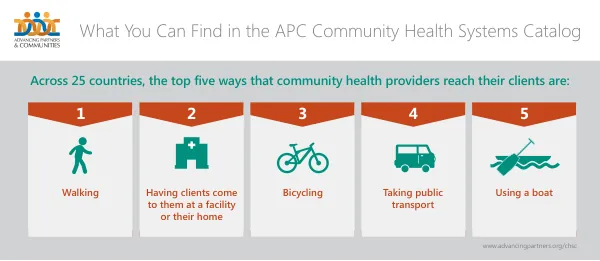
The most common approaches include walking to clients' homes, having clients come to a facility, and using a boat to transport clients. Bicycling is also a widely used method, while taking public transport is less frequently utilized. These outreach strategies enable community health providers to deliver essential services to remote or underserved populations. The use of walking as a primary means of reaching clients is likely due to the need for direct, personal interaction and the ability to navigate challenging terrain. Having clients come to a facility allows providers to offer a range of services in a centralized location, while also enabling clients to access other health services and resources. Bicycling and boat transport are often used in areas with limited road infrastructure or where walking is not feasible. In regions with well-developed public transportation systems, community health providers may use public transport to reach clients. However, this approach may be less common in areas with limited access to public transportation or where the terrain is difficult to navigate. The choice of outreach method depends on various factors, including the local context, the needs of the community, and the resources available to the health providers. The APC Community Health Systems Catalog provides a comprehensive resource for community health providers, policymakers, and other stakeholders. The catalog offers a wealth of information on community health systems, including best practices, case studies, and technical guidance. By leveraging this resource, community health providers can improve their outreach strategies and better meet the needs of their clients. The catalog's focus on community health systems reflects the importance of integrated, community-based approaches to health care. By engaging with local communities and leveraging existing resources, community health providers can deliver high-quality services that are tailored to the unique needs of their clients. This approach has been shown to improve health outcomes, increase access to care, and enhance the overall well-being of communities.