USAID ADVANCING PARTNERS AND COMMUNITIES
What You Can Find in the APC Community Health Systems Catalog
The APC Community Health Systems Catalog is a comprehensive resource for information on community health systems in various countries.
2017 · 1 pages
Sign in to readA free account is required to download.
Abstract
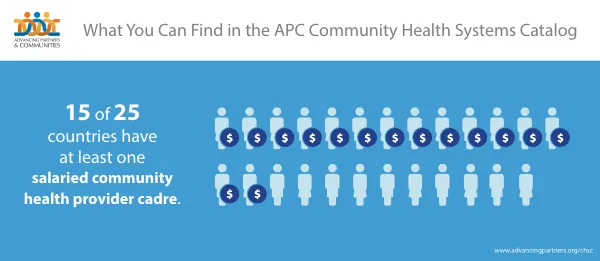
The catalog provides data on the presence and characteristics of salaried community health provider cadres in different nations. According to the catalog, 15 out of 25 countries have at least one salaried community health provider cadre. This indicates a significant presence of formal community health workforce in these countries. The catalog is available online at www.advancingpartners.org/chsc, providing easy access to the information for researchers, policymakers, and practitioners. The data presented in the catalog can be used to inform decisions related to community health system strengthening, human resources for health development, and health service delivery. The salaried community health provider cadres in these countries are likely to play a crucial role in improving access to health services, particularly for underserved populations. These cadres may include community health workers, community health nurses, or other types of health professionals who work at the community level to provide primary health care services. The catalog's focus on salaried community health provider cadres highlights the importance of formal employment and compensation for community health workers. This approach can help to ensure the sustainability and quality of community health services, as well as the motivation and retention of community health workers. The data presented in the catalog can be used to inform policies and programs aimed at strengthening community health systems and improving health outcomes in these countries. The APC Community Health Systems Catalog is an essential resource for anyone interested in community health systems, human resources for health, and health service delivery. The catalog's data and information can be used to support evidence-based decision-making and program implementation at the national, regional, and local levels.
Related documents