RTI INTERNATIONAL
What You Need to Know about HIV Risks
The Botswana HIV-MARPs Project is a collaborative effort between Botswana and the United States to combat HIV/AIDS.
2013 · 2 pages
Sign in to readA free account is required to download.
Abstract
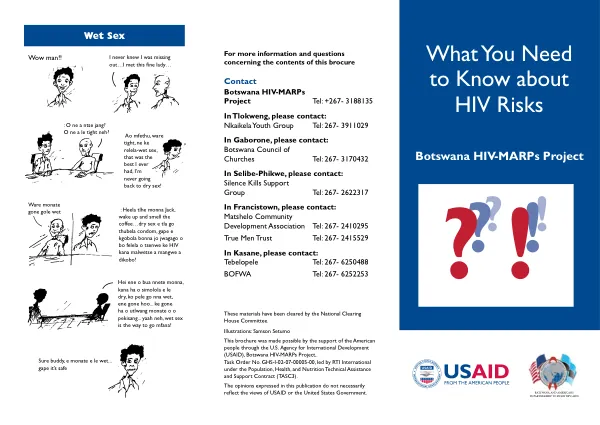
The project focuses on providing information and resources to individuals, particularly men, to reduce their risk of contracting HIV. The project emphasizes the importance of safer sex practices, including the use of condoms and water-based lubricants. Safer sex is defined as using protective measures, such as condoms, to prevent the transmission of HIV and other sexually transmitted infections (STIs). However, condoms are not 100% effective, and other factors, such as the presence of cuts or sores on the skin, can increase the risk of infection. The project also highlights the risks associated with oral sex, including the transmission of HIV through infected fluids. The project provides information on how to identify and prevent HIV infection, including the importance of getting tested for HIV. It also emphasizes that HIV cannot be transmitted through casual contact, such as kissing, hugging, or shaking hands, and that it cannot be transmitted through blood transfusions or other means. The project aims to educate individuals, particularly men, on the risks associated with HIV and the importance of practicing safer sex. It provides information on how to use condoms correctly and consistently, as well as the use of water-based lubricants to reduce the risk of condom breakage. The project also emphasizes the importance of getting tested for HIV and seeking medical attention if symptoms of HIV infection are present. The project is supported by the American people through the U.S. Agency for International Development (USAID) and is led by RTI International under the Population, Health, and Nutrition Technical Assistance and Support Contract (TASC3). The project's goal is to reduce the spread of HIV/AIDS in Botswana and to promote safer sex practices among individuals. The project also highlights the importance of addressing the social and cultural factors that contribute to the spread of HIV/AIDS. It emphasizes the need for education and awareness-raising efforts to promote safer sex practices and to reduce stigma and discrimination against individuals living with HIV/AIDS. In Botswana, the project has established partnerships with local organizations, including the Nkaikela Youth Group, the Botswana Council of Churches, and the Silence Kills Support Group, to provide information and resources to individuals and communities. The project has also established a hotline for individuals to seek information and support on HIV/AIDS. The project's message is clear: safer sex is the best way to prevent the transmission of HIV and other STIs. By using condoms correctly and consistently, and by getting tested for HIV, individuals can reduce their risk of infection and promote their overall health and well-being.