RTI INTERNATIONAL
Wildlife Free Gifting Campaign Phases 1 and 2
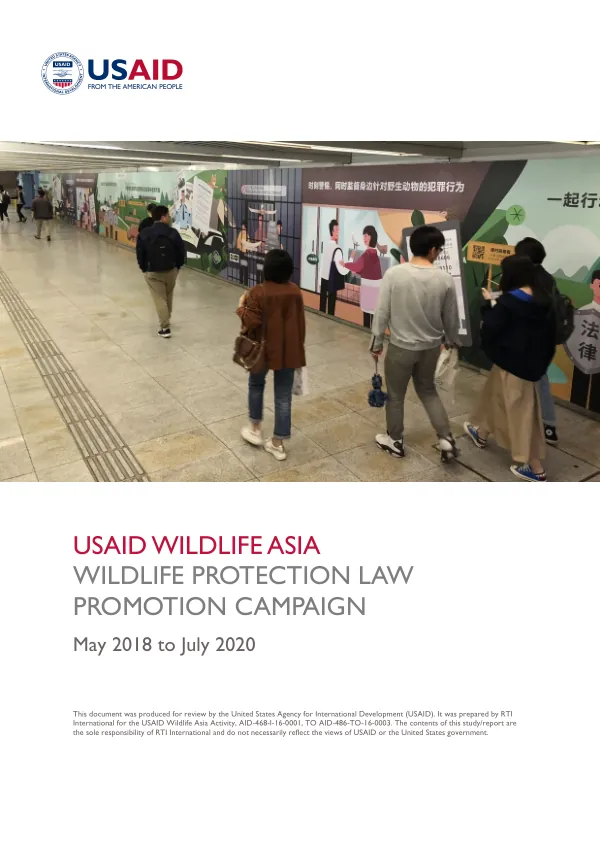
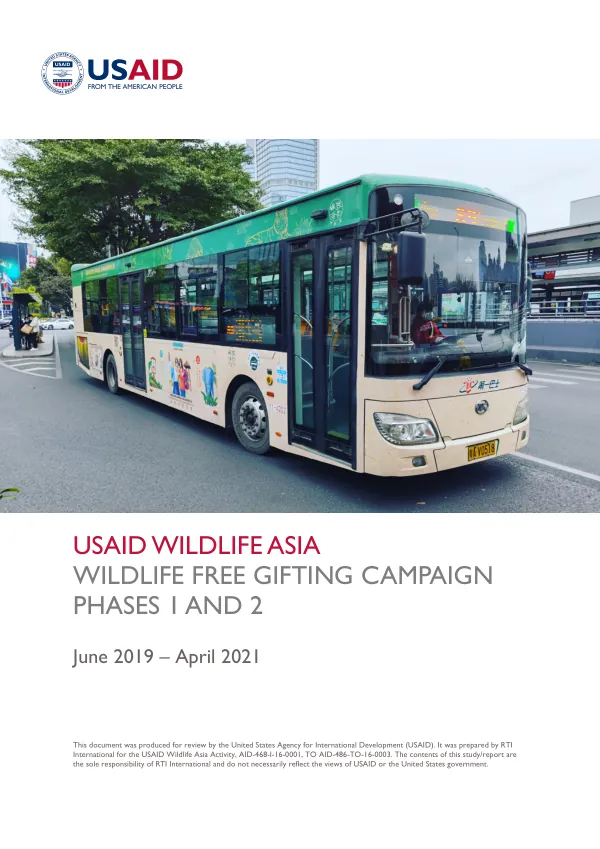
The Wildlife Free Gifting Campaign was a consumer demand reduction initiative implemented by USAID Wildlife Asia from June 2019 to April 2021.
2021 · 22 pages
Sign in to readA free account is required to download.
Abstract
The campaign aimed to reduce demand for pangolin, rhino horn, tiger, and ivory products in China, Thailand, and Vietnam. The project applied a social and behavior change communication (SBCC) framework to plan, implement, and evaluate demand reduction campaigns. The SBCC framework uses a consumer research-based planning process and a socio-ecological model of change to identify the tipping points for behavior change. It operates through three strategies – advocacy, social mobilization, and behavior change communication (BCC) – to achieve its behavior change objectives. The campaign's objectives included reducing consumer demand for wildlife products, improving enforcement of existing laws, and increasing collaboration and coordination among regional, international, and inter-institutional law enforcement. The campaign targeted specific species in each country, with a focus on reducing demand for elephant ivory and tiger products in Thailand, rhino horn in Vietnam, and pangolin, rhino horn, tiger, and ivory products in China. The project's SBCC campaigns were informed by a simplified model of the USAID Wildlife Asia Demand Reduction Theory of Change. This theory of change reflects the interplay between attitudes and social norms that contribute to driving intention to buy or use wildlife parts and products. The campaign's implementation involved several key components, including concept and creative idea development, materials development, pretesting of campaign materials, dissemination strategy, and mobilizing and leveraging public and private sector institutions. The campaign's impact was evaluated through a 2021 China monitoring survey, which revealed key findings and lessons learned. The campaign's results showed a 25% increase among target audiences exposed to campaigns with desired attitudes related to consumption of parts/products of targeted wildlife species. Additionally, there was a 30% increase in target audience(s) saying that consuming and buying wildlife products is not socially acceptable, a 25% decrease in target audience(s) reporting that they would like to purchase wildlife products in the future, and a 10% decrease in self-reported wildlife product purchases among target audience(s). The campaign's sustainability was a key consideration, with efforts made to ensure that the campaign's impact would be sustained beyond the project's duration. The campaign's success was attributed to the effective application of SBCC principles and approaches, which targeted consumers and potential consumers, understood the motivations underlying purchase and use behaviors, and moved from raising awareness to reducing desire and demand for wildlife parts and products. The Wildlife Free Gifting Campaign demonstrated the effectiveness of SBCC in reducing consumer demand for wildlife products. The campaign's results and lessons learned can inform future demand reduction initiatives and contribute to the global effort to combat wildlife trafficking.