INTERNATIONAL RESOURCES GROUP
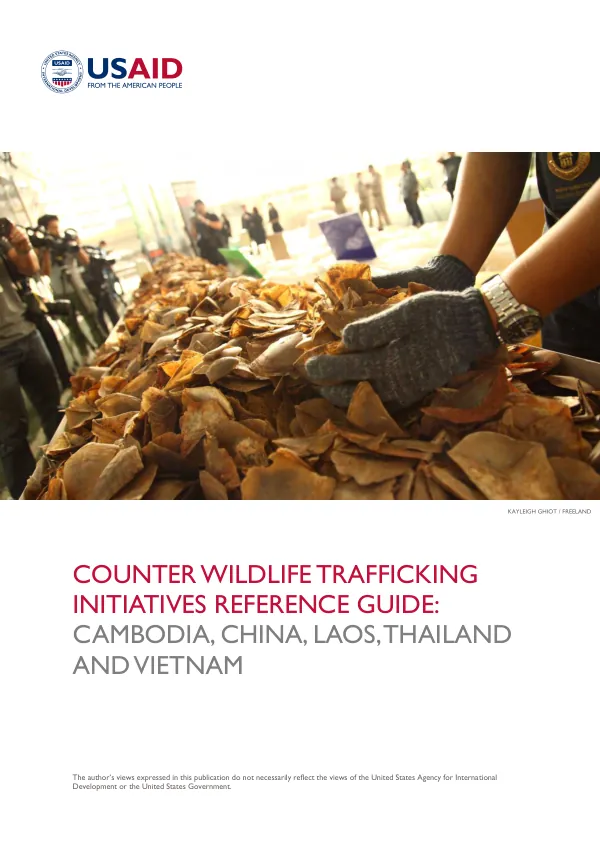
Counter Wildlife Trafficking Initiatives Reference Guide
The Counter Wildlife Trafficking Initiatives Reference Guide is a comprehensive report that provides a detailed overview of initiatives to counter wildlife trafficking in Cambodia, China, Laos, Thailand, and Vietnam.
2017 · 83 pages
Sign in to readA free account is required to download.
Abstract
The report was compiled by a consultant, Christian Dietrich, on behalf of USAID Wildlife Asia, and was intended to provide a rapid reference guide to all significant initiatives in the countries listed above. The report focuses on mapping current or potential overlap and duplication between initiatives within individual countries or within the region. It aims to identify synergies (value-added partnerships) and gaps in existing responses to wildlife trafficking, facilitating targeted measures to address these gaps. The report also identifies key donors to the initiatives listed above to enable greater coordination, including in the pursuit of public-private partnerships. The report was compiled during a three-month period between February and May 2017, using a desk-based research approach, followed by telephone and Skype interviews with inter-governmental organizations (IGOs) and non-governmental organizations (NGOs). The author also participated in the USAID Wildlife Asia Innovations conference in Bangkok, Thailand, and conducted additional meetings with organizations in attendance. The report provides a detailed index of initiatives being conducted in the countries listed above, with full details as to the scope, scale, and duration of each initiative. The initiatives are categorized into six main areas: law enforcement support (landscape level), law enforcement support (national level), political commitment building, private sector commitment building, and consumer demand reduction. The report highlights the importance of coordination and collaboration between organizations and government actors to effectively counter wildlife trafficking. It emphasizes the need for a comprehensive and integrated approach to address the complex issue of wildlife trafficking, which involves multiple stakeholders and requires a coordinated response. The report provides a valuable resource for organizations and government actors working to counter wildlife trafficking in the region. It offers a detailed overview of existing initiatives and identifies areas for collaboration and coordination, facilitating targeted measures to address the issue of wildlife trafficking. The report covers the following countries: Cambodia, China, Laos, Thailand, and Vietnam. Each country section provides a summary of initiatives, including law enforcement support, political commitment building, private sector commitment building, and consumer demand reduction. The report also identifies key donors to the initiatives listed above, enabling greater coordination and collaboration between organizations and government actors. The report highlights the importance of addressing the root causes of wildlife trafficking, including poverty, corruption, and lack of awareness. It emphasizes the need for a comprehensive and integrated approach to address the issue, involving multiple stakeholders and requiring a coordinated response. The report provides a detailed overview of initiatives to counter wildlife trafficking in the region, highlighting the importance of coordination and collaboration between organizations and government actors. It offers a valuable resource for organizations and government actors working to address the issue of wildlife trafficking. The report identifies several key initiatives in each country, including: * Cambodia: The Cambodian government has established a national committee to combat wildlife trafficking, which includes representatives from various government agencies and NGOs. The committee has implemented several initiatives, including training for law enforcement officials and community-based conservation programs. * China: The Chinese government has established a national wildlife protection law, which prohibits the trade and possession of endangered species. The government has also implemented several initiatives, including the establishment of wildlife reserves and the training of law enforcement officials.
Related documents