DELOITTE INC.
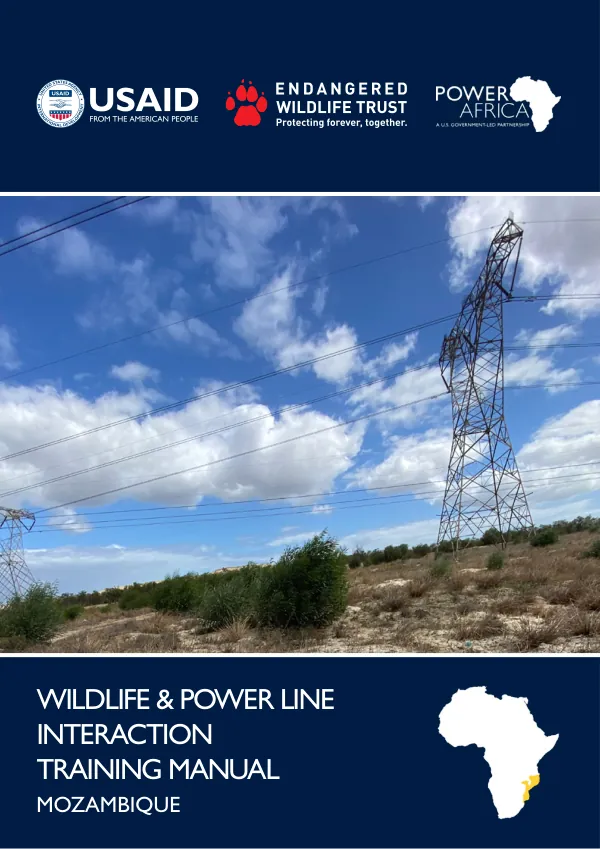
Wildlife & Power Line Interaction Training Manual
Wildlife and Power Line Interaction in Mozambique.
2021 · 72 pages
Sign in to readA free account is required to download.
Abstract
The term "wildlife interaction" encompasses various impacts involving various species and scenarios. On the positive side, birds can use pylons or structures as nesting sites, perches, or roosts, expanding their ranges in some cases. However, many interactions have negative consequences for energy infrastructure and utility performance. For instance, collisions with conductors and shield wires kill flying birds, while larger bird species are at risk of electrocution when coming into contact with two live phases or live and earthed phases on distribution lines and substation components. Large bird species such as vultures are most affected, but mammals such as Vervet Monkeys, baboons, genets, and Leopards are also at risk due to interactions with electrical infrastructure. Reptiles, including snakes, are also at risk. Aside from the species mentioned, larger mammals can cause significant damage to infrastructure, a significant factor in Africa. Some interactions, such as the build-up of bird excreta on critical hardware components, can lead to poor performance and result in flashovers, while bird nests constructed on infrastructure can result in line trips and even fires. The USAID South Africa Energy Program, a Power Africa initiative, teamed up with the Endangered Wildlife Trust (EWT) to develop mitigation measures for Mozambican utility, Eletricidade de Moçambique (EDM. This training manual explains how wildlife interactions with electrical infrastructure in Mozambique can be identified, reported, and resolved. By managing these interactions, EDM will improve the quality of electricity supply by phasing out costly faults caused by wildlife, reducing maintenance along the network, and ensuring the protection of local wildlife. Wildlife and Power Line Interaction Training Manual. When a wildlife incident is reported, the information will be stored in the EDM Central Incident Register (CIR). This register contains all reported wildlife incidents on both distribution and transmission electrical infrastructure across the country. The information contained within this register allows EDM management to monitor and respond to trends in wildlife interactions across all regions and to develop recommendations for the implementation of solutions at the site to prevent interactions. Species identification is crucial in reporting wildlife incidents. The Species Identification Guide provides information on various species, including birds, mammals, reptiles, and others. The guide includes descriptions, images, and images of habitats and behaviors. The guide is essential in identifying species and determining the necessary actions to be taken. The guide is also useful in understanding the behavior and habitat of various species, which is essential in preventing interactions with electrical infrastructure. The guide includes information on various species, including birds, mammals, reptiles, and others. The guide also includes information on the impact of wildlife interactions on energy infrastructure and utility performance. The guide is essential in understanding the behavior and habitat of various species, which is essential in preventing interactions with electrical infrastructure. The guide is also useful in identifying species and determining the necessary actions to be taken. The guide includes information on various species, including birds, mammals, reptiles, and others. The guide also includes information on the impact of wildlife interactions on energy infrastructure and utility performance. The guide is essential