DELOITTE CONSULTING, LLP
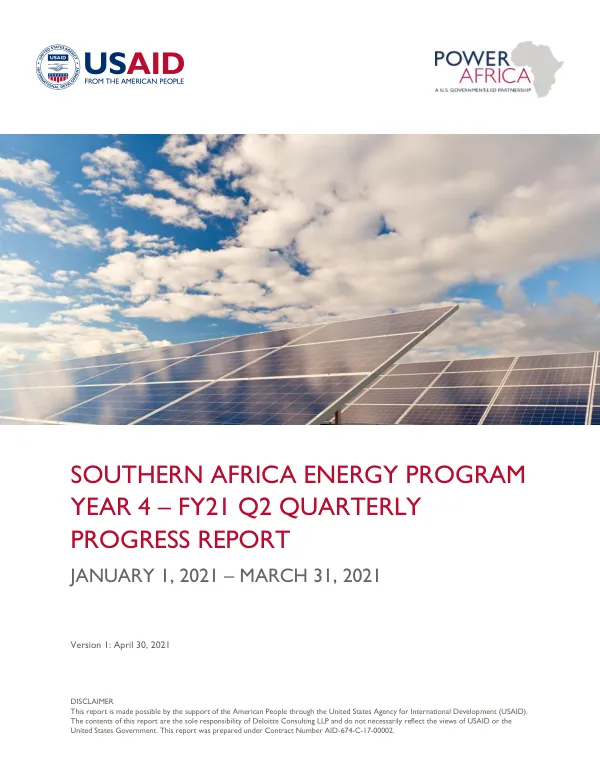
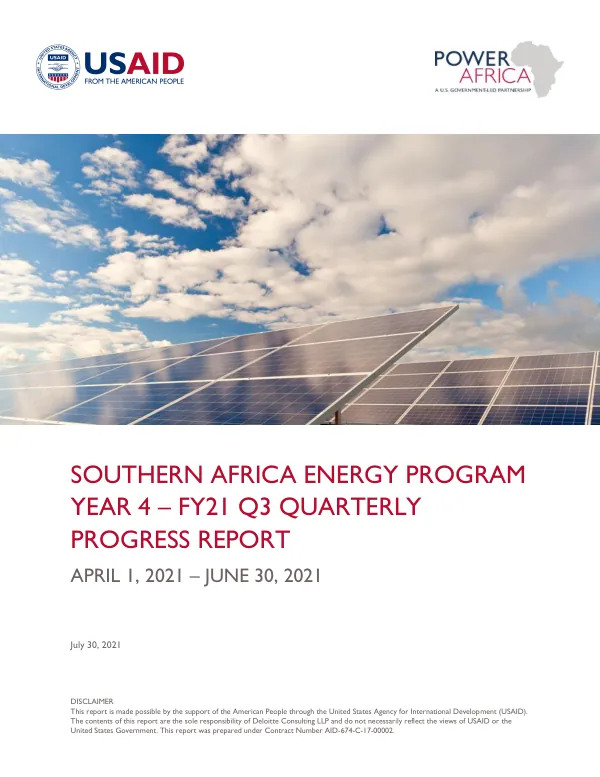
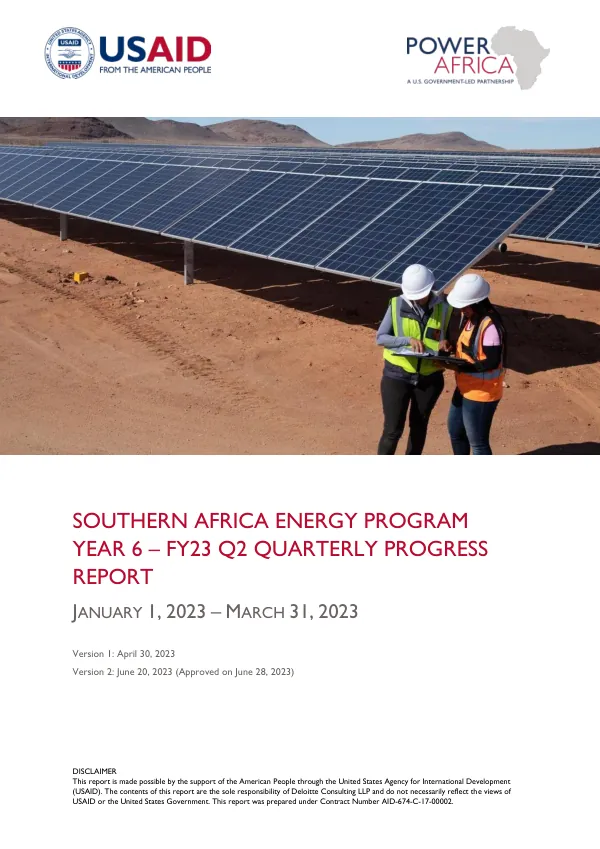
Southern Africa Energy Program Year 4 – FY21 Q1 Quarterly Progress Report
The Southern Africa Energy Program is a regional initiative aimed at promoting energy access, security, and sustainability in the Southern African Development Community (SADC) region.
2021 · 156 pages
Sign in to readA free account is required to download.
Abstract
The program is implemented by Deloitte Consulting LLP under Contract Number AID-674-C-17-00002. The program's primary objective is to increase access to electricity and promote the use of renewable energy sources in the region. The program's scope encompasses several key areas, including energy access, energy efficiency, and renewable energy. The program focuses on supporting the development of regional energy infrastructure, promoting the use of renewable energy sources, and improving energy access for rural and underserved communities. The program also aims to enhance the capacity of regional energy institutions and promote regional energy cooperation. The program's implementation is guided by a set of key performance indicators (KPIs) that track progress against program objectives. The KPIs include metrics such as the number of households connected to the grid, the amount of renewable energy capacity added, and the level of energy efficiency improvements achieved. In the first quarter of FY21, the program made significant progress in several key areas. The program's energy access component achieved a milestone of connecting over 10,000 households to the grid, with a focus on rural and underserved communities. The program's renewable energy component made significant progress in the development of solar and wind energy projects, with several projects reaching financial close. The program's energy efficiency component also made progress in the first quarter, with several energy efficiency projects reaching completion. The program's capacity building component continued to support the development of regional energy institutions, with a focus on enhancing the capacity of energy regulatory authorities and energy utilities. The program's regional energy cooperation component also made progress in the first quarter, with several regional energy initiatives launched or completed. The program's monitoring and evaluation component continued to track progress against program objectives, with a focus on ensuring that the program is meeting its intended outcomes. The program's budget for the first quarter of FY21 was $X million, with a focus on supporting the development of regional energy infrastructure and promoting the use of renewable energy sources. The program's budget for the remainder of FY21 is expected to be $Y million, with a focus on continuing to support the development of regional energy infrastructure and promoting the use of renewable energy sources. The program's implementation is guided by a set of key stakeholders, including the SADC Secretariat, regional energy institutions, and energy utilities. The program's governance structure includes a Board of Directors, an Executive Committee, and several working groups that focus on specific program components. The program's risk management framework includes a set of risk assessments and mitigation strategies that are designed to minimize the risk of program failure. The program's risk management framework includes a set of key risks, including the risk of project delays, the risk of cost overruns, and the risk of non-compliance with program requirements. The program's monitoring and evaluation framework includes a set of key performance indicators (KPIs) that track progress against program objectives. The program's monitoring and evaluation framework includes a set of metrics, including the number of households connected to the grid, the amount of renewable energy capacity added, and the level of energy efficiency improvements achieved. The program's sustainability framework includes a set of key strategies that are designed to ensure the long-term sustainability of program outcomes. The program's sustainability framework includes a set of key strategies, including the development of regional energy institutions, the promotion of renewable energy sources, and the improvement of energy access for rural and underserved communities. The program's environmental and social impact assessment framework includes a set of key strategies that are designed to minimize the environmental and social impacts of program activities. The program's environmental and social impact assessment framework includes a set of key strategies, including the development of environmental and social management plans, the implementation of environmental and social monitoring and evaluation systems, and the provision of training and capacity building for program staff and stakeholders. The program's financial management framework includes a set of key strategies that are designed to ensure the effective management of program finances. The program's financial management framework includes a set of key strategies, including the development of financial management systems, the implementation of financial monitoring and evaluation systems, and the provision of training and capacity building for program staff and stakeholders. The program's human resources management framework includes a set of key strategies that are designed to ensure the effective management of program human resources. The program's human resources management framework includes a set of key strategies, including the development of human resources management systems, the implementation of human resources monitoring and evaluation systems, and the provision of training and capacity building for program staff and stakeholders. The program's procurement framework includes a set of key strategies that are designed to ensure the effective management of program procurement activities. The program's procurement framework includes a set of key strategies, including the development of procurement systems, the implementation of procurement monitoring and evaluation systems, and the provision of training and capacity building for program staff and stakeholders. The program's security framework includes a set of key strategies that are designed to ensure the security of program staff, assets, and information