USAID
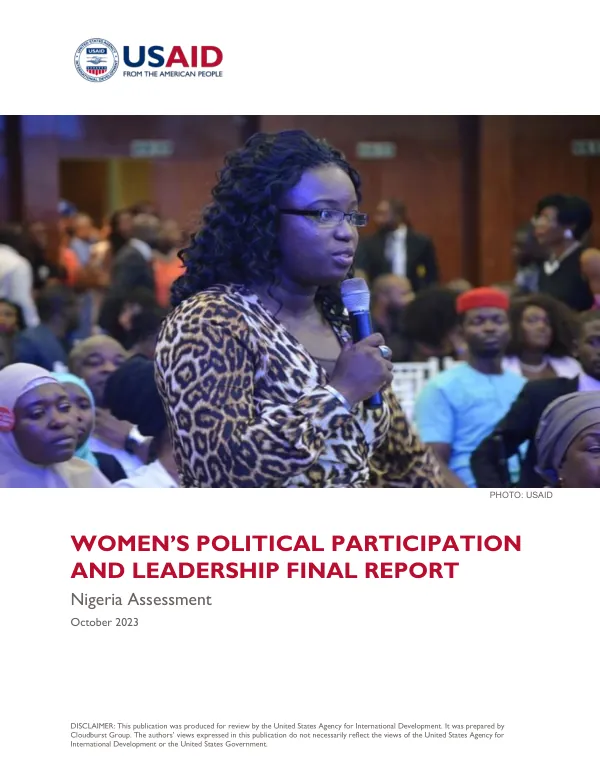
Women's Political Participation and Leadership Final Report: Nigeria Assessment
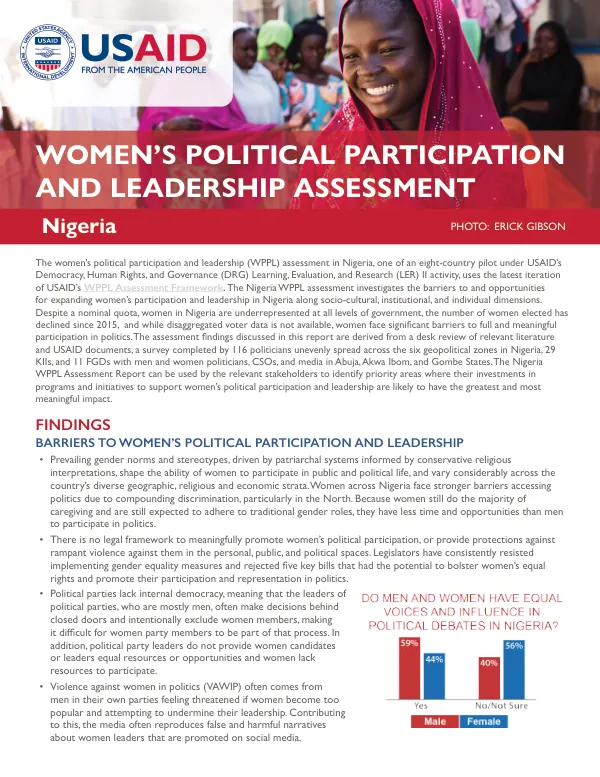
Women's political participation and leadership in Nigeria remain a pressing issue, with women underrepresented at all levels of government.
2023 · 101 pages
Sign in to readA free account is required to download.
Abstract
The country's recent elections in 2023 saw a decline in the number of women elected, with women's representation already ranked the lowest in Africa. The government has taken symbolic steps to promote affirmative action, but deeply ingrained cultural and religious interpretations hinder women's ability and opportunities to participate in public and political life. The assessment identified several barriers to women's political participation and leadership in Nigeria. Prevailing gender norms and stereotypes, driven by patriarchal systems informed by conservative religious interpretations, shape the ability of women to participate in public and political life. There is no legal framework to meaningfully promote women's political participation, and protections against violence against women in politics are lacking. Political parties lack internal democracy, and women are often excluded from decision-making processes. Violence against women in politics is a significant concern, with men in their own parties feeling threatened by women's leadership. Additionally, electoral authorities are not delivering on their mandate to provide oversight of key electoral processes, allowing opaque processes to favor male gatekeepers. The media often reproduces false narratives about women leaders, and women still do the majority of caregiving, leaving them with less time to participate in politics. Men do not believe it is their responsibility to change a violent and patriarchal political environment, and women often lack the necessary resources to participate in politics. However, there are opportunities for women's political participation and leadership in Nigeria. The legal framework around women's political participation could be revisited, and the INEC's gender policy could be used to incentivize party reforms. Women's civil society is strong and has successfully advocated for important gains for women's rights. Primary and secondary schools provide an important space for girls and boys to begin engaging in politics, and higher education is more accessible for women than ever before. There is also openness amongst some traditional and religious leaders on the benefits of women's participation and leadership. Recommendations for action include supporting gender transformative education programs to change attitudes and behaviors, shifting harmful cultural views and behavior by engaging men gatekeepers and allies, and supporting WPPL public information campaigns rooted in cultural values. Partnering with leaders of religious organizations to show how religious views and gender equality can align is also recommended. Furthermore, supporting women's leadership development programs, providing equal resources to women candidates and leaders, and promoting women's participation in party primaries and campaign financing are essential. Additionally, promoting a culture of accountability and transparency in electoral processes, and addressing violence against women in politics are critical steps towards increasing women's participation and leadership in Nigeria. The assessment also highlights the need for a comprehensive approach to address the barriers to women's political participation and leadership in Nigeria. This includes revisiting the legal framework, promoting internal democracy in political parties, and addressing violence against women in politics. The report provides a framework for stakeholders to identify priority areas where investments in programs and initiatives to support women's political participation and leadership are likely to have the greatest and most meaningful impact.