ABT ASSOCIATES
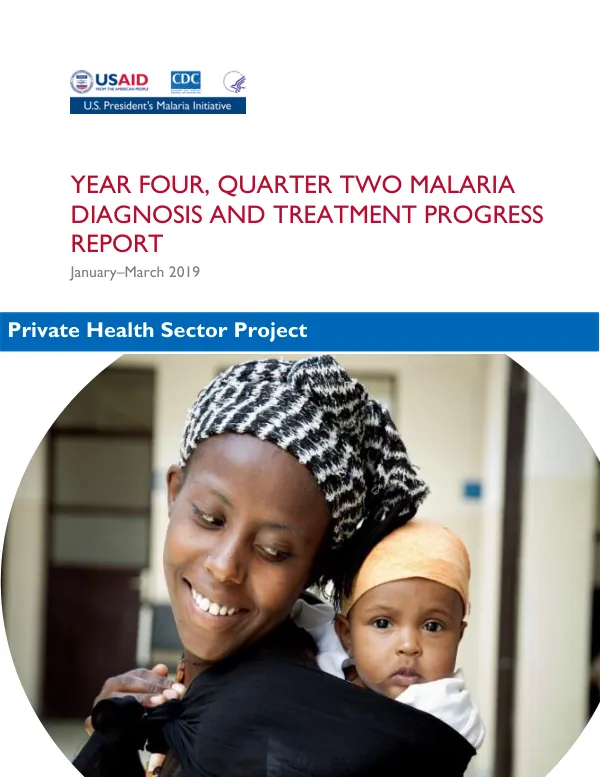
Year Four, Quarter One Malaria Diagnosis and Treatment Progress Report
The Private Health Sector Project (PHSP) is a technical assistance project to support the Government of Ethiopia.
2018 · 36 pages
Sign in to readA free account is required to download.
Abstract
The project is managed by Abt Associates Inc. and is funded by the United States Agency for International Development (USAID). The project aims to support the private health sector in providing quality malaria diagnosis and treatment services. The malaria component of the project has several objectives, including increasing access to and uptake of malaria services in private health facilities and workplaces, enhancing capacity of local partners to ensure the sustainability of public-private mix (PPM) partnerships, enhancing pharmaceutical supply chain management and rational drug use at private health facilities, and enhancing program learning and innovative ventures. To meet the project's targets, PHSP applies several implementation strategies. These include working collaboratively with the National Malaria Control Program (NMCP), Regional Health Bureaus (RHBs), and other stakeholders to improve the policy and legal environment to engage the private health sector in the delivery of malaria and prevention. Additionally, PHSP participates in the national Technical Working Group (TWG) to ensure alignment with national policies and strategies. In Year Four, Quarter One, PHSP continued to provide technical support to 141 private-for-profit and 22 workplace health facilities. The facilities provided technical support to 355,564 patients suspected for malaria, diagnosed 65,345, and treated 65,245 patients. Additionally, PHSP established 15 temporary clinics in the camps of farmlands in Tigray and Beneshangul Gumuz regions to increase access to prompt and quality malaria diagnosis and treatment services to mobile and migrant workers. The project also implemented various activities to enhance the capacity of local partners to ensure the sustainability of PPM partnerships. These included mentoring and supportive supervision, provision of registers and job aids, lab quality assurance, and ensuring access to pharmaceutical supplies. The project also conducted various assessments and evaluations to monitor progress and identify areas for improvement. These included assessments of the quality of malaria diagnosis and treatment services, assessments of the capacity of local partners, and assessments of the effectiveness of the project's interventions. The project also implemented various strategies to enhance pharmaceutical supply chain management and rational drug use at private health facilities. These included training and mentoring of healthcare providers, provision of job aids and registers, and monitoring of pharmaceutical supply chain management. The project also generated evidence on malaria service needs of the migrant and mobile workforce for decision making and programming. This included conducting surveys and focus group discussions with migrant and mobile workers to understand their needs and preferences. Overall, the Private Health Sector Project is making significant progress in improving access to and uptake of malaria services in private health facilities and workplaces. The project's implementation strategies are aimed at enhancing the capacity of local partners, enhancing pharmaceutical supply chain management and rational drug use, and generating evidence on malaria service needs of the migrant and mobile workforce. The project's performance report highlights the following achievements: * 141 private-for-profit and 22 workplace health facilities provided technical support to 355,564 patients suspected for malaria. * 65,345 patients were diagnosed with malaria, and 65,245 patients were treated. * 15 temporary clinics were established in Tigray and Beneshangul Gumuz regions. * The project enhanced the capacity of local partners to ensure the sustainability of PPM partnerships. * The project enhanced pharmaceutical supply chain management and rational drug use at private health facilities. * The project generated evidence on malaria service needs of the migrant and mobile workforce. The project's challenges include ensuring the sustainability of PPM partnerships, improving the policy and legal environment to engage the private health sector, and addressing the challenges faced by mobile and migrant workers. The project's recommendations include continuing to support the private health sector, enhancing the capacity of local partners, and improving the policy and legal environment to enable the private health sector to deliver malaria services. The project's geographic focus is on the following regions: Afar, Amhara, Beneshangul Gumuz, Dire Dawa, Gambella, Oromia, SNNPR, and Tigray. The project's timeframes are as follows: * Year Four, Quarter One: October-December 2018 * Year Four, Quarter Two: January-March 2019 The project's recommendations are as follows: * Continue to support the private health sector * Enhance the capacity of local partners * Improve the policy and legal environment to enable the private health sector to deliver malaria services * Address the challenges faced by mobile and migrant workers
Related documents