MANAGEMENT SYSTEMS INTERNATIONAL
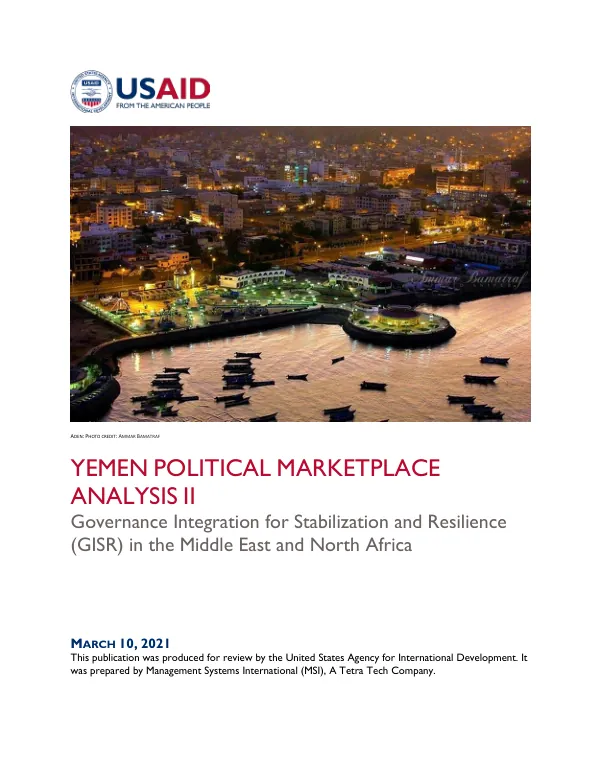
Yemen Political Marketplace Analysis II
The Yemeni state is broken, with various factions vying for control.
2021 · 90 pages
Sign in to readA free account is required to download.
Abstract
The Houthis control the northern highlands and the capital of Sanaa, while the Southern Transitional Council (STC) controls large parts of the south and the temporary capital of Aden. President Hadi of the internationally-recognized Republic of Yemen Government remains in exile. Hadramawt, Shabwa, and Marib have managed to achieve some degree of autonomy, largely through oil and gas revenues, although this is being challenged in Marib by an extended Houthi offensive. Throughout the country, armed groups of various sizes and loyalties hold sway, while outside actors continue to fund and arm local allies. The conflict has resulted in significant humanitarian needs, with millions of Yemenis displaced or in need of assistance. The country's economy is also severely impacted, with widespread poverty and food insecurity. The Yemeni economy is heavily reliant on imports, which has been severely disrupted by the conflict. The country's oil and gas revenues have been significantly reduced, and the Yemeni riyal has depreciated significantly. The conflict has also led to a significant decline in the country's agricultural production, with many farmers unable to access markets or inputs due to the fighting. The conflict in Yemen has been ongoing for several years, with various factions vying for control. The Houthis, who are backed by Iran, have been fighting against the internationally-recognized government, which is backed by a Saudi-led coalition. The conflict has resulted in significant humanitarian needs, with millions of Yemenis displaced or in need of assistance. The Yemeni government has been unable to exert control over the entire country, with various factions controlling different regions. The STC, which is a secessionist movement, controls large parts of the south and has been seeking greater autonomy for the region. The Houthis, on the other hand, have been seeking to establish a new government in Sanaa, which they control. The conflict in Yemen has also had significant regional implications, with various countries providing support to different factions. The Saudi-led coalition has been providing military support to the internationally-recognized government, while Iran has been providing support to the Houthis. The conflict has also had significant implications for the global economy, with oil prices rising significantly due to the disruption of oil exports from the region. The Yemeni people are suffering greatly as a result of the conflict, with widespread poverty, food insecurity, and displacement. The conflict has also had significant implications for the country's infrastructure, with many roads, bridges, and other critical infrastructure damaged or destroyed. The conflict has also had significant implications for the country's healthcare system, with many hospitals and medical facilities damaged or destroyed. The conflict in Yemen is complex and multifaceted, with various factions vying for control. The conflict has resulted in significant humanitarian needs, with millions of Yemenis displaced or in need of assistance. The country's economy is also severely impacted, with widespread poverty and food insecurity. The conflict has also had significant regional implications, with various countries providing support to different factions.