USAID DEC
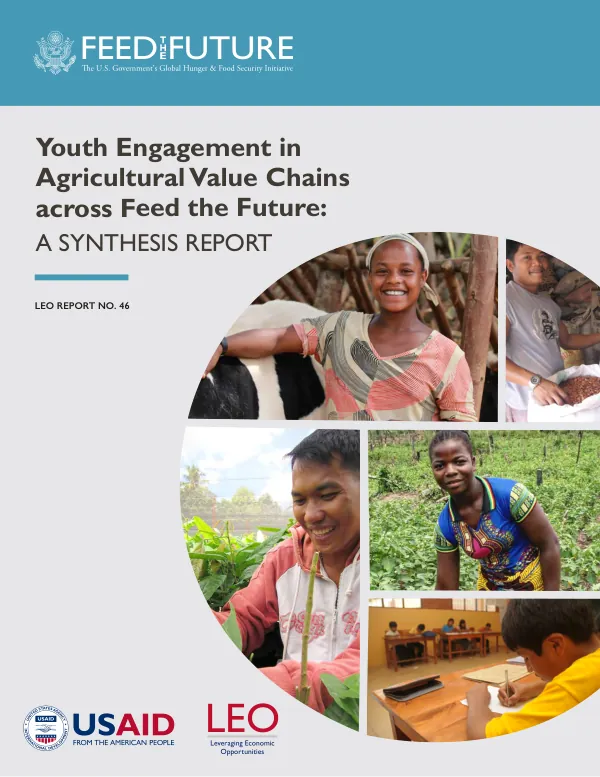
Youth Engagement in Agricultural Value Chains Across Feed the Future: A Synthesis Report
Sign inACDI/VOCA
Youth Engagement in Agricultural Value Chains Across Feed the Future: A Synthesis Report
Feed the Future (FTF) is a global initiative aimed at reducing poverty and hunger by improving agricultural productivity and promoting economic growth.
2016 · 62 pages
Sign in to readA free account is required to download.
Abstract
The initiative focuses on engaging youth in agricultural value chains to address the challenges of youth unemployment and underemployment. This report synthesizes findings from FTF programs in Uganda, Liberia, Guatemala, and Nepal to provide insights into the opportunities and barriers faced by youth in these countries. The report highlights the strengths of FTF in supporting youth programming, including its focus on agricultural value chains, market systems, and youth-led initiatives. FTF programs have been successful in engaging youth in various activities, such as farming, entrepreneurship, and vocational training. However, the report also identifies barriers to effective youth programming, including limited access to education and training, lack of market information, and inadequate support for youth-led initiatives. The report emphasizes the importance of understanding the needs and aspirations of youth in agricultural value chains. It highlights the need for programs to be designed with a focus on youth-led initiatives, entrepreneurship, and market systems. The report also stresses the importance of addressing the unique challenges faced by young women, who are often underrepresented or unaccounted for in development programs. The report presents several case studies and success stories from FTF programs in the four countries. These case studies highlight the potential of youth-led initiatives in improving agricultural productivity and promoting economic growth. For example, a case study from Uganda highlights the success of a youth-led initiative that improved agricultural productivity and increased income for young farmers. The report provides several recommendations for youth-mainstreamed program design, including: 1. Mainstreaming youth in program design and implementation 2. Providing education and training opportunities for youth 3. Supporting youth-led initiatives and entrepreneurship 4. Addressing the unique challenges faced by young women 5. Fostering partnerships between government, private sector, and civil society organizations to support youth-led initiatives The report also highlights the need for further research on the opportunities and challenges faced by youth in agricultural value chains. It emphasizes the importance of understanding the needs and aspirations of youth in these contexts and designing programs that are responsive to their needs. The report concludes by emphasizing the potential of youth-led initiatives in improving agricultural productivity and promoting economic growth. It highlights the need for continued support for FTF programs and other initiatives that aim to engage youth in agricultural value chains. The report includes several tables and figures that provide additional information on the opportunities and challenges faced by youth in agricultural value chains. These include tables on off-farm value chain opportunities for youth, youth vulnerabilities and programmatic options, and ranking of recommendations for youth-mainstreamed program design. The report also includes figures on the Ugandan youth pathway to mixed livelihoods, youth participation rate and intentionality in FTF programs, and national definition of youth in FTF countries. Overall, the report provides a comprehensive overview of the opportunities and challenges faced by youth in agricultural value chains and highlights the potential of youth-led initiatives in improving agricultural productivity and promoting economic growth.