ENCOMPASS, LLC
Youth Workforce Development (YWFD) Indicator Framework – September 2023
The Five Core YWFD Indicators are a set of standard indicators frequently used in Youth Workforce Development (YWFD) activities.
2023 · 12 pages
Sign in to readA free account is required to download.
Abstract
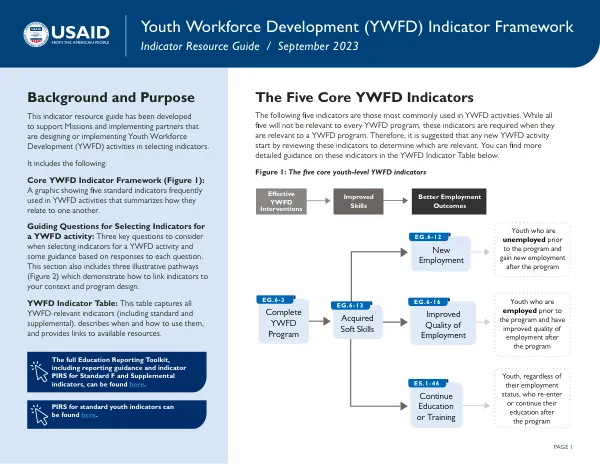
These indicators are required when they are relevant to a YWFD program and are intended to support Missions and implementing partners in selecting indicators. The core indicators are summarized in the Core YWFD Indicator Framework, which shows how they relate to one another. The guiding questions for selecting indicators for a YWFD program include: Who are the target program participants? What interventions is the program using? And what are the target outcomes? These questions help determine which indicators are most relevant to a program's context, target population, interventions, and intended outcomes. The YWFD Indicator Table captures all YWFD-relevant indicators, including standard and supplemental indicators, and provides guidance on when and how to use them. The table includes information on the numerator and denominator for each indicator, as well as recommended methodologies and tools for measurement. One of the standard indicators is EG.6-3: Number of individuals who complete USG-assisted workforce development programs. This indicator measures the number of youth who participate in a workforce development program and meet all completion requirements. The numerator is the total number of individuals completing workforce development programming, which should come from implementing partner records. Another standard indicator is EG.6-12: Percent of individuals with new employment following participation in USG-assisted workforce development programs. This indicator measures the percentage of youth who are unemployed or not in the labor force prior to starting a YWFD program and gain new employment after the program. The numerator is the number of participants employed at endline, and the denominator is the number of individuals targeted for the YWFD program. The YWFD Indicators Table also includes information on EG.6-13: Percent of individuals with improved soft skills following participation in USG-assisted workforce development programs. This indicator measures the percentage of youth who participate in a soft skills development program and have demonstrated improved skills on a pre/post assessment. The numerator is the number of individuals with improved skills at post-test, and the denominator is the number of individuals participating in soft skills programming. The YouthPower soft skills toolkit and the EducationLinks resources on social and emotional learning and soft skills are key resources for measuring soft skills for YWFD. Programs that report on this indicator should also report against the related output indicator, Youth-1: Number of youth trained in soft skills/life skills through USG-assisted programs. The YWFD Indicator Table provides a brief summary of the key information related to these indicators, and more detailed guidance on measuring these indicators can be found in the full PIRS at www.edu-links.org/indicators and www.youthpower.org/resources/usaid-standard-youth-indicators-reference-sheet.