TETRA TECH
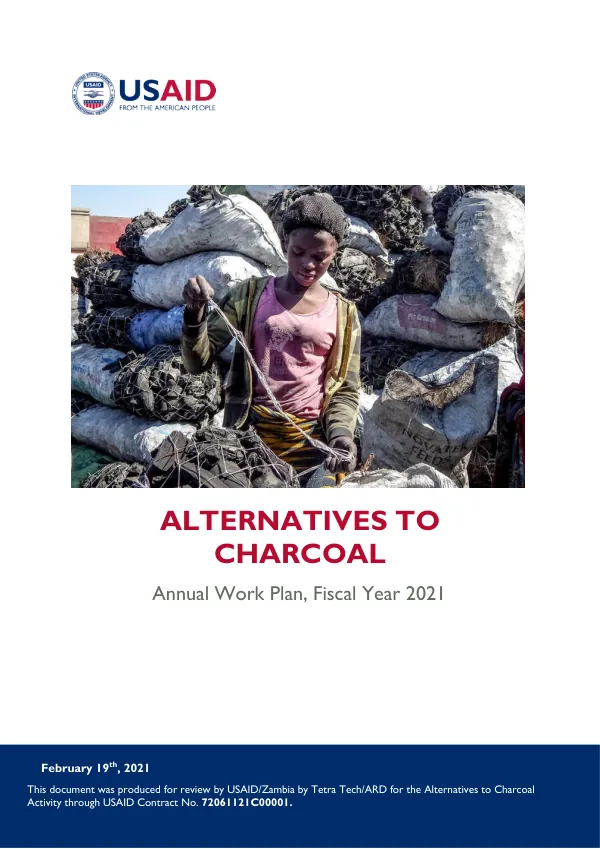
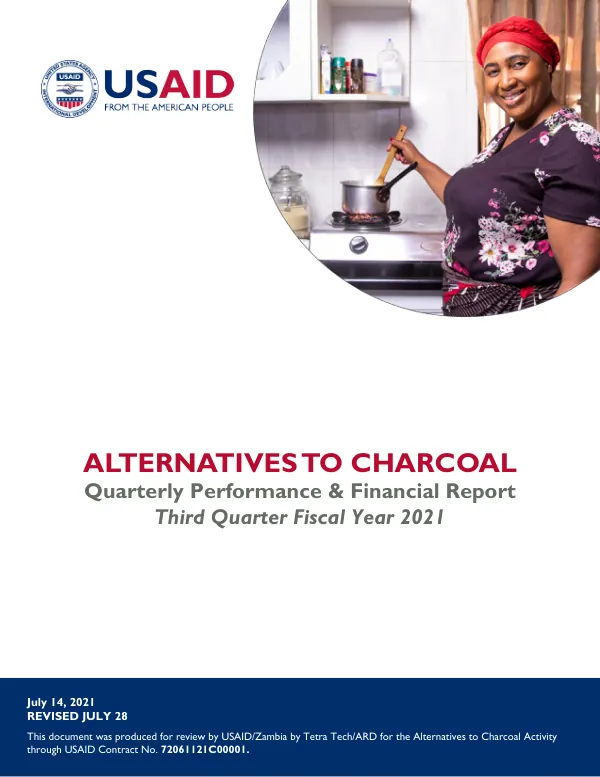
Zambia Alternatives to Charcoal FY21 Q3 Quarterly Report
The Alternatives to Charcoal Activity in Zambia began on January 5, 2021, and is scheduled to conclude on January 4, 2026.
2021 · 39 pages
Sign in to readA free account is required to download.
Abstract
The activity aims to reduce the use of charcoal and promote the adoption of alternative technologies and fuels. The activity is funded by the United States Agency for International Development (USAID) through a contract with Tetra Tech/ARD. The activity has four main objectives: to increase the use of alternative technologies and fuels by 38%, to improve the business enabling environment for low-emission charcoal alternatives, to promote social behavior change communications, and to support alternative livelihoods and improved regulation and enforcement of the charcoal supply chain. The activity also aims to adapt to changing circumstances through adaptive management. Implementation of the activity has been ongoing since January 2021, with various activities and achievements reported. For example, the activity has conducted consumer preferences surveys to understand the demand for alternative technologies and fuels. The activity has also established partnerships with local organizations and government agencies to promote the adoption of alternative technologies and fuels. One of the key challenges encountered by the activity has been the COVID-19 pandemic, which has disrupted implementation and affected the availability of resources. The activity has also faced challenges in promoting the adoption of alternative technologies and fuels, particularly in rural areas where access to information and resources is limited. Despite these challenges, the activity has made significant progress in achieving its objectives. For example, the activity has reported a 27% increase in the use of alternative technologies and fuels among households in target areas. The activity has also established a network of community-based organizations to promote the adoption of alternative technologies and fuels. The activity has also made progress in improving the business enabling environment for low-emission charcoal alternatives. For example, the activity has worked with local government agencies to establish regulations and standards for the production and sale of alternative technologies and fuels. In terms of social behavior change communications, the activity has conducted various campaigns to promote the adoption of alternative technologies and fuels. For example, the activity has worked with local media outlets to promote the benefits of alternative technologies and fuels, and has established a network of community-based organizations to promote the adoption of alternative technologies and fuels. The activity has also made progress in supporting alternative livelihoods and improving regulation and enforcement of the charcoal supply chain. For example, the activity has worked with local government agencies to establish regulations and standards for the production and sale of charcoal, and has established a network of community-based organizations to promote the adoption of alternative technologies and fuels. Looking ahead, the activity plans to continue implementing its objectives and achieving its goals. The activity will continue to work with local organizations and government agencies to promote the adoption of alternative technologies and fuels, and will continue to adapt to changing circumstances through adaptive management. The activity has also established a number of indicators to measure its progress and achievement of its objectives. For example, the activity has established indicators to measure the increase in the use of alternative technologies and fuels, the improvement in the business enabling environment for low-emission charcoal alternatives, and the promotion of social behavior change communications. In terms of financial performance, the activity has reported a total expenditure of $X million as of the end of the third quarter of fiscal year 2021. The activity has also reported a total income of $Y million as of the end of the third quarter of fiscal year 2021. The activity has also established a number of partnerships and collaborations to support its implementation. For example, the activity has established partnerships with local organizations and government agencies to promote the adoption of alternative technologies and fuels. The activity has also established partnerships with international organizations to access technical assistance and resources. In conclusion, the Alternatives to Charcoal Activity in Zambia has made significant progress in achieving its objectives and promoting the adoption of alternative technologies and fuels. The activity has faced challenges, but has adapted to changing circumstances through adaptive management. The activity will continue to implement its objectives and achieve its goals, and will continue to work with local organizations and government agencies to promote the adoption of alternative technologies and fuels.
Related documents