DAI
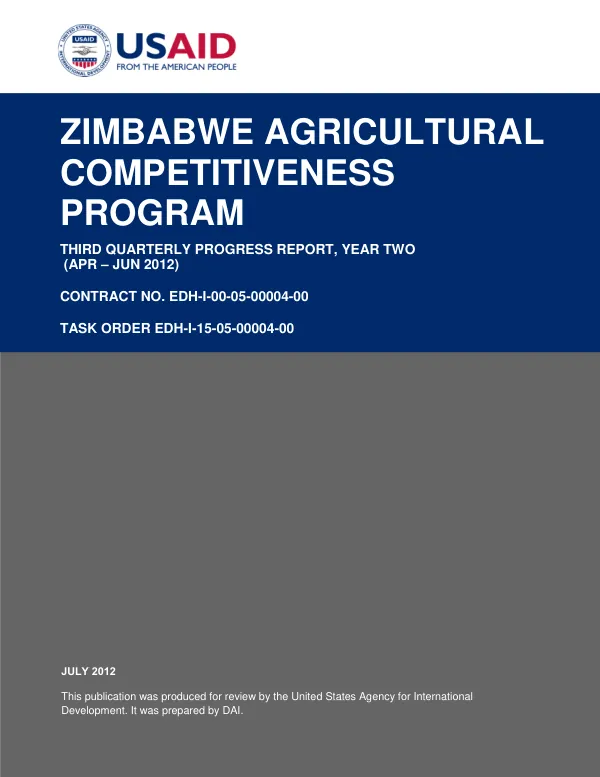
Zim ACP Year 4th Quarter Apr 2012 Report
The Zimbabwe Agricultural Competitiveness Program is a USAID-funded initiative aimed at improving the country's agricultural sector.
2012 · 60 pages
Sign in to readA free account is required to download.
Abstract
The program is divided into three components: Strengthening Organizations and Institutions, Improving Market Infrastructure and Institutions, and Improving Agro-Business Development Services, Agro-Business Skills, and Agro-Production and Productivity. Component 1 focuses on strengthening organizations and institutions to support evidence-based advocacy. This includes the establishment of a National Agricultural Policy and a National Agricultural Strategy. The program also supports the development of a National Agricultural Extension Policy and a National Agricultural Research Policy. Component 2 aims to improve market infrastructure and institutions. This includes the development of a commodity exchange, the establishment of a warehouse receipt system, and the improvement of market information systems. The program also supports the development of a national agricultural marketing strategy and a national agricultural trade policy. Component 3 focuses on improving agro-business development services, agro-business skills, and agro-production and productivity. This includes the provision of training and capacity-building programs for farmers, the development of a national agricultural extension strategy, and the improvement of agricultural research and development services. The program has made significant progress in its first two years, with notable achievements including the establishment of a national agricultural policy and a national agricultural strategy, the development of a commodity exchange, and the improvement of market information systems. The program has also faced several challenges, including challenges related to the operating environment, the operating environment has been affected by the country's economic crisis, which has led to a decline in agricultural production and a reduction in the availability of inputs and services. The program has also faced challenges related to the implementation of its activities, including challenges related to the capacity of the implementing partners and the availability of resources. Despite these challenges, the program has made significant progress in its first two years and is expected to continue making progress in the coming years. The program has also made significant progress in its gender and environmental components, including the development of a gender strategy and the implementation of activities aimed at promoting gender equality and reducing the environmental impact of agricultural production. The program has also made significant progress in its monitoring and evaluation component, including the development of a monitoring and evaluation plan and the implementation of activities aimed at monitoring and evaluating the program's progress. The program has also made significant progress in its networking and collaboration component, including the establishment of partnerships with various stakeholders, including government agencies, private sector companies, and civil society organizations. The program has also made significant progress in its budgetary component, including the development of a budget plan and the implementation of activities aimed at managing the program's budget. The program has also made significant progress in its annexes component, including the development of annexes related to the program's activities, including annexes related to the program's monitoring and evaluation plan, the program's budget plan, and the program's gender strategy. The program has also made significant progress in its acronyms component, including the development of a list of acronyms used in the program, including acronyms related to the program's components, the program's implementing partners, and the program's stakeholders. The program has also made significant progress in its lessons learned component, including the development of a lessons learned report and the implementation of activities aimed at documenting and disseminating the program's lessons learned. The program has also made significant progress in its challenges component, including the development of a challenges report and the implementation of activities aimed at addressing the program's challenges. The program has also made significant progress in its conclusion component, including the development of a conclusion report and the implementation of activities aimed at summarizing the program's progress and achievements. The program has also made significant progress in its annexes component, including