CNFA, INC.
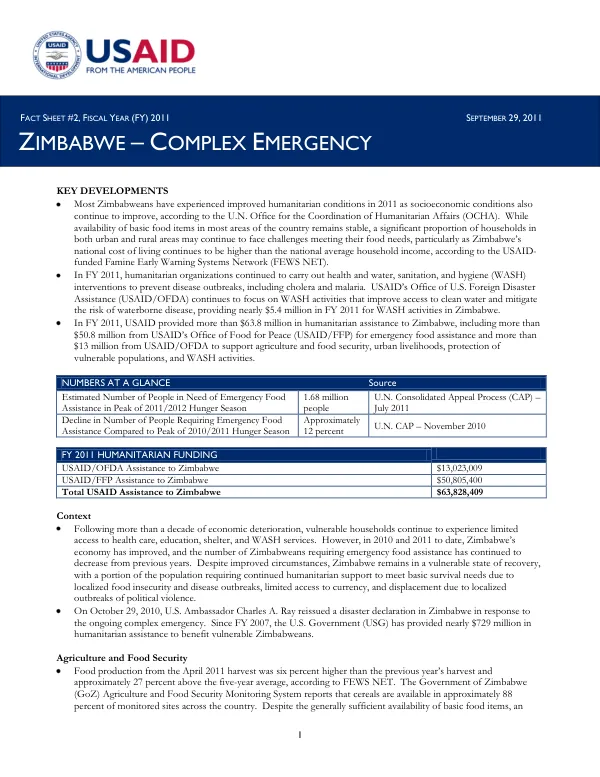
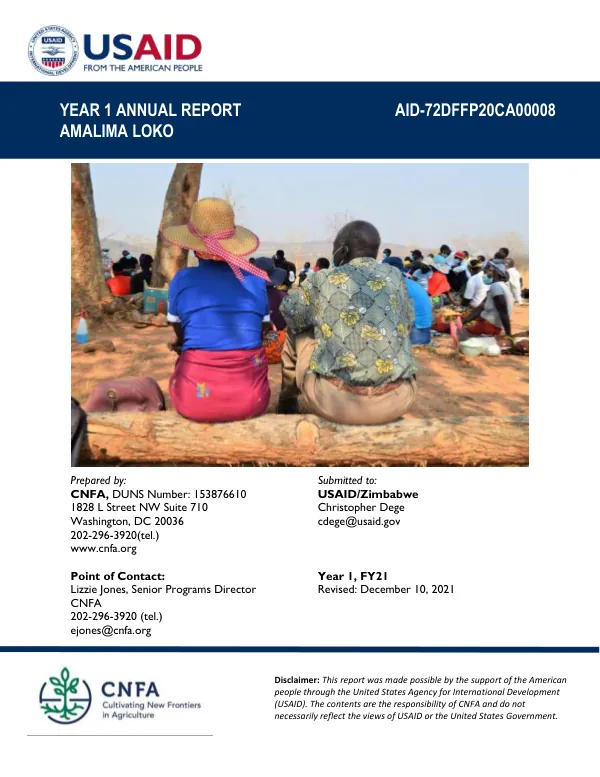
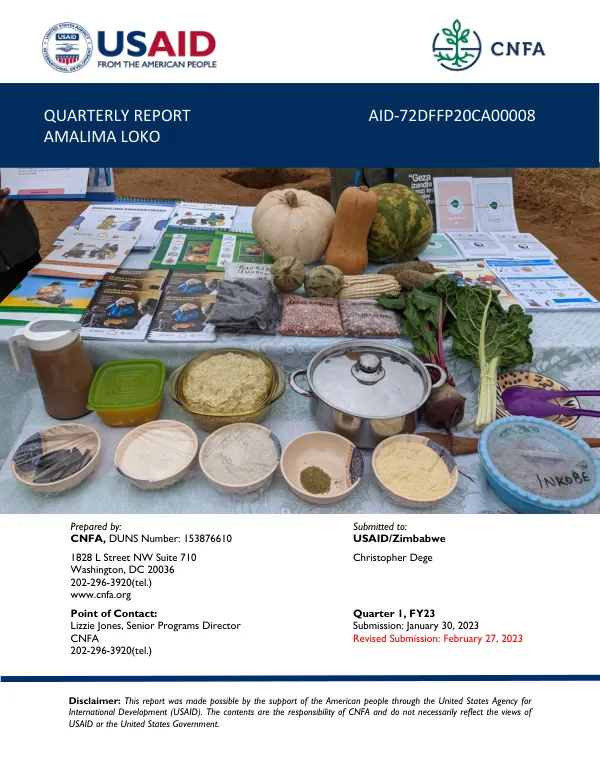
Quarterly Report: Amalima Loko Resilience Food Security Activity
The Amalima Loko program is a five-year Resilience Food Security Activity designed to improve food and nutrition security for over 67,000 vulnerable households in rural Zimbabwe.
2023 · 22 pages
Sign in to readA free account is required to download.
Abstract
The program is currently operating in 21 watershed clusters across Tsholotsho, Nkayi, Lupane, Binga, and Hwange districts of Matabeleland North province. The program aims to increase food access and sustainable watershed management. The program began on October 1, 2020, and is led by CNFA as the prime implementer, in partnership with the Organisation of Rural Associations for Progress (ORAP), Dabane, Mercy Corps, International Medical Corps (IMC), and The Manoff Group. This report covers the first quarter (October–December) of FY23, which is Year 3 of the Amalima Loko program. The 2022 staple grain harvest in Matabeleland North was relatively poor, and food security challenges increased through this quarter. However, seasonal rains began well in late October, and the overall precipitation outlook for the growing season is positive. It is expected that food availability will improve toward the end of next quarter. Amalima Loko made significant progress with watershed infrastructure activities this quarter, drilling 20 and rehabilitating 60 boreholes, completing conservation works at ten sites totaling 250 hectares of cleared land, and installing a one-hectare irrigation scheme in Ntonjeni, Nkayi. The program also signed grant agreements with Greenline Africa and Mefemo Trading following USAID approval. Blanket Supplementary Food Program (BSFP) distributions continued in all program areas, reaching 31,985 participants. The program hosted several USAID monitoring visits this quarter, including visits from BHA Nutrition Advisor Mike Manske, Activity Manager, and Meal Specialist, and William Dreyer, Humanitarian Assistance Officer at USAID/Southern Africa Division, and Justin Mupeyiwa, USAID/ BHA Regional Monitoring and Evaluation Specialist. Community Visioning (CV) was a key activity this quarter, with the program supporting villages to identify their own development priorities and develop local transformation plans. Three Village Action Plans and five Ward Transformation Plans were developed in the Nkayi (Zenka and Gwelutshena clusters), and all 12 ward plans submitted to the Hwange RDDC were accepted and adopted. Across all districts, Amalima Loko supported communities to submit 45 Ward Transformation Plans to local government by the end of Q1. Community Action was also a significant activity this quarter, with 99 villages embarking on collective action activities, independent of Amalima Loko, such as construction of dip tanks, dams, schools, clinics, and protection of grazing lands. Some examples of community-led works that were completed include the construction of lodging for three teachers at Hilltop secondary school and the drilling and equipping of a new borehole in Sihlangene village. The program also made progress with commodity management, health and nutrition, agriculture and livelihoods, and grants. The FY22 Annual Report was approved on December 27, 2022, after providing Annual Report Issue Letter responses. Overall, Amalima Loko continued to make significant progress in the first quarter of FY23, with a focus on community-led development and sustainable watershed management.
Related documents