USAID DEC
Zimbabwe, anticipation of economic and humanitarian needs : electric energy and the transition
Sign inAFRICAN-AMERICAN SCHOLARS COUNCIL
Zimbabwe, anticipation of economic and humanitarian needs : electric energy and the transition
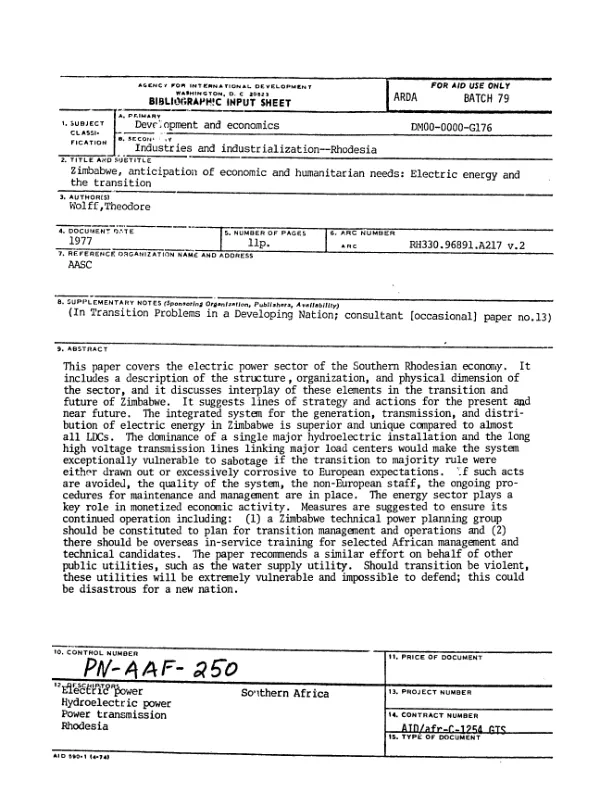
This paper covers the electric power sector of the Southern Rhodesian economy.
Wolff, Theodore · 1970
Sign in to readA free account is required to download.
Abstract
It includes a description of the structure, organization, and physical dimension of the sector, and it discusses interplay of these elements in the transition and future of Zimbabwe. It suggests lines of strategy and actions for the present and near future. The integrated system for the generation, transmission, and distribution of electric energy in Zimbabwe is superior and unique compared to almost all LDC"s. The dominance of a single major hydroelectric installation and the long high voltage transmission lines linking major load centers would make the system exceptionally vulnerable to sabotage if the transition to majority rule were either drawn out or excessively corrosive to European expections. If such acts are avoided, the quality of the system, the non-European staff, the ongoing procedures for maintenance and management are in place. The energy sector plays a key role in monetized economic activity. Measures are suggested to ensure its continued operation including: (1) a Zimbabwe technical power planning group should be constituted to plan for transition management and operations and (2) there should be overseas in-service training for selected African management and technical candidates. The paper recommends a similar effort on behalf of other public utilities, such as the water supply utility. Should transition be violent, these utilities will be extremely vulnerable and impossible to defend; this could be disastrous for a new nation.
Related documents