USAID DEC
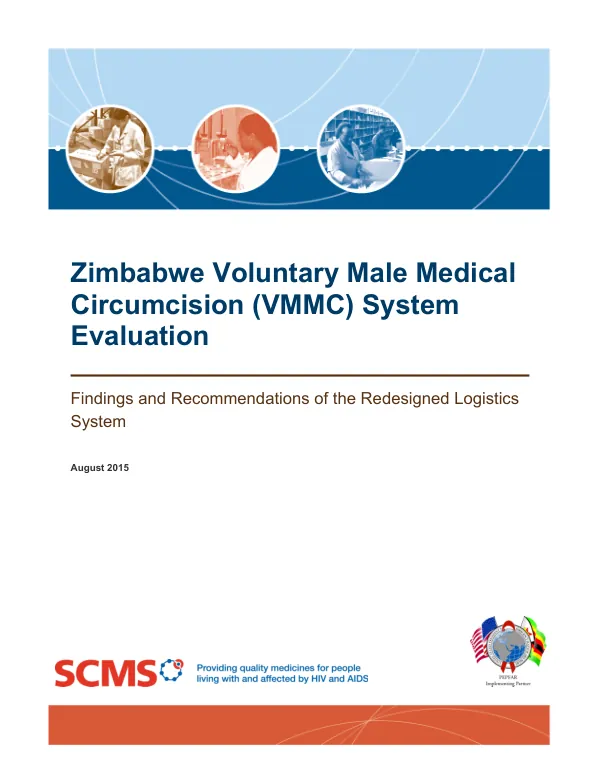
Zimbabwe Voluntary Male Medical Circumcision (VMMC) Evaluation: Findings and Recommendations of the Redesigned Logistics System
Sign inPOPULATION SERVICES INTERNATIONAL/DKT INTERNATIONAL
Zimbabwe Voluntary Male Medical Circumcision (VMMC) Evaluation: Findings and Recommendations of the Redesigned Logistics System
The Zimbabwe Voluntary Medical Male Circumcision (VMMC) program was initiated in 2009 by the Ministry of Health and Child Care (MOHCC) to prevent HIV infections.
2015 · 56 pages
Sign in to readA free account is required to download.
Abstract
The program has undergone significant evolution since its inception, with the VMMC ordering and distribution system expanding from five static sites to approximately 90 sites in 2014. A system assessment in 2012 recommended a redesign of the VMMC logistics system, which was implemented in 2013 and rolled out to all VMMC sites in January 2014. The system became fully operational in July 2014, with four distribution runs completed as of April 2015. The redesigned logistics system aimed to improve the management of VMMC commodities, including the procurement, storage, and distribution of essential medicines and health supplies. The system was designed to strengthen existing supply chains in the field and facilitate collaboration and information exchange among key donors and service providers. The Supply Chain Management System (SCMS) was established to support the implementation of the VMMC program, with the goal of enabling the unprecedented scale-up of HIV/AIDS prevention, care, and treatment programs in the developing world. The evaluation of the redesigned logistics system was conducted using a two-pronged approach, including in-depth interviews with central level stakeholders and partners, as well as a quantitative evaluation of sample VMMC sites. The evaluation aimed to assess the effectiveness of the redesigned system in managing VMMC commodities and identify areas for improvement. The findings of the evaluation are presented in the following sections. The evaluation revealed that the redesigned logistics system has improved the management of VMMC commodities, with a significant increase in the number of VMMC procedures performed and a reduction in the stockout rates of essential medicines and health supplies. The system has also improved the coordination and communication among stakeholders, with a higher level of collaboration and information exchange observed among key donors and service providers. However, the evaluation also identified several challenges and areas for improvement, including the need for further training and supervision of health facility staff, the development of standard operating procedures for the management of VMMC commodities, and the improvement of the logistics management information system (LMIS) to enhance the tracking and monitoring of VMMC commodities. The recommendations of the evaluation include the implementation of a comprehensive training program for health facility staff, the development of standard operating procedures for the management of VMMC commodities, and the improvement of the LMIS to enhance the tracking and monitoring of VMMC commodities. Additionally, the evaluation recommends the establishment of a centralized warehouse to improve the storage and distribution of VMMC commodities, and the development of a coordination mechanism to enhance the collaboration and information exchange among stakeholders. The evaluation of the redesigned logistics system has provided valuable insights into the effectiveness of the system in managing VMMC commodities and has identified areas for improvement. The recommendations of the evaluation are expected to contribute to the further improvement of the VMMC program and the achievement of its goals in preventing HIV infections and improving the health outcomes of the population.
Related documents