ENVIRONMENTAL INCENTIVES, LLC
04_USAID Colombia Nature Tourism Rapid Assessment
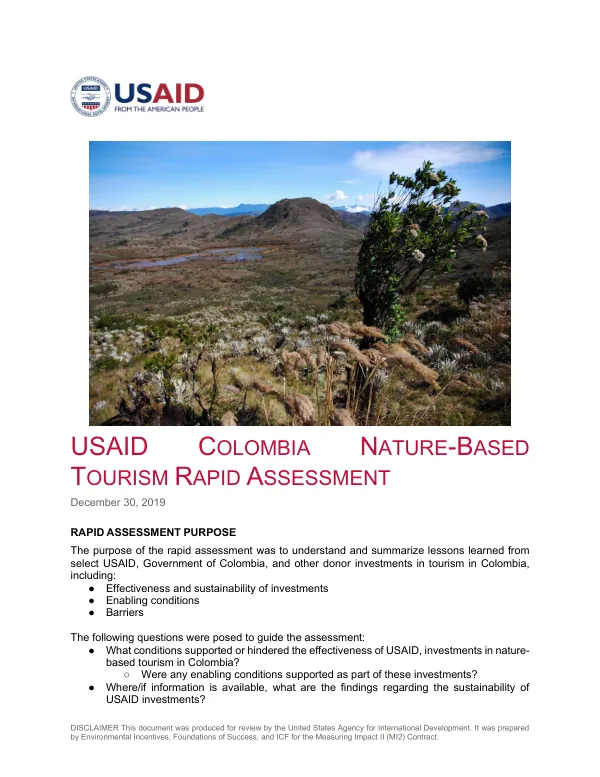
The USAID Colombia Nature-Based Tourism Rapid Assessment was conducted in December 2019 to understand and summarize lessons learned from select USAID, Government of Colombia, and other donor investments in tourism in Colombia.
2019 · 5 pages
Sign in to readA free account is required to download.
Abstract
The assessment aimed to identify the effectiveness and sustainability of investments, enabling conditions, and barriers to nature-based tourism development. The rapid assessment findings indicate that USAID interventions in tourism have largely differed in their approaches and reach. Most of the support has been channeled through sub-activities of less than one year, focused on providing specific supplies and training to organizations in certain skills needed for tourism and/or business management. However, some activities have incorporated multi-pronged approaches to develop destinations. The assessment identified several enabling conditions that are crucial for the success of nature-based tourism projects, including planning and carrying capacity, selection of target market, trust between community members and implementing partners, destinations and routes that connect to towns, adequate community support, participation and coordination with the private sector, local government, and donors, and a mix of community capacity. Conversely, factors that hinder the success of these projects include market saturation, dependency on donors, desertion, large investments needed for enabling conditions, and lack of government support. The assessment also highlighted the importance of selecting intervention sites based on enabling conditions. While the creation or strengthening of enabling conditions were not supported by USAID activities, they were used to select intervention sites. The analysis done to identify enabling conditions may serve as a diagnosis of gaps in organizations and destinations. The major recommendations for a future nature-based tourism activity include investing in enabling conditions, such as planning and carrying capacity, and selecting intervention sites based on these conditions. Additionally, it is recommended to prioritize destinations and routes that connect to towns, ensure adequate community support, and promote participation and coordination with the private sector, local government, and donors. The assessment also identified several USAID activities related to tourism, including the Paisaje de Conservación, Paisaje de Conservación Caribe, Afro-Colombian and Indigenous Program, Reintegration and Prevention of Recruitment Activity, Inclusion for Peace Activity, Programade Alianzas para la Reconciliación, Conservation and Governance, Community Development and Licit Opportunities, Natural Wealth, and Páramos y Bosques. These activities have focused on various aspects of nature-based tourism development, including awareness, training, planning, marketing, and infrastructure development. Overall, the USAID Colombia Nature-Based Tourism Rapid Assessment provides valuable insights into the effectiveness and sustainability of investments in nature-based tourism development in Colombia. The assessment highlights the importance of investing in enabling conditions and selecting intervention sites based on these conditions to ensure the success of nature-based tourism projects.