USAID DEC
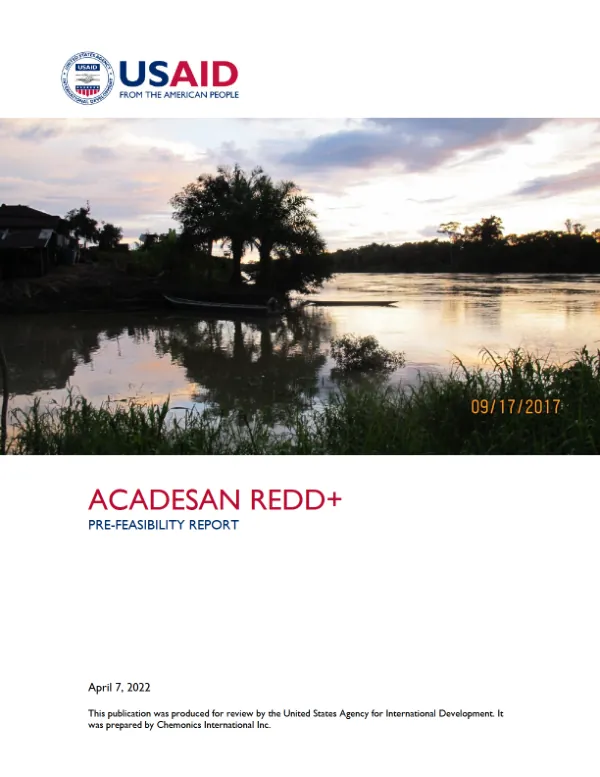
GABARRA CATALAURA AND MOTILON BARI REDD+ PRE-FEASIBILITY REPORT
The GABARRA CATALAURA AND MOTILON BARI REDD+ pre-feasibility report is a comprehensive study on the potential for reducing greenhouse gas emissions in the region of Chocó, Colombia.
212 pages
Sign in to readA free account is required to download.
Abstract
The report is a result of a collaborative effort between ACADESAN and the United States Agency for International Development (USAID). The project aims to reduce emissions from deforestation and forest degradation in the GABARRA CATALAURA AND MOTILON BARI region, which is characterized by high levels of biodiversity and endemism. The region is home to several indigenous communities, including the Chocó Department's Afro-Colombian and indigenous populations. The project's location is situated in the Chocó Department, which is one of the most biodiverse regions in the world. The region's terrain is characterized by rugged mountains, valleys, and rivers, with a climate that ranges from tropical to subtropical. The project area covers approximately 1,500 square kilometers, with a mix of primary and secondary forests, as well as agricultural lands and urban areas. The project's stakeholders include local communities, indigenous groups, government agencies, and private sector organizations. The project's land tenure is complex, with a mix of private and communal lands, as well as protected areas and indigenous reserves. The national context for the project is shaped by Colombia's national REDD policy, which aims to reduce greenhouse gas emissions from deforestation and forest degradation. The country has established a forest reference emission level, which serves as a baseline for measuring emissions reductions. The project's methodology is based on the GHG Program, which is a widely accepted standard for measuring and verifying emissions reductions. The project's baseline conditions are characterized by high levels of deforestation and forest degradation, driven by factors such as agricultural expansion, urbanization, and logging. The project's most likely baseline scenario assumes a continuation of these trends, with a projected increase in emissions over the next 10 years. The project's proposed activities aim to reduce emissions from deforestation and forest degradation through a combination of conservation, reforestation, and sustainable land-use practices. The project's alignment with baseline land uses is critical, as it ensures that the project's activities do not displace existing land uses or exacerbate existing social and environmental impacts. The project's additionality considerations are critical, as they ensure that the project's activities are additional to business-as-usual practices and do not rely on existing funding or incentives. The project's risks are also carefully assessed, including factors such as land tenure, community engagement, and market volatility. The project's GHG quantification is based on a geospatial analysis of the project area, which uses remote sensing and GIS technologies to estimate emissions reductions. The project's carbon accounting methodology is based on the REDD methodology, which is widely accepted by the international community. The project's financial feasibility is assessed through a detailed analysis of costs and revenues, including project costs, credit sales revenue, and projected timelines for project development. The project's marketing strategy is also carefully considered, including the characterization of potential investors and the development of alternative livelihood value chains. The project's conclusions highlight the potential for reducing greenhouse gas emissions in the GABARRA CATALAURA AND MOTILON BARI region, while also promoting sustainable land-use practices and community development. The project's recommendations for project development are based on a careful assessment of the project's risks, costs, and benefits, and are designed to ensure the project's long-term sustainability and effectiveness.