USAID DEC
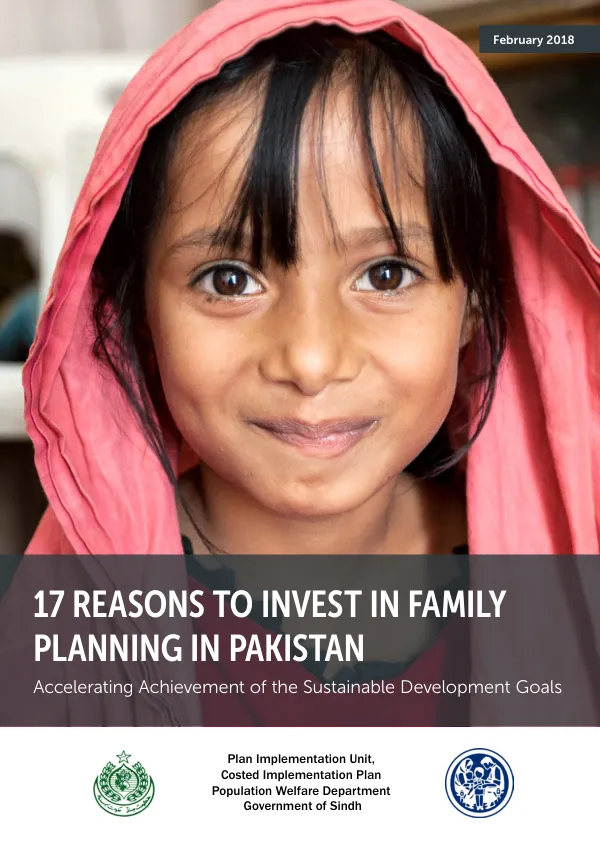
17 Reasons to Invest in Family Planning in Pakistan: Accelerating Achievement of the Sustainable Development Goals
Sign inAVENIR HEALTH
17 Reasons to Invest in Family Planning in Pakistan: Accelerating Achievement of the Sustainable Development Goals
Pakistan's population is projected to increase from 208 million people in 2017 to 377 million by 2050, with an average annual growth rate of 2.4 percent from 1998 to 2017.
2018 · 19 pages
Sign in to readA free account is required to download.
Abstract
The country's total fertility rate (TFR) remains the highest in the region, at 3.8 births per woman. This rapid population growth places significant strain on the government to respond to the needs of the populace, particularly in terms of health, education, and employment systems. Pakistan's earlier commitments to the Millennium Development Goals (MDGs) focused on poverty reduction, gender equality, health, education, and environmental sustainability. While progress was made towards achieving these goals, only one of the eight MDGs was realized: Goal 7 (ensure environmental sustainability). Progress towards other essential health commitments, including Goal 4 (reduce child mortality), Goal 5 (improve maternal health), and Goal 6 (combat HIV, AIDS, and malaria), lagged behind national targets. The Pakistan Vision 2025 recognizes the importance of family planning in improving overall health and economic prosperity. The vision commits to increasing spending on health to 3 percent of the country's gross domestic product and outlines critical steps to promote the availability and uptake of family planning services, including expanding the Lady Health Worker Program, lowering the fertility rate, improving primary care, and increasing the availability of healthcare providers trained in family planning. Pakistan's rapid population growth also has significant implications for the country's natural resources, peace, and economic prosperity. A firm commitment to strong family planning and reproductive health in Pakistan could contribute to a wide range of transformational development opportunities, including reduction of poverty, conservation of natural resources, promotion of gender equality, mitigation of the impact of climate change, and reduction in the potential for conflict. The country's total fertility rate (TFR) remains the highest in the region, at 3.8 births per woman, with significant regional disparities. The TFR in urban areas is 2.6 births per woman, compared to 4.1 births per woman in rural areas. This disparity highlights the need for targeted interventions to promote family planning services in rural areas. Pakistan's population growth also has significant implications for the country's education system. The country must prepare to respond to increased demand on existing educational systems, particularly in terms of primary and secondary education. Prioritizing the promotion and provision of voluntary family planning services to slow population growth will better prepare the government of Pakistan to respond to the needs of its population. The government of Pakistan has committed to increasing its total contraceptive prevalence rate for married women to 55 percent and providing universal access to reproductive health by 2020. However, progress towards achieving these commitments has been slow, with only 35 percent of married women using modern contraception in 2017. This highlights the need for increased efforts to promote family planning services and improve access to reproductive health care in Pakistan.
Related documents