USAID DEC
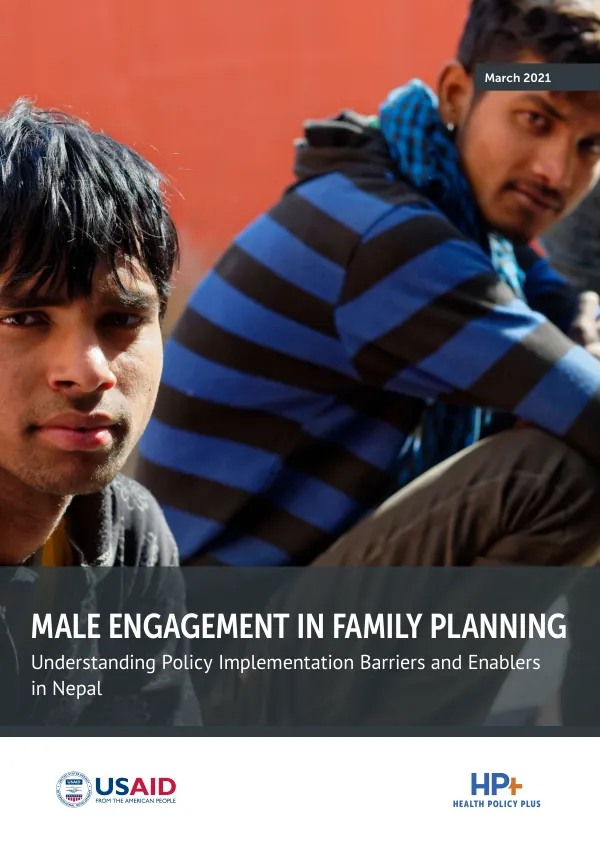
Male Engagement in Family Planning: Understanding Policy Implementation Barriers and Enablers in Nepal
Sign inAVENIR HEALTH
Male Engagement in Family Planning: Understanding Policy Implementation Barriers and Enablers in Nepal
Male engagement in family planning is a critical aspect of reproductive health, particularly in countries with high rates of child marriage and adolescent pregnancy.
2021 · 16 pages
Sign in to readA free account is required to download.
Abstract
Nepal is one such country, with 58% of its population under the age of 25. Encouraging positive habits from an early age increases adherence to them, making it essential to reach adolescent boys and young men to protect their own reproductive health and that of their family. The Health Policy Plus (HP+) project, funded by the U.S. Agency for International Development (USAID), examined the policy environment for male engagement in family planning in Nepal. The analysis applied a male engagement policy framework, which is organized around men's and boys' three overlapping roles: as clients and users, supportive partners, and agents of change. The framework contains 27 evidence-based policy provisions that influence men's and boys' participation in family planning and seven principles for male engagement. The male engagement policy framework emphasizes the importance of providing male-friendly services, including high-quality, accessible information and services, as well as a wide availability of condoms. It also directs services to have protocols in place to assess and address men's family planning needs. Additionally, the framework recognizes the role of men in caregiving and includes strategies to enhance their caregiving and parenting skills. HP+ conducted a policy review and key informant interviews to assess the extent to which policies in Nepal adhere to the standards in the male engagement policy framework. The analysis identified 26 policies and guidelines that influence men's and boys' involvement in family planning in Nepal. A text analysis of these policies revealed that many of them do not fully adhere to the standards in the male engagement policy framework, indicating policy barriers to effective implementation. Key informant interviews were conducted with stakeholders in Kathmandu, Karnali Province, and Province No. 2 to identify key barriers to and enablers of effective implementation of family planning and male engagement policies. The interviews revealed that policy barriers include a lack of clear guidelines for male-friendly services, inadequate training for healthcare providers, and limited availability of male-friendly information and services. In contrast, enablers of effective implementation include the presence of male champions and advocates, community-based initiatives, and multisectoral approaches that combine community norms, outreach, mobilization, and mass-media campaigns with group education. The analysis identified priority policy actions that strengthen a supportive environment for engaging men and boys in family planning programs and services. The findings of this analysis will inform future efforts to integrate adolescent-focused male engagement into family planning policies and strengthen their implementation. By addressing policy barriers and leveraging enablers, Nepal can create a more supportive environment for engaging men and boys in family planning, ultimately improving reproductive health outcomes for all.
Related documents