AVENIR HEALTH
Health Policy Plus: Pakistan
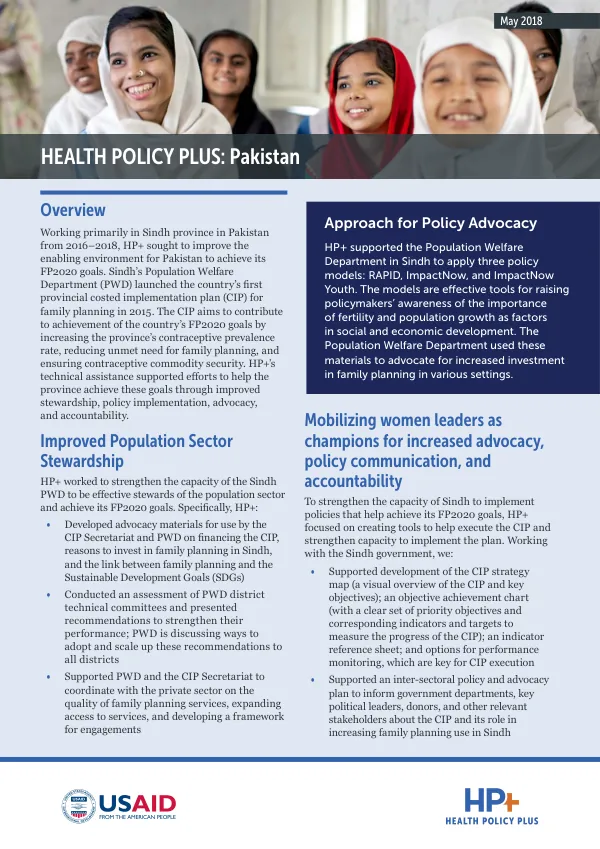
Health Policy Plus (HP+) worked in Sindh province, Pakistan from 2016 to 2018 to improve the enabling environment for the country to achieve its Family Planning 2020 (FP2020) goals.
2018 · 2 pages
Sign in to readA free account is required to download.
Abstract
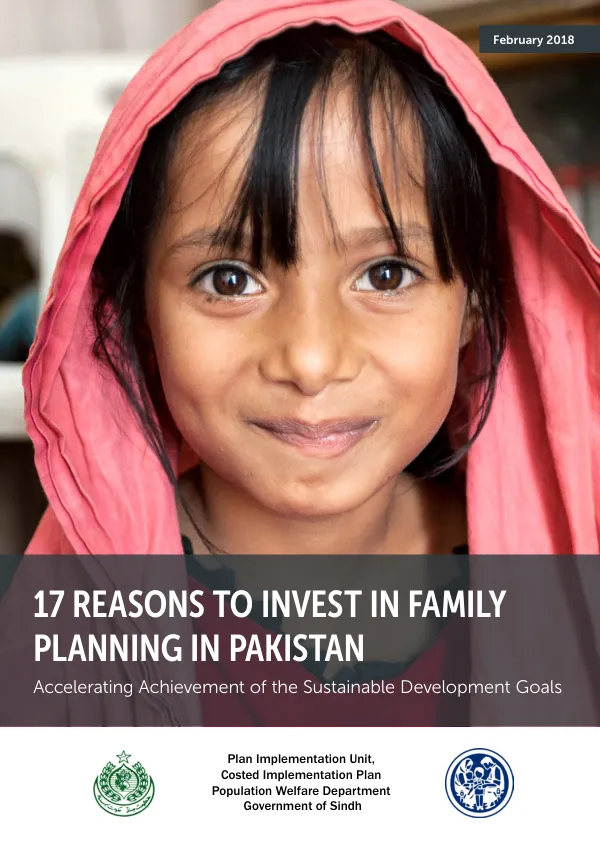
The Sindh Population Welfare Department (PWD) launched the country's first provincial costed implementation plan (CIP) for family planning in 2015. The CIP aimed to contribute to the achievement of the country's FP2020 goals by increasing the province's contraceptive prevalence rate, reducing unmet need for family planning, and ensuring contraceptive commodity security. HP+ provided technical assistance to support the province in achieving these goals through improved stewardship, policy implementation, advocacy, and accountability. The organization strengthened the capacity of the Sindh PWD to be effective stewards of the population sector. This involved developing advocacy materials for use by the CIP Secretariat and PWD on financing the CIP, reasons to invest in family planning in Sindh, and the link between family planning and the Sustainable Development Goals (SDGs). HP+ also conducted an assessment of PWD district technical committees and presented recommendations to strengthen their performance. HP+ mobilized women leaders as champions for increased advocacy, policy communication, and accountability. The organization created tools to help execute the CIP and strengthen capacity to implement the plan. This included supporting the development of the CIP strategy map, an objective achievement chart, an indicator reference sheet, and options for performance monitoring. HP+ also supported an inter-sectoral policy and advocacy plan to inform government departments, key political leaders, donors, and other relevant stakeholders about the CIP and its role in increasing family planning use in Sindh. HP+ applied three policy models: RAPID, ImpactNow, and ImpactNow Youth. These models are effective tools for raising policymakers' awareness of the importance of fertility and population growth as factors in social and economic development. The Population Welfare Department used these materials to advocate for increased investment in family planning in various settings. HP+ also strengthened the capacity of women, journalists, and male champions to advocate for improved implementation of family planning policies and programs. The organization trained 83 male social mobilizers and taluka population welfare officers on leadership, advocacy, and myths and misconceptions around family planning. Participants developed action plans to share information about family planning in their own districts. HP+ also worked through the White Ribbon Alliance to organize a citizens' hearing on respectful maternity care, which led to the endorsement of the inclusion of the Respectful Maternal Care Charter in the minimum service delivery standards in Sindh. Through its in-country partnerships, HP+ has helped shape the family planning sector in Sindh and contributed to the province's achievement of family planning goals. Ongoing efforts to sustain this momentum should include continued coordination between the PWD, Department of Health, the private sector, and nongovernmental organizations to share data and expand quality family planning services in the province. Strengthening provincial policies and operational guidelines to address the family planning needs of youth and expanding youth-friendly reproductive health services is also crucial. Advocacy for increased programmatic and financial investments in the province's family planning programs, including priority interventions identified in the CIP, is essential. Raising awareness of population and development issues, including implementation of family planning programs and services, among policymakers and program managers is also necessary.