USAID DEC
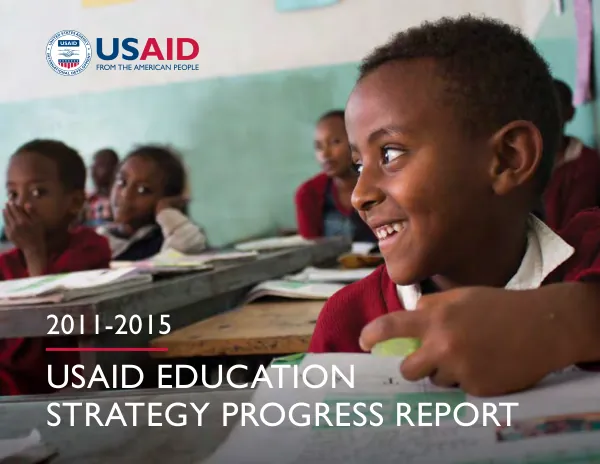
2011-2015 USAID Education Strategy Progress Report
The 2011-2015 USAID Education Strategy aimed to address the pressing challenge of limited access to quality education for children and youth in developing countries.
2016 · 56 pages
Sign in to readA free account is required to download.
Abstract
The strategy focused on measurable outcomes and ambitious targets, transforming the conversation in the sector from counting inputs and activities to measuring results at the beneficiary level. This approach helped concentrate USAID's investments and create transformative change at the global and country level. USAID supported 151 basic education programs in 46 countries, directly benefiting more than 41.6 million children and youth. The annual reach of basic education programs aligned with the strategy's goals grew from 7.6 million children and youth in 29 countries in 2011 to 25.7 million children and youth in 45 countries in 2015. The number of basic education programs aligned with the strategy's goals increased by 55 percent, and the number of partner countries supporting basic education programming increased by 55 percent. The strategy's accomplishments include improved pedagogy through training for an average of 450,000 teachers annually, increased parental and community engagement through support for an average of 26,000 parent teacher associations or community-based school governance structures annually, and the provision of 146 million essential teaching and learning materials over the course of the strategy. USAID's basic education programs advanced progress toward the two numeric targets of the 2011-2015 Strategy: improved reading skills for 100 million children in primary grades by 2015 and increased equitable access to education in crisis and conflict environments for 15 million learners by 2015. For the All Children Reading target, 1.5 million learners met the definition of improved reading, with 900,000 girls and 600,000 boys. However, reading assessment data is available for less than 30 percent of the 37.7 million learners who have received reading interventions to date. For the Education in Crisis and Conflict target, 11.8 million individual children and youth were reached through programming designed to improve or establish safe, quality education, including increased access to education for 2.4 million who were previously out-of-school. USAID also supported 88 programs aligned with the higher education and workforce development objectives of the strategy, including 79 workforce development programs in 32 countries and 57 higher education programs in 20 countries. The quality and relevance of higher education curricula were improved for more than 161 post-secondary education programs, and an average of 3,000 individuals per year participated in education, training, or exchanges in the United States.