USAID DEC
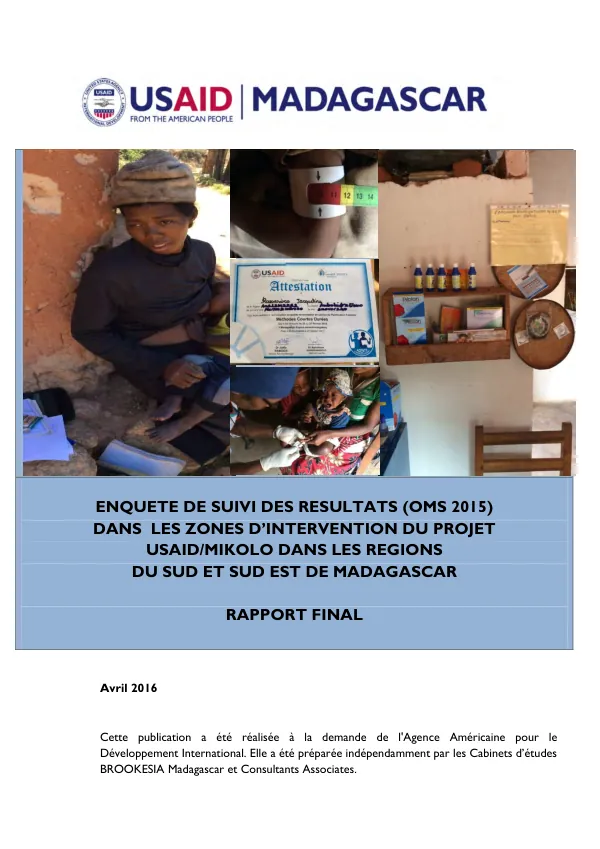
2015 Outcome Monitoring Survey (OMS) dans les zones d’intervention du projet USAID/MIKOLO dans les régions du Sud et Sud-Est de Madagascar
Sign inBROOKESIA MADAGASCAR
2015 Outcome Monitoring Survey (OMS) dans les zones d’intervention du projet USAID/MIKOLO dans les régions du Sud et Sud-Est de Madagascar
The 2015 Outcome Monitoring Survey (OMS) was conducted in the intervention zones of the USAID/MIKOLO project in the South and Southeast regions of Madagascar.
2016 · 63 pages
Sign in to readA free account is required to download.
Abstract
The survey aimed to assess the performance of the project in improving health outcomes, particularly in the areas of malaria, maternal and child health, family planning, and water, sanitation, and hygiene (WASH). The survey used a stratified sampling method to select 1,200 households from 30 communes in the intervention zones. Data were collected through face-to-face interviews with household members, as well as through observations of household conditions and behaviors. The survey found that the prevalence of malaria was high in the intervention zones, with 34% of children under the age of 5 testing positive for malaria. However, the use of insecticide-treated bed nets (ITNs) was low, with only 22% of households owning at least one ITN. The survey also found that the majority of households (83%) had access to a source of improved water, but only 45% of households had access to a latrine. In terms of maternal and child health, the survey found that the majority of women (95%) had received at least one antenatal care visit, and 85% of women had received a tetanus toxoid injection. However, the survey also found that the majority of children (63%) had not received all of the recommended vaccinations. The survey also found that the use of modern contraceptive methods was low, with only 22% of women of reproductive age using a modern method. However, the survey also found that the majority of women (85%) had received education and counseling on family planning. In terms of WASH, the survey found that the majority of households (83%) had access to a source of improved water, but only 45% of households had access to a latrine. The survey also found that the majority of households (75%) had access to a handwashing station with soap and water. The survey also found that the majority of households (85%) had access to a source of food, but 22% of households reported experiencing food insecurity. The survey also found that the majority of households (75%) had access to a source of income, but 30% of households reported experiencing economic insecurity. Overall, the survey found that the USAID/MIKOLO project had made some progress in improving health outcomes in the intervention zones, but there were still significant challenges to be addressed. The survey recommended that the project focus on increasing the use of ITNs, improving access to latrines and improved water sources, and increasing the use of modern contraceptive methods. The survey also recommended that the project focus on improving access to healthcare services, particularly for pregnant women and children under the age of 5. The survey also recommended that the project focus on increasing education and counseling on family planning, as well as improving access to modern contraceptive methods. In terms of geographic focus, the survey was conducted in the South and Southeast regions of Madagascar, which are among the poorest and most vulnerable regions in the country. The survey found that the majority of households in these regions faced significant challenges in accessing healthcare services, clean water, and sanitation facilities. The survey was conducted in April 2016, and the results were used to inform the development of the USAID/MIKOLO project's work plan for 2016-2017. The survey was funded by the United States Agency for International Development (USAID) and was implemented by the Brookesia Madagascar and Consultants Associates.