USAID DEC
2019 GIIN Impact Measurement and Management Survey
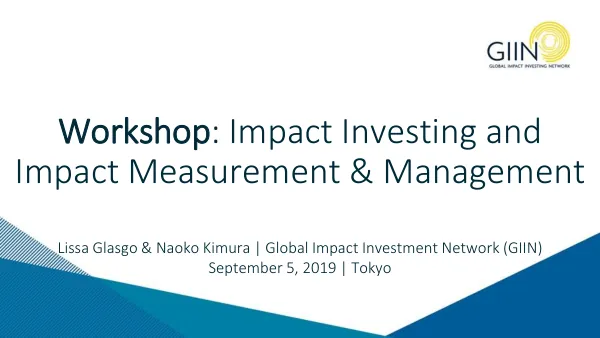
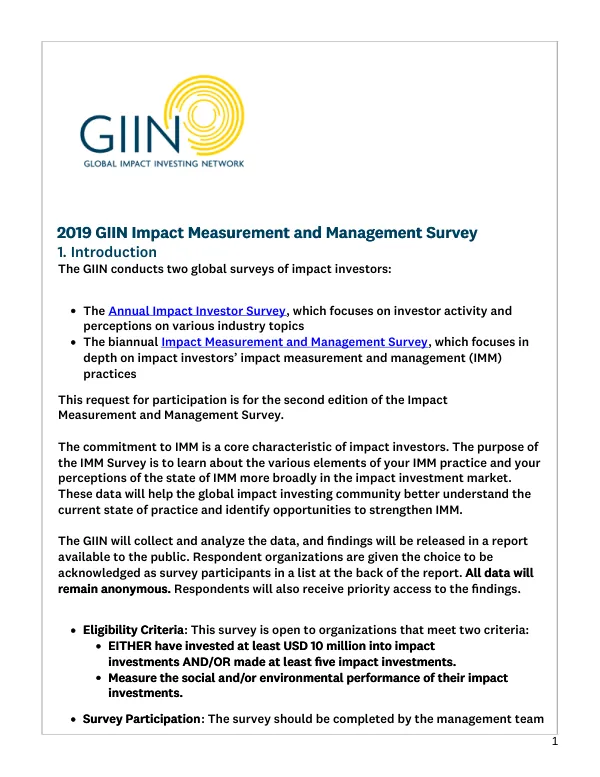
The 2019 GIIN Impact Measurement and Management Survey is a global initiative conducted by the Global Impact Investing Network (GIIN) to gather information on impact investors' impact measurement and management (IMM) practices.
2019 · 38 pages
Sign in to readA free account is required to download.
Abstract
The survey aims to understand the current state of IMM practices among impact investors and identify opportunities to strengthen IMM. The GIIN will collect and analyze the data, and findings will be released in a report available to the public. The survey is open to organizations that have invested at least USD 10 million in impact investments or made at least five impact investments. Respondents must measure the social and/or environmental performance of their impact investments. The survey is expected to take 30-45 minutes to complete, and respondents will have the option to be acknowledged as survey participants in a list at the back of the report. The survey collects information on organizational background, including the location of the organization's headquarters and the category that best describes the organization type. Respondents are also asked about their impact investing portfolio, including the estimated current total impact investment assets under management and the allocation of assets to different market types and instruments. The survey also explores the motivations for impact measurement and management, including the primary impact objective and the stakeholder groups and ecoregions that respondents specifically seek to impact. The GIIN's definition of impact investments is used throughout the survey, which includes direct investments into companies or projects, indirect investments into funds or other intermediaries, and borrowers or issuers whose debt is held. The survey is designed to gather information on the current state of IMM practices among impact investors and to identify opportunities to strengthen IMM. The findings from the survey will be released in a report available to the public, and respondents will have priority access to the findings. The survey is an important initiative for the global impact investing community, as it aims to promote best practices in IMM and support the growth of the impact investing market. The GIIN's definition of impact investments is a key aspect of the survey, as it includes investments made with the intention to generate positive, measurable social and environmental impact alongside a financial return. The survey is open to organizations that meet the eligibility criteria, and respondents are encouraged to participate to contribute to the growth of the impact investing market and to promote best practices in IMM. The survey's findings will provide valuable insights into the current state of IMM practices among impact investors and will help to identify opportunities to strengthen IMM. The report will be available to the public, and respondents will have priority access to the findings. The survey is an important initiative for the global impact investing community, and its findings will contribute to the growth of the impact investing market and promote best practices in IMM. The GIIN's definition of impact investments is used throughout the survey, and respondents are asked to answer questions with respect to their impact investing portfolio only. The survey is designed to gather information on the current state of IMM practices among impact investors and to identify opportunities to strengthen IMM. The findings from the survey will be released in a report available to the public, and respondents will have priority access to the findings. The survey's focus on impact measurement and management is a key aspect of the initiative, as it aims to promote best practices in IMM and support the growth of the impact investing market. The GIIN's definition of impact investments is a key aspect of the survey, and respondents are asked to answer questions with respect to their impact investing portfolio only. The survey is designed to gather information on the current state of IMM practices among impact investors and to identify opportunities to strengthen IMM.