DAI
Year Seven Annual Work Plan
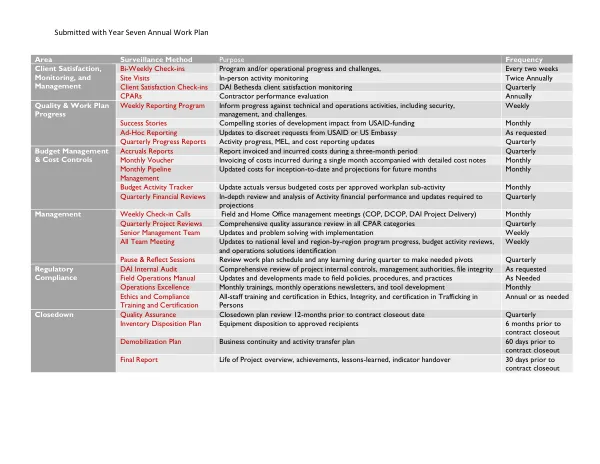
The Year Seven Annual Work Plan outlines a comprehensive framework for monitoring and managing program progress, client satisfaction, and operational activities.
2022 · 1 pages
Sign in to readA free account is required to download.
Abstract
The plan emphasizes the importance of regular check-ins, site visits, and client satisfaction monitoring to ensure effective implementation and adaptability. Bi-weekly check-ins between program staff and management facilitate the exchange of information on program and operational progress, challenges, and lessons learned. These meetings occur every two weeks and serve as a critical mechanism for identifying and addressing issues in a timely manner. In-person activity monitoring through site visits is conducted twice annually, providing an opportunity for direct observation and assessment of program activities. Client satisfaction is a key focus area, with quarterly client satisfaction check-ins conducted using the DAI Bethesda client satisfaction monitoring framework. This framework enables the collection of feedback and insights from clients, informing program adjustments and improvements. Contractor performance evaluation, or CPARs, is conducted annually, providing a comprehensive assessment of contractor performance and identifying areas for improvement. The plan also outlines a range of reporting mechanisms to ensure transparency and accountability. Weekly reporting on program progress, including technical and operational activities, management, and challenges, is a critical component of the plan. Success stories of development impact from USAID-funding are compiled and shared on a monthly basis, highlighting the achievements and impact of the program. In addition to these reporting mechanisms, the plan includes a range of financial management and budgeting processes. Accruals reports are generated quarterly, providing an overview of invoiced and incurred costs during a three-month period. Monthly vouchers are submitted, accompanied by detailed cost notes, to ensure accurate and transparent financial management. The monthly pipeline management process provides an updated view of costs for inception-to-date and projections for future months, enabling informed budgeting and financial planning. The plan also emphasizes the importance of quality and work plan progress, with weekly reporting on program progress against technical and operations activities. Quarterly progress reports provide an overview of activity progress, monitoring, evaluation, and learning, as well as cost reporting updates. Budget management and cost controls are critical components of the plan, with quarterly financial reviews providing an in-depth analysis of activity financial performance and updates required to projections. The plan also includes a range of management and team meetings, including weekly check-in calls between field and home office management, monthly all-team meetings, and quarterly project reviews. These meetings provide an opportunity for updates on national level and region-by-region program progress, budget activity reviews, and operations solutions identification. The plan also includes pause and reflect sessions, quarterly review of work plan schedule and any learning during the quarter to make needed pivots. Regulatory compliance is also a critical component of the plan, with comprehensive reviews of project internal controls, management authorities, and file integrity conducted by DAI internal audit as requested. The plan also includes updates and developments made to field policies, procedures, and practices, as well as monthly trainings, monthly operations newsletters, and tool development to promote operations excellence. Finally, the plan includes a range of activities related to ethics and compliance, including all-staff training and certification in ethics, integrity, and trafficking in persons. The plan also includes a closedown plan review 12 months prior to contract closeout date, inventory disposition plan 6 months prior to contract closeout, demobilization plan 60 days prior to contract closeout, and final report 30 days prior to contract closeout.