USAID DEC
A cluster randomized trial of delivery of intermittent preventive treatment of malaria in pregnancy at the community level in Burkina Faso
Sign inTHE UNITED STATE CENTERS FOR DISEASE CONTROL AND PREVENTION
A cluster randomized trial of delivery of intermittent preventive treatment of malaria in pregnancy at the community level in Burkina Faso
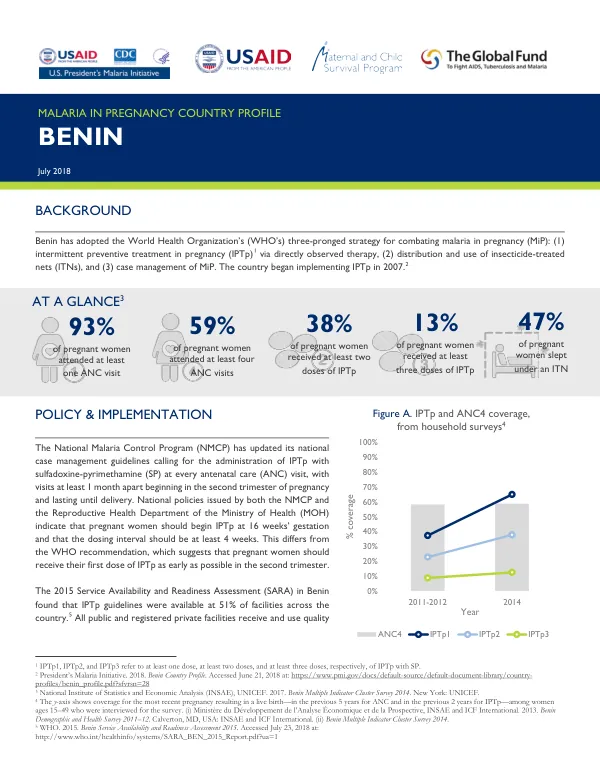
Malaria in pregnancy is a significant public health problem in sub-Saharan Africa, responsible for 8-14% of low birth weight and 20% of stillbirths.
2020 · 11 pages
Sign in to readA free account is required to download.
Abstract
To prevent these adverse consequences, the World Health Organization recommends intermittent preventive treatment of pregnant women (IPTp) with sulfadoxine-pyrimethamine. However, global IPTp coverage in targeted countries remains unacceptably low. A cluster randomized trial was conducted in 12 health facilities in three districts of Burkina Faso to assess the effect of IPTp administration by community health workers (CHWs) on the coverage of IPTp and antenatal care (ANC). The districts and facilities were purposively selected taking into account malaria epidemiology, IPTp coverage, and the presence of active CHWs. Pre- and post-intervention surveys were carried out in March 2017 and July-August 2018, respectively. At baseline, women received a median of 2.1 doses of IPTp, while by endline, women received a median of 1.8 doses in the control group and 2.8 doses in the intervention group. There was a non-statistically significant increase in the proportion of women attending four ANC visits in the intervention compared to the control group. By the endline, administration of IPTp was higher in the intervention than control, with a difference-in-differences (DiD) of 17.6% for IPTp3 and 20.0% for IPTp4. The study area, Burkina Faso, is a high malaria endemic Sahelian country in West Africa, with an estimated population of 20 million. The study was implemented in three of the 13 regions with highest malaria transmission, with one district purposively selected from each region. Routine HMIS data indicate that before the trial, IPTp3 coverage in the selected districts was 34.6%, 52.8%, and 47.2%, respectively, for an overall average of 44.9%. The study intervention included all pregnant women living in the targeted areas, while the baseline and endline surveys included women aged 18-49 years in selected households who had given birth in the 9 months prior to each survey. The catchment area of these health facilities included 113 villages, all of which were included in the cross-sectional survey. At the village level, the Expanded Programme on Immunization (EPI) sampling method was used to select households where women would be interviewed. The results of the study suggest that community delivery of IPTp could potentially lead to a greater number of IPTp doses delivered, with no apparent decrease in ANC coverage. The study provides evidence that community health workers can effectively deliver IPTp and promote ANC attendance at health facilities. The findings of this study have implications for the implementation of IPTp programs in Burkina Faso and other countries with similar epidemiological profiles.