USAID DEC
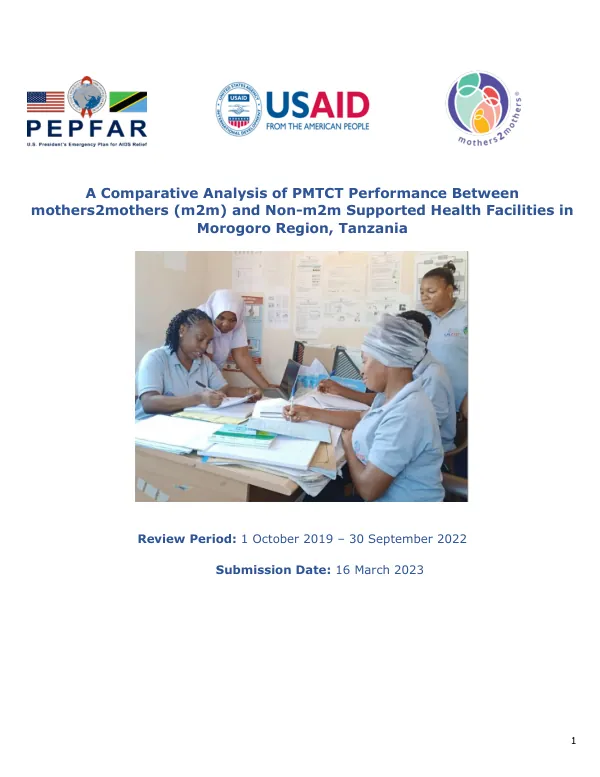
A Comparative Analysis of PMTCT Performance Between mothers2mothers (m2m) and Non-m2m Supported Health Facilities in Morogoro Region, Tanzania
Sign inDELOITTE INC.
A Comparative Analysis of PMTCT Performance Between mothers2mothers (m2m) and Non-m2m Supported Health Facilities in Morogoro Region, Tanzania
The PMTCT performance analysis in Morogoro Region, Tanzania, aimed to review the performance levels and trends of PMTCT indicators across select sites supported by mothers2mothers (m2m) and non-m2m supported health facilities.
2023 · 31 pages
Sign in to readA free account is required to download.
Abstract
The study focused on 20 sites, including ten m2m-supported facilities and ten non-m2m-supported health facilities, selected based on specific criteria such as location, ANC services, and staffing levels. The analysis included six PMTCT performance/Monitoring Evaluation and Reporting (MER) indicators: PMTCT_STAT, PMTCT_EID Coverage, 12 Months Retention, TX_ML, Viral Load Test Coverage, and TX_PVLSD. These indicators were selected to assess the performance of PMTCT services, including HIV testing coverage, early infant diagnosis, viral load coverage, retention of clients in care, treatment interruptions, and viral suppression. Data from the Tanzania Health Management Information System (THMIS) was used for the period of October 2019 to September 2022. The data extraction from the national DHIS2 system was conducted in December 2022, covering the PEPFAR Fiscal Year (FY) 2020-2022. The analysis aimed to establish performance levels and trends in PMTCT indicators between m2m-supported and non-m2m-supported sites, as well as client behavioral changes along the PMTCT cascade indicators. The study's objectives were to achieve 95-95-95 targets critical to ending the HIV/AIDS epidemic and to build capacity and technical expertise of governments to manage and implement quality PMTCT programs. The analysis aimed to gauge m2m's program contributions to date and to establish performance levels and trends in PMTCT indicators between m2m-supported and non-m2m-supported sites. The PMTCT performance analysis in Morogoro Region, Tanzania, is a critical component of the Reaching Impact, Saturation, and Epidemic Control (RISE) II project, which aims to support the government's strategy to prevent mother-to-child transmission of HIV. The study's findings will inform the development of strategies to improve PMTCT services and to strengthen the continuum of care between health facilities and communities. The analysis revealed that m2m-supported sites showed improved performance in PMTCT indicators compared to non-m2m-supported sites. The m2m-supported sites had higher percentages of pregnant women with known HIV status, higher EID coverage, higher retention rates, lower treatment interruptions, and higher viral load test coverage. These findings suggest that the m2m program has contributed to improved PMTCT performance in the Morogoro Region. The study's results have implications for the implementation of PMTCT programs in Tanzania and highlight the importance of community-based interventions in improving PMTCT performance. The findings also underscore the need for continued support to strengthen the capacity of health facilities and communities to deliver quality PMTCT services. The analysis also identified areas for improvement, including the need to increase HIV testing coverage, improve EID coverage, and reduce treatment interruptions. The study's recommendations for implementation include scaling up the m2m program to reach more sites and communities, strengthening the capacity of health facilities to deliver quality PMTCT services, and improving the continuum of care between health facilities and communities. The PMTCT performance analysis in Morogoro Region, Tanzania, provides valuable insights into the effectiveness of community-based interventions in improving PMTCT performance. The study's findings have implications for the implementation of PMTCT programs in Tanzania and highlight the importance of continued support to strengthen the capacity of health facilities and communities to deliver quality PMTCT services.
Related documents