USAID DEC
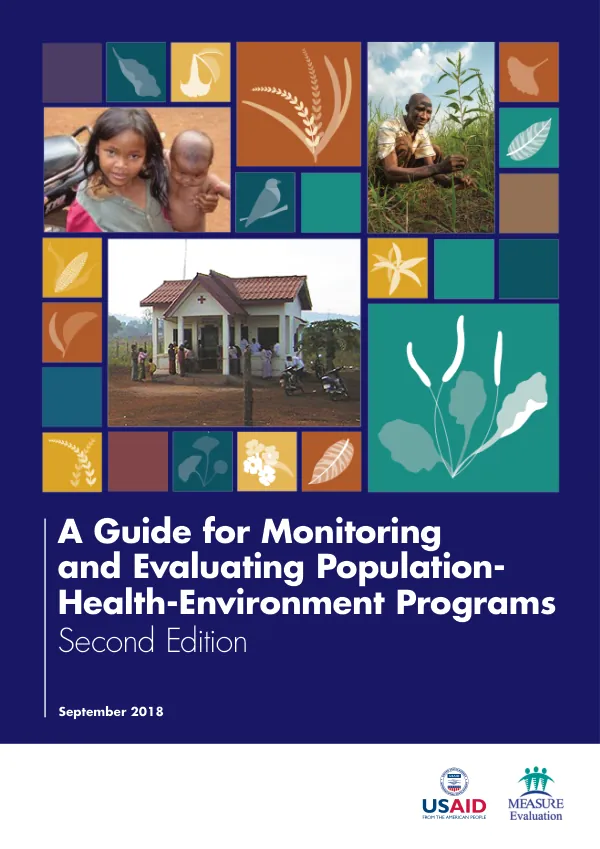
A Guide for Monitoring and Evaluating Population-Health-Environment Programs, Second Edition
Sign inCENTER FOR INTERNATIONAL FORESTRY AND RESEARCH
A Guide for Monitoring and Evaluating Population-Health-Environment Programs, Second Edition
Population-Health-Environment (PHE) programs aim to address the interconnected challenges of population growth, health, and environmental degradation.
2018 · 164 pages
Sign in to readA free account is required to download.
Abstract
These programs often involve complex interventions that require effective monitoring and evaluation (M&E) systems to assess their impact and inform decision-making. The PHE community has long recognized the need for a standardized approach to M&E. In response, the first edition of this guide was developed by Theresa Finn, which established the foundation for subsequent revisions. The current second edition, published in September 2018, builds on this foundation and provides a comprehensive framework for monitoring and evaluating PHE programs. The guide is designed to be a practical resource for PHE practitioners, policymakers, and researchers. It provides a clear overview of the PHE approach, including its underlying principles, key concepts, and indicators. The guide also offers a step-by-step approach to developing and implementing an M&E system, including selecting indicators, designing data collection tools, and analyzing data. The guide emphasizes the importance of integrating PHE indicators into a single framework, which allows for a comprehensive understanding of the program's impact. It also highlights the need for a participatory approach to M&E, involving stakeholders at all levels of the program. The guide is organized into five parts, each addressing a critical aspect of PHE M&E. Part 1 provides an overview of the guide, including its purpose, scope, and methodology. Part 2 focuses on program monitoring and evaluation, including the types of data used and methods employed. Part 3 addresses implementing a monitoring and evaluation system, including steps for developing and implementing a system. Part 4 discusses evaluating complex programs, including evaluation methods and approaches. Part 5 presents a comprehensive set of indicators for PHE programs, including population, health, environment, livelihood, and integration indicators. The guide includes a range of tools and resources to support PHE M&E, including figures, tables, and examples. These resources provide practical guidance on designing data collection tools, analyzing data, and interpreting results. The guide also includes a suggested citation and a list of abbreviations used throughout the document. The development of this guide involved extensive collaboration with the PHE community, including organizations and projects working in PHE. The guide was reviewed by experts from the United States Agency for International Development (USAID) and other stakeholders, who provided valuable feedback and suggestions. The guide is a valuable resource for anyone involved in PHE programs, including practitioners, policymakers, and researchers. It provides a comprehensive framework for monitoring and evaluating PHE programs, which can help to improve their impact and inform decision-making. The guide's emphasis on integration, participation, and practicality makes it an essential tool for the PHE community. The guide's focus on indicators is a critical aspect of PHE M&E. Indicators are used to measure the program's impact and track progress over time. The guide presents a comprehensive set of indicators for PHE programs, including population, health, environment, livelihood, and integration indicators. These indicators are designed to be measurable, relevant, and feasible to collect. The guide's emphasis on data analysis is also critical. Data analysis is used to interpret results and draw conclusions about the program's impact. The guide provides practical guidance on designing data collection tools, analyzing data, and interpreting results. The guide's focus on participation is also essential. Participation involves stakeholders at all levels of the program, including community members, program staff, and policymakers. The guide emphasizes the importance of involving stakeholders in the M&E process, including in the design of data collection tools, data analysis, and interpretation of results. Overall, the guide provides a comprehensive framework for monitoring and evaluating PHE programs. Its emphasis on integration, participation, and practicality makes it an essential tool for the PHE community. The guide's focus on indicators, data analysis, and participation is critical to improving the impact of PHE programs and informing decision-making.