USAID DEC
A Guide to Youth Friendly Practices, The City of Calgary
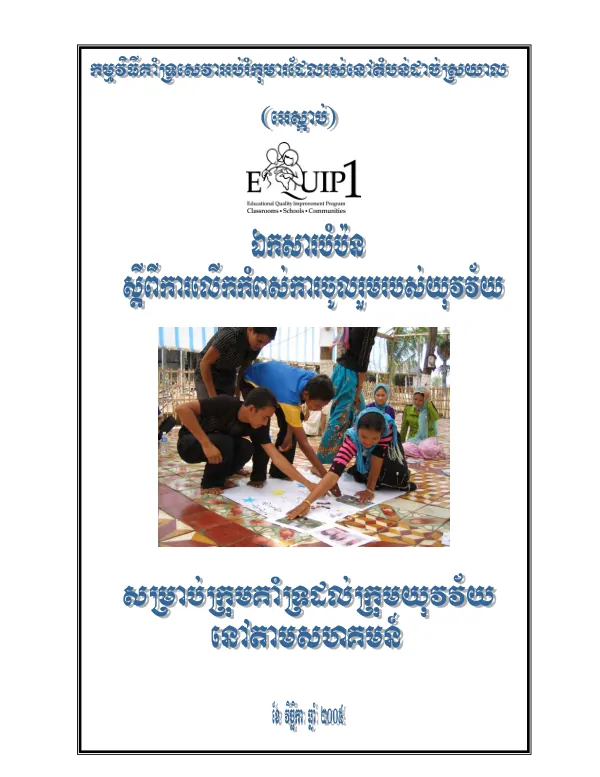
The Community-Based Youth Group (CYG) initiative is a program aimed at empowering youth in various communities.
34 pages
Sign in to readA free account is required to download.
Abstract
The program focuses on providing training and resources to young people, enabling them to develop essential skills and become active contributors to their communities. The CYG initiative began with a comprehensive assessment of the needs and challenges faced by youth in the target communities. This assessment identified key areas of focus, including education, employment, and community engagement. The program's implementation involved a range of activities, including workshops, training sessions, and community outreach programs. One of the key components of the CYG initiative is the establishment of youth-friendly practices in the target communities. This involves creating a supportive environment that encourages young people to participate in community activities and develop their skills and talents. The program also focuses on promoting positive relationships between youth and community leaders, with the aim of building trust and fostering a sense of belonging. The CYG initiative has been implemented in various communities, with a focus on rural and disadvantaged areas. The program has been successful in engaging young people and providing them with the skills and knowledge they need to become active contributors to their communities. The initiative has also helped to build positive relationships between youth and community leaders, with a focus on promoting social cohesion and community development. The CYG initiative has been supported by various stakeholders, including local government agencies, community organizations, and private sector partners. The program has received funding from various sources, including government grants and private sector donations. The initiative has also been recognized for its innovative approach to community development and its commitment to empowering young people. The CYG initiative has a range of benefits for the target communities, including improved social cohesion, increased community engagement, and enhanced economic development. The program has also helped to build the capacity of community leaders and organizations, enabling them to provide better services and support to young people. The CYG initiative has been evaluated using a range of methods, including surveys, focus groups, and community assessments. The evaluation has provided valuable insights into the program's effectiveness and has helped to identify areas for improvement. The initiative has also been recognized for its commitment to transparency and accountability, with a focus on ensuring that resources are used effectively and efficiently. The CYG initiative has a range of costs associated with its implementation, including personnel costs, training costs, and community outreach costs. The program has also incurred costs related to the establishment of youth-friendly practices and the promotion of positive relationships between youth and community leaders. However, the initiative has been recognized for its value for money and its commitment to achieving positive outcomes for the target communities. The CYG initiative has a range of recommendations for future implementation, including the need to expand the program to reach more communities and to increase the level of community engagement and participation. The initiative also recommends the establishment of a more formalized governance structure, with a focus on ensuring that resources are used effectively and efficiently.