USAID DEC
USAID Mission Checklist: Integrating Mental Health and Psychosocial Support into Youth Programming
Sign inUSAID
USAID Mission Checklist: Integrating Mental Health and Psychosocial Support into Youth Programming
The World Health Organization reports that nearly one in five people are impacted by poor mental health in conflict and post-conflict areas.
2021 · 5 pages
Sign in to readA free account is required to download.
Abstract
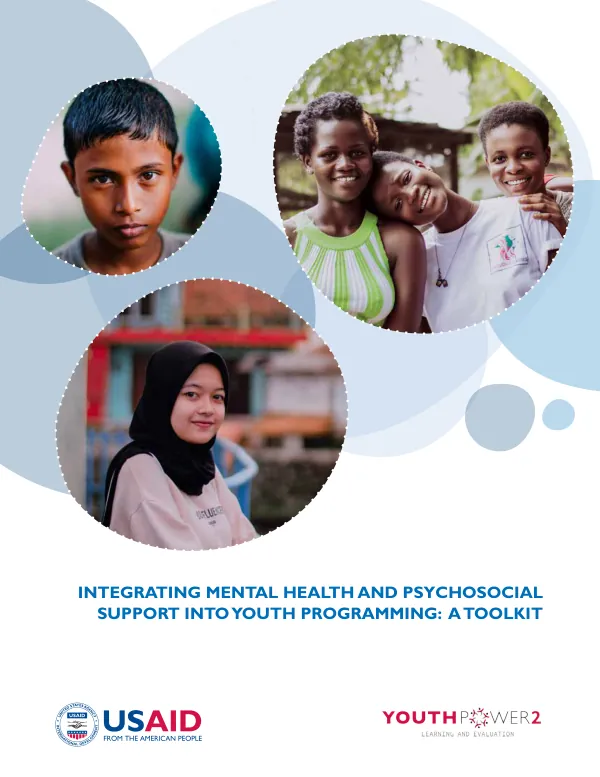
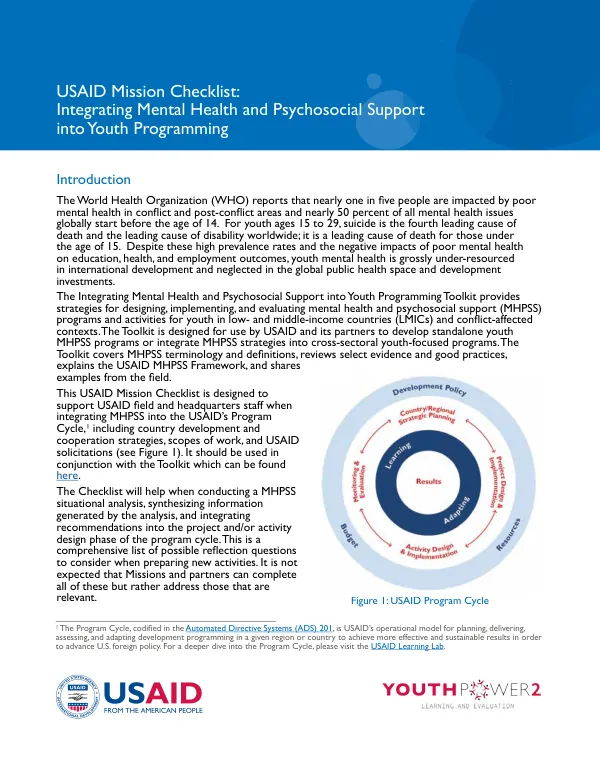
Mental health issues globally start before the age of 14, with nearly 50 percent of all mental health issues beginning during this period. For youth ages 15 to 29, suicide is the fourth leading cause of death and the leading cause of disability worldwide, also a leading cause of death for those under the age of 15. Despite these high prevalence rates and the negative impacts of poor mental health on education, health, and employment outcomes, youth mental health is grossly under-resourced in international development and neglected in the global public health space and development investments. The Integrating Mental Health and Psychosocial Support into Youth Programming Toolkit provides strategies for designing, implementing, and evaluating mental health and psychosocial support (MHPSS) programs and activities for youth in low- and middle-income countries (LMICs) and conflict-affected contexts. The Toolkit is designed for use by USAID and its partners to develop standalone youth MHPSS programs or integrate MHPSS strategies into cross-sectoral youth-focused programs. The Toolkit covers MHPSS terminology and definitions, reviews select evidence and good practices, explains the USAID MHPSS Framework, and shares examples from the field. The USAID Mission Checklist is designed to support USAID field and headquarters staff when integrating MHPSS into the USAID's Program Cycle, including country development and cooperation strategies, scopes of work, and USAID solicitations. The Checklist will help when conducting a MHPSS situational analysis, synthesizing information generated by the analysis, and integrating recommendations into the project and/or activity design phase of the program cycle. This is a comprehensive list of possible reflection questions to consider when preparing new activities. The Checklist includes questions related to project design planning, MHPSS situational analysis, and project design finalization. For project design planning, questions include whether the Mission has identified a MHPSS technical expert, established a multi-sectoral project design team, and familiarized itself with USAID's MHPSS Framework. For MHPSS situational analysis, questions include whether the analysis incorporates information from various sources, includes a validation process, and includes an overview of suicide in the country. For project design finalization, questions include whether the project design applies the dos and don'ts of MHPSS programming, engages youth in the planning and implementation of the MHPSS program activities, and references the results of the MHPSS situational analysis throughout the Project Activity Description (PAD). The Checklist also includes questions related to safeguarding, preventing sexual exploitation and abuse, and do no harm considerations, such as whether the program has a clear Child Safeguarding Plan in place and clear referral procedures. The Toolkit and Checklist are designed to support USAID and its partners in developing effective MHPSS programs and activities for youth in LMICs and conflict-affected contexts. By using these resources, USAID and its partners can ensure that their programs are well-designed, effective, and responsive to the needs of youth.
Related documents