USAID DEC
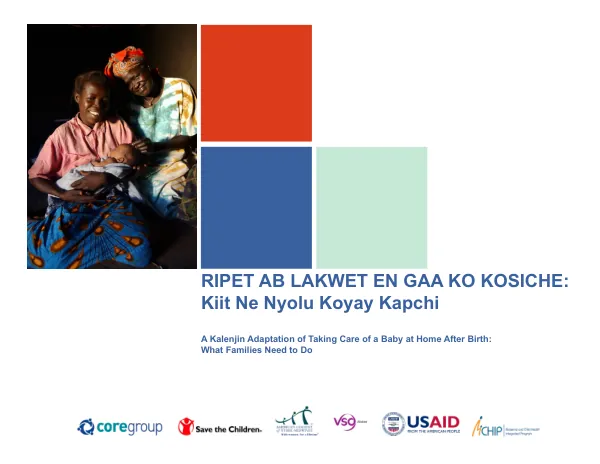
A Kalenjin Adaptation of Taking Care of a Baby at Home After Birth: What Families Need to Do
Sign inCORE GROUP
A Kalenjin Adaptation of Taking Care of a Baby at Home After Birth: What Families Need to Do
The Kalenjin adaptation of "Taking Care of a Baby at Home After Birth: What Families Need to Do" provides essential guidance for new mothers in the Kalenjin community.
2012 · 23 pages
Sign in to readA free account is required to download.
Abstract
The document emphasizes the importance of proper care and hygiene practices to ensure the health and well-being of both the mother and the baby. Initial assessments and preparations are crucial after birth. New mothers are advised to keep their homes clean and hygienic, with a focus on the area where the baby will be cared for. This includes washing hands frequently, using clean water, and ensuring proper disposal of soiled items. The document also recommends the use of clean clothes, towels, and bedding for the baby. The document highlights the significance of proper feeding and nutrition for the baby. New mothers are advised to breastfeed their babies, as it provides essential nutrients and antibodies. The document also recommends the use of clean water for mixing formula, if breastfeeding is not possible. Additionally, the document emphasizes the importance of proper hygiene practices when handling and preparing food for the baby. The document also addresses the issue of postpartum care for the mother. New mothers are advised to rest and avoid strenuous activities, as this can help prevent complications and promote healing. The document also recommends the use of clean clothes and bedding for the mother, as well as proper hygiene practices when handling and preparing food. In terms of baby care, the document provides guidance on how to bathe and clean the baby. New mothers are advised to use clean water and mild soap, and to avoid using harsh chemicals or abrasive materials. The document also recommends the use of clean clothes and towels for the baby, as well as proper hygiene practices when handling and preparing food. The document also addresses the issue of baby safety and prevention of infections. New mothers are advised to keep the baby's environment clean and free from hazards, and to avoid exposing the baby to people who are sick or have been in contact with someone who is sick. The document also recommends the use of clean clothes and bedding for the baby, as well as proper hygiene practices when handling and preparing food. In terms of emergency situations, the document provides guidance on how to recognize and respond to potential health risks. New mothers are advised to seek medical attention immediately if they notice any unusual symptoms or signs of illness in the baby. The document also recommends the use of clean clothes and bedding for the baby, as well as proper hygiene practices when handling and preparing food.