USAID DEC
A Novel HIV-1 RNA Testing Intervention to Detect Acute and Prevalent HIV Infection in Young Adults and Reduce HIV Transmission in Kenya: Protocol for a Randomized Controlled Trial
Sign inJOHNS HOPKINS UNIVERSITY
A Novel HIV-1 RNA Testing Intervention to Detect Acute and Prevalent HIV Infection in Young Adults and Reduce HIV Transmission in Kenya: Protocol for a Randomized Controlled Trial
The Tambua Mapema Plus study is a randomized controlled trial aimed at detecting acute and prevalent HIV infection in young adults and reducing HIV transmission in Kenya.
2021 · 13 pages
Sign in to readA free account is required to download.
Abstract
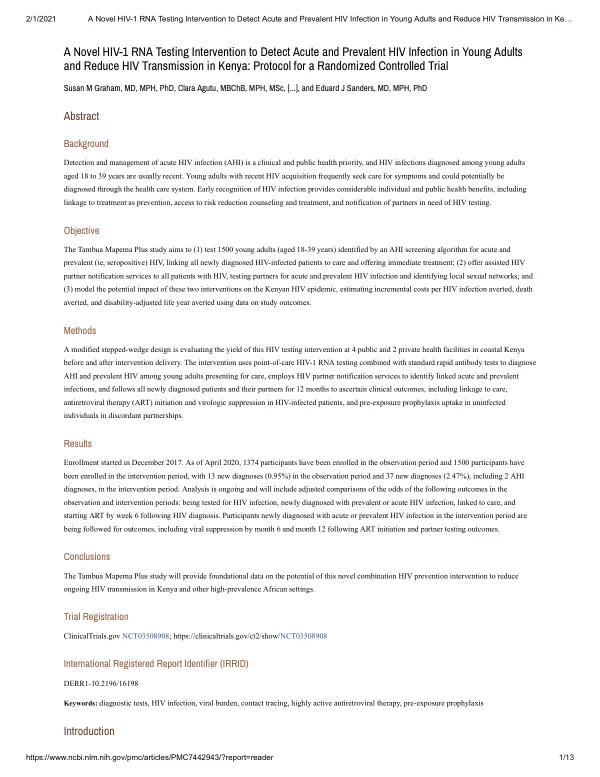
The study began in December 2017 and is being conducted at 6 health facilities in coastal Kenya. The intervention uses point-of-care HIV-1 RNA testing combined with standard rapid antibody tests to diagnose acute and prevalent HIV among young adults presenting for care. The study's primary objective is to test 1500 young adults aged 18-39 years identified by an acute HIV infection (AHI) screening algorithm for acute and prevalent HIV, linking all newly diagnosed HIV-infected patients to care and offering immediate treatment. The intervention also includes assisted HIV partner notification services to identify linked acute and prevalent infections, and follows all newly diagnosed patients and their partners for 12 months to ascertain clinical outcomes. A modified stepped-wedge design is being used to evaluate the yield of this HIV testing intervention before and after intervention delivery. As of April 2020, 1374 participants have been enrolled in the observation period and 1500 participants have been enrolled in the intervention period, with 13 new diagnoses (0.95%) in the observation period and 37 new diagnoses (2.47%), including 2 AHI diagnoses, in the intervention period. The study's AHI risk score is based on demographic factors, signs, and symptoms, including age, fever, fatigue, body pains, diarrhea, sore throat, and genital ulcer disease. The risk score has been shown to be a reliable predictor of AHI, with a sensitivity of 90.0% in Kilifi and 92.9% in Lilongwe. The study's hypothesis is that targeted evaluation for AHI among young adults who have symptoms compatible with AHI will improve AHI detection and reduce HIV transmission. The study's methodology includes the use of point-of-care HIV-1 RNA testing followed by rapid antibody testing to differentiate acute from prevalent infection. Participants newly diagnosed with acute or prevalent HIV infection in the intervention period are being followed for outcomes, including viral suppression by month 6 and month 12 following ART initiation and partner testing outcomes. The study's expected outcomes include improved AHI detection, increased linkage to care, and reduced HIV transmission among young adults in Kenya. The study's results will provide foundational data on the potential of this novel combination HIV prevention intervention to reduce ongoing HIV transmission in Kenya and other high-prevalence African settings.