USAID DEC
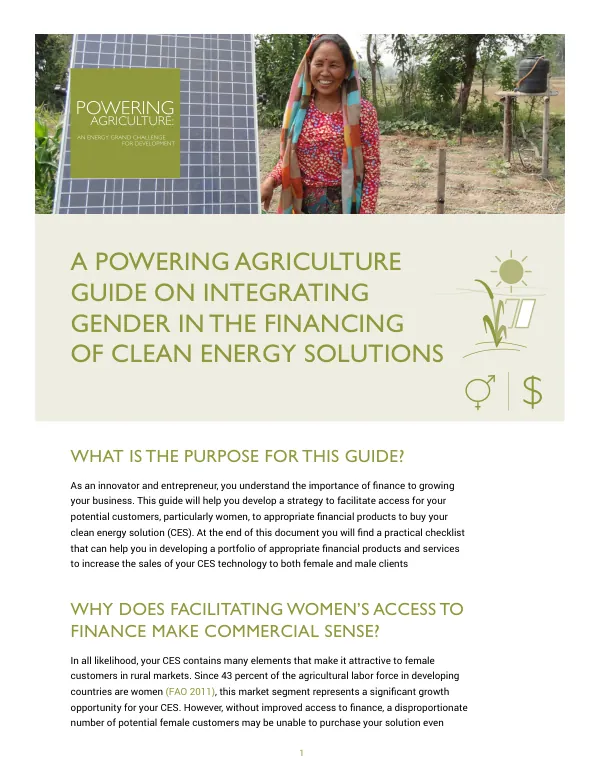
A Powering Agriculture Guide on Integrating Gender in the Financing of Clean Energy Solutions
Sign inFRENCH AGRICULTURAL RESEARCH CENTER FOR INTERNATIONAL DEVELOPMENT
A Powering Agriculture Guide on Integrating Gender in the Financing of Clean Energy Solutions
Facilitating women's access to finance is crucial for the growth of clean energy solutions in developing countries.
2017 · 8 pages
Sign in to readA free account is required to download.
Abstract
Women represent a significant market segment, with 43% of the agricultural labor force in developing countries being women. However, they face barriers to accessing finance, including limited or no access to formal banking services, lack of knowledge about available financial products, and discriminatory banking practices. The Global Banking Alliance for Women has found that extending banking services to women is profitable and sustainable. Member financial institutions have reported increased profits, lower non-performing loan rates, and higher customer retention rates among women. Women also control a significant portion of global consumer spending, with nearly four in ten small and medium enterprises being owned by women. Common barriers to financing for women include limited access to formal banking services, lack of knowledge about available financial products, and discriminatory banking practices. Women often lack the cash and property to put forward as collateral for loans, and are subject to higher interest rates and collateral requirements. Minimum land or capital requirements for participation in agricultural cooperatives can also be a barrier to women's participation. To facilitate male and female customer access to financial services, consider financial institutions in the targeted geographic area. Identify local financial institutions that offer appropriate and flexible savings and lending services for low-income individuals, particularly women. Reach out to these institutions to learn more about their lending practices and existing products and services. Understand the financing challenges, needs, and demands of male and female customers. Women face more challenges that inhibit access to financing and new agricultural technologies. Identify the socio-cultural and regulatory barriers particular to your specific target population and understand the preferences of potential women customers regarding borrowing and banking. This will help determine the general features of appropriate financing products. Educate yourself on existing and potential opportunities for gender-responsive financial services and products in your target market. Before linking potential customers with existing financial products, try to understand the main features of those products. Identify existing products that are more likely to enhance female entrepreneurs' success and wellbeing, rather than put them at risk. This responsible approach will benefit your customers and protect the company from reputational risk.